Every year, thousands of trekkers complete the Manaslu Circuit Trek without any significant health issue beyond a few sore muscles and a mild headache at altitude. But some trekkers do get sick and knowing what can happen, what to watch for, and exactly what your guide and agency will do in response is one of the most important pieces of preparation you can make before setting foot on this trail. Contact our manaslu trekking company to plan your trip with local experts.
The Manaslu Circuit reaches 5,106 metres at Larkya La Pass. It passes through a remote restricted area with no road access, no walk-in clinic, and no pharmacy along most of the route. Medical help, when it is needed, requires a response from your guide, communication with Kathmandu, and in serious cases a helicopter. The system works — we have managed medical situations on this trail for many years and our trekkers have always received the care they needed. But the system works better when trekkers understand it before they arrive.
This guide covers every health scenario you might face on the Manaslu Circuit — from a stomach upset in Machha Khola to severe altitude sickness above Samagaun — along with clear information on prevention, treatment, rescue procedures, and what our guides are trained and equipped to do on your behalf.
Understanding the Medical Landscape of the Manaslu Circuit
Before discussing specific illnesses, it helps to understand the medical geography of the route. The Manaslu Circuit Trek climbs from around 730 metres at Soti Khola to over 5,000 metres at Larkya La — a gain of more than 4,300 metres over roughly ten days of walking. This elevation profile places the upper circuit firmly in the zone where altitude-related illness is a genuine risk for any trekker who ascends too quickly or ignores early symptoms.
There is a basic health post at Samagaun (3,520m) staffed by a health worker with limited supplies. There is nothing comparable at Samdo (3,875m), Dharamsala (4,460m), or anywhere on the Larkya La crossing itself. Once you pass Samagaun heading north, you are in one of the most medically remote environments in Nepal. This is not said to frighten you — it is said so that you take the prevention protocols in this guide seriously.
The good news is that the vast majority of health incidents on the Manaslu Circuit are manageable with proper guide response and do not require helicopter evacuation. Our guides are trained in wilderness first aid, high-altitude medicine, and emergency communication protocols. The goal is always to prevent serious situations through vigilant monitoring and early intervention — not to wait until a situation becomes critical before acting.
Altitude Sickness: The Primary Medical Risk
Altitude-related illness is by far the most serious and most common medical risk on the Manaslu Circuit Trek. It does not discriminate by age, fitness level, or previous high-altitude experience. A marathon runner with three Himalayan treks behind them can develop acute mountain sickness (AMS) while a first-time trekker acclimatizes without difficulty. Understanding how altitude affects the body and knowing the warning signs is knowledge that every trekker on this route should carry.
How Altitude Sickness Develops
At high altitude, the partial pressure of oxygen in the air decreases. Your body compensates by breathing faster and producing more red blood cells, but this process takes time. When you ascend faster than your body can adapt, fluid can accumulate in the brain (HACE — High Altitude Cerebral Edema) or the lungs (HAPE — High Altitude Pulmonary Edema). Both conditions are life-threatening if not treated promptly with descent and supplemental oxygen.
The standard safe ascent guideline at altitude is: above 3,000 metres, do not increase your sleeping altitude by more than 300 to 500 metres per day, and include a rest day for every 1,000 metres gained. Our 14-day Manaslu Circuit itinerary is specifically designed around this guideline and includes an acclimatization rest day at Samagaun before the final push to Samdo and Larkya La.
- Headache (mild)
- Fatigue and weakness
- Loss of appetite
- Nausea (mild)
- Dizziness when standing
- Disturbed sleep
- Severe persistent headache
- Vomiting
- Extreme fatigue
- Shortness of breath at rest
- Inability to walk straight
- Confusion (early)
- Loss of coordination (ataxia)
- Severe confusion or disorientation
- Cannot walk unaided
- Gurgling or bubbling breath sounds
- Pink or frothy sputum (HAPE)
- Unconsciousness
The Lake Louise Score — How Your Guide Assesses You
Our guides use the Lake Louise Scoring System to objectively measure AMS severity. The guide asks the trekker five questions covering headache severity, gastrointestinal symptoms, fatigue, dizziness, and sleep quality. Each answer receives a score from 0 to 3. A total score of 3 to 4 indicates mild AMS. A score of 5 or above indicates moderate to severe AMS and triggers the descent and evacuation protocol.
This assessment is done every morning at high-altitude camps and any time a trekker reports symptoms. It removes guesswork from the decision-making process and ensures that guide response is based on objective criteria rather than a trekker saying “I’m fine” when they are not.
Common Non-Altitude Illnesses on the Manaslu Circuit
Altitude sickness gets the most attention, but it is not the only thing that can make you unwell on the Manaslu Circuit Trek. The following conditions are also seen regularly on the trail and deserve equal attention in your preparation.
Gastrointestinal illness is the most common health complaint on any Nepal trek and the Manaslu Circuit is no exception. Tea house kitchens in remote villages have limited refrigeration and variable hygiene standards. Water sources, if not properly treated, carry bacteria and parasites including Giardia and E. coli.
- Loose or watery stools
- Stomach cramps
- Nausea and vomiting
- Fever (in bacterial cases)
- Bloating and gas
- Oral rehydration salts (ORS)
- Rest and reduced food intake
- Ciprofloxacin for bacterial cases
- Metronidazole for Giardia
- Clear broth and boiled water
- Drink only boiled or treated water
- Avoid raw vegetables and salads
- Eat freshly cooked hot food only
- Wash hands before every meal
- Carry water purification tablets
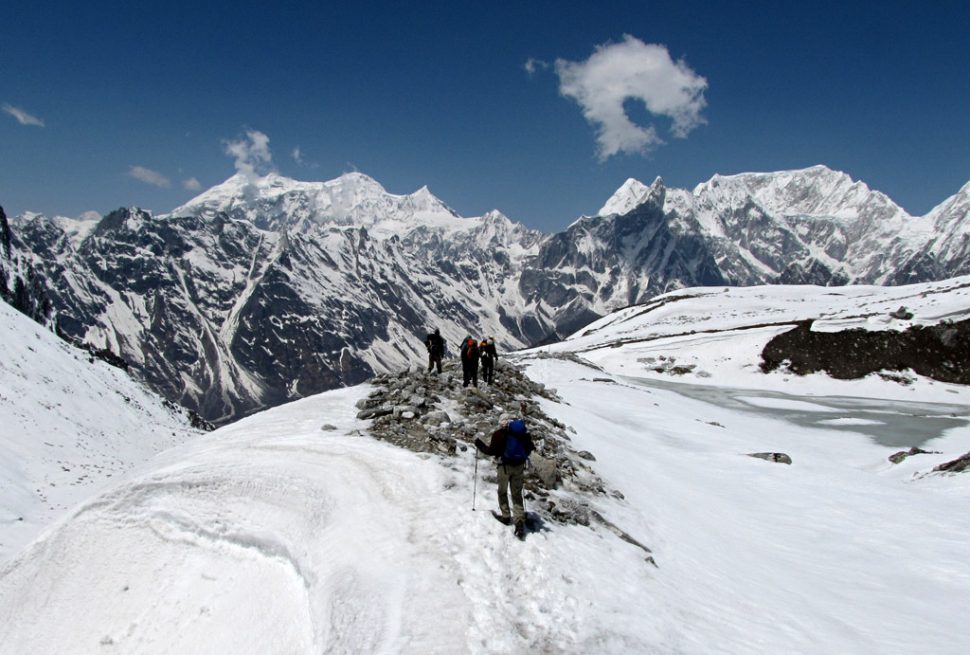
The Manaslu Circuit passes through high-altitude terrain where nighttime temperatures regularly drop below freezing, even in October and November. At Dharamsala (4,460m), where trekkers camp before the early-morning Larkya La crossing, temperatures can fall to minus 10 to minus 15 degrees Celsius at night. Larkya La itself is exposed to wind that dramatically increases effective cold. Trekkers who are not properly equipped or who push through the pass in deteriorating weather face genuine hypothermia risk.
- Uncontrollable shivering
- Confusion and slurred speech
- Loss of coordination
- Pale or blue-grey skin
- Loss of consciousness (severe)
- Move the person out of wind and cold
- Remove wet clothing immediately
- Insulate with dry sleeping bag
- Warm sweet drinks if conscious
- Body-to-body warmth if severe
- Layering system with waterproof outer
- Down jacket rated to minus 10°C minimum
- Insulated gloves and balaclava
- Never start the pass crossing in rain
- Keep moving on the pass — do not stop in wind
Frostbite is the freezing of body tissue and is a real risk at and above 4,500 metres in cold, windy, or wet conditions. The extremities — fingers, toes, nose, ears, and cheeks — are most vulnerable. Most trekkers on the Manaslu Circuit will not encounter conditions severe enough to cause frostbite if they are properly equipped, but trekkers who attempt the Larkya La crossing in bad weather or with inadequate gloves and boots face genuine exposure.
- Numbness and loss of feeling
- White or greyish-yellow skin
- Hard, waxy skin surface
- Blistering after rewarming
- Do not rub the affected area
- Rewarm only when refreezing risk is gone
- Rewarm in warm water (38 to 42°C)
- Do not walk on frostbitten feet
- Evacuate immediately
- Waterproof insulated boots
- Liner gloves under outer mitts
- Keep moving to maintain circulation
- Avoid alcohol before cold exposure
UV radiation increases by roughly 10 percent for every 1,000 metres of altitude gain. At 4,000 metres on a sunny day with snow reflection, trekkers receive UV exposure comparable to direct sunlight on a tropical beach but without the warning sensation of heat on the skin. Many trekkers underestimate this risk because the air feels cold. Sunburn at altitude is severe and takes longer to heal than at lower elevations.
Snow blindness (photokeratitis) is sunburn of the cornea, caused by UV reflection off snow and ice. It develops gradually during the day and becomes extremely painful several hours later, often after the trekker has descended to the tea house. Symptoms include intense eye pain, sensitivity to light, the sensation of sand in the eyes, and temporary vision impairment. It is entirely preventable with proper glacier sunglasses or goggles with UV protection and side shields.
Blisters are the most common reason trekkers slow down or stop on the Manaslu Circuit. They are caused by friction between the foot and boot, aggravated by wet socks, poorly broken-in boots, or long descents. An untreated blister that becomes infected at altitude creates a medical situation that is genuinely difficult to manage in the field — which is why blister prevention and early treatment deserve serious attention.
Musculoskeletal injuries — most commonly twisted ankles on the rocky trails between Soti Khola and Machha Khola, and knee pain on the long descents from Larkya La toward Bimthang — can also slow or stop a trek. Trekking poles significantly reduce the risk of both ankle injuries and descent knee pain and are strongly recommended for all trekkers on this route regardless of fitness level.
Trek with Guides Trained in Wilderness First Aid
Every Manaslu Treks and Expedition guide is certified in wilderness first aid and high-altitude medicine. We carry oxygen, a Gamow bag, and a full emergency kit on all circuits. No advance payment required.
What Your Guide Does When You Get Sick
The guide’s response to illness on the Manaslu Circuit Trek follows a clear protocol that our team is trained to execute calmly and efficiently. Understanding this protocol removes a significant amount of anxiety for trekkers who worry about what happens if something goes wrong in a remote location.
The Rescue Procedure: Step by Step
Helicopter rescue from the Manaslu Circuit is a well-established procedure that Kathmandu-based rescue companies operate regularly. Here is what the full process looks like from the moment a call is made to arrival at hospital.
| Phase | What Happens | Approximate Time |
|---|---|---|
| Guide assessment and contact | Guide assesses trekker, contacts Manaslu Treks Kathmandu office with GPS coordinates, altitude, and condition report | 0 to 15 minutes |
| Insurance verification | Office contacts trekker’s insurance emergency line for rescue authorisation. Cash deposit arranged if needed. | 15 to 45 minutes |
| Helicopter dispatch | Rescue company dispatches helicopter from Kathmandu or Pokhara depending on location and weather | 1 to 2 hours after call |
| Field treatment continues | Guide administers oxygen, Gamow bag, or other treatment as needed while awaiting helicopter | Ongoing |
| Helicopter arrives | Pilot confirms landing zone. Guide assists with patient loading. Guide may accompany trekker if space allows. | 1 to 3 hours from initial call |
| Flight to Kathmandu | Direct flight to CAAN-approved landing zone near hospital. From upper circuit: approximately 45 to 60 minutes flight time. | 45 to 60 minutes |
| Hospital admission | Trekker transferred to Kathmandu hospital — CIWEC Clinic, Norvic International, or Teaching Hospital depending on severity | Within 4 to 6 hours of initial call |
Helicopter Landing Zones on the Manaslu Circuit
Our guides know the confirmed helicopter landing zones at every major point on the Manaslu Circuit Trek. Knowing these in advance reduces response time significantly when a rescue call is made.
| Location | Altitude | Landing Zone | Notes |
|---|---|---|---|
| Jagat | 1,410m | School ground area | Reliable year-round |
| Namrung | 2,660m | Flat field above village | Good accessibility |
| Lho | 3,180m | Field below Ribung Gompa | Morning preferred |
| Samagaun | 3,520m | Main field above village, near health post | Primary evacuation point for upper circuit |
| Samdo | 3,875m | Open ground north of village | Afternoon winds — morning rescues preferred |
| Dharamsala | 4,460m | Flat area near tea house | Limited space, experienced pilots only |
| Bimthang | 3,590m | Valley floor below village | Reliable, frequently used |
| Tilje / Thonje | 2,300m | Near trail junction | Lower circuit exit point |
Prevention: How to Avoid Getting Sick on the Manaslu Circuit Trek
The best medical outcome on the Manaslu Circuit Trek is the one where no intervention is needed because no serious illness develops. Prevention is not complicated — it requires consistent attention to a small set of habits that protect your health throughout the trek.
— Kiran Basnet, Senior Trekking Expert, Manaslu Treks and Expedition
Acclimatization: The Most Important Prevention Tool
Acclimatization is not a passive process — it is something you actively manage through the pace of your ascent, your rest days, your hydration, and your willingness to slow down or stop when your body asks you to. Our 14-day itinerary builds in the acclimatization time that the circuit requires. If you choose a shorter package like the 11-day or 9-day option, the ascent profile is faster and you need to be in excellent physical condition and have prior high-altitude experience.
Hydration
Dehydration accelerates AMS, impairs your body’s temperature regulation, and reduces physical performance. At altitude, you lose water faster than at sea level through increased respiration rate. The minimum recommended fluid intake above 3,000 metres is 3 to 4 litres per day. Drink before you feel thirsty — by the time thirst registers at altitude, you are already mildly dehydrated. Urine colour is the best field guide: pale yellow means adequately hydrated; dark yellow or amber means you need more water immediately.
Diamox (Acetazolamide)
Diamox is a prescription medication that accelerates acclimatization by stimulating increased breathing rate, which raises blood oxygen levels. It is widely used by trekkers on the Manaslu Circuit and significantly reduces the incidence and severity of AMS. The standard preventive dose is 125mg twice daily, starting 24 hours before ascending above 3,000 metres and continuing until you have been at maximum altitude for 48 hours.
Diamox is not a substitute for proper acclimatization and should not be used to push a faster ascent than your body can handle. It has side effects including tingling in the fingers and toes, increased urination, and occasional nausea. People with sulfa drug allergies should not take it. Consult your doctor before departing and obtain a prescription before leaving your home country — Diamox is available in Kathmandu pharmacies but quality control is variable.
Food and Water Safety
All drinking water on the Manaslu Circuit must be treated. Carry water purification tablets (iodine or chlorine dioxide) or a SteriPen UV purifier as a backup to boiled water. Avoid ice, raw salads, fresh fruit you have not peeled yourself, and undercooked meat. Eat hot freshly cooked meals and avoid food that has been sitting out. Dal bhat — the Nepali staple of lentil soup, rice, and vegetables — is your safest meal choice at every tea house on the route because it is cooked fresh for each order.
Things to Avoid on the Manaslu Circuit Trek
✗ Things That Increase Your Risk
- Ascending with symptoms. Never go higher if you have a headache, nausea, or dizziness at altitude — not even one step.
- Alcohol at altitude. Alcohol suppresses breathing rate during sleep, worsening overnight oxygen desaturation. It also masks AMS symptoms and causes dehydration. Avoid completely above 3,000m.
- Sleeping pills and sedatives. Sedatives suppress breathing and dramatically worsen AMS overnight. Do not take any sleeping medication above 3,000m without explicit medical advice.
- Tobacco smoking. Smoking reduces blood oxygen saturation and impairs your body’s ability to acclimatize. It also increases mucus production making respiratory illness worse at altitude.
- Overexertion on ascent days. Walk slowly. The Nepali guide phrase is “bistari bistari” — slowly slowly. Arriving at camp less tired gives your body more energy to acclimatize.
- Skipping the acclimatization day. The rest day at Samagaun is not optional padding in your itinerary. It is physiologically required. Do not try to push through it even if you feel good.
- Ignoring a wet or cold body. Change out of wet clothes immediately on arrival at the tea house. Sitting in damp trekking layers while your body temperature drops is the fast route to hypothermia.
- Untreated water. A single glass of untreated stream water on the Manaslu Circuit can put you flat on your back for 48 to 72 hours. Every water source regardless of how clean it looks must be treated.
✓ Habits That Protect Your Health
- Tell your guide everything. No symptom is too minor to mention. Your guide cannot help you if they do not know what you are feeling. There is no social cost to reporting a headache.
- Drink 3 to 4 litres per day. Set a water alarm on your phone if needed. Consistent hydration is the simplest and most effective prevention tool available to you.
- Eat even when you are not hungry. Appetite suppression is a normal effect of altitude. Eat carbohydrate-rich meals regardless — your body needs fuel to acclimatize.
- Sleep low when possible. The rule “climb high, sleep low” applies throughout the trek. On acclimatization days, take short hikes to higher elevations then return to sleep at a lower altitude.
- Start the Larkya La crossing before dawn. A 3 AM departure gets you over the pass in the best weather window before afternoon cloud and wind develop.
- Use trekking poles on descents. Poles reduce knee stress by up to 25 percent on steep descents. The long drop from Larkya La to Bimthang is brutal on unprotected knees.
- Keep your feet dry. Change wet socks at lunch stops. Wet feet cause blisters within hours and create hypothermia risk when temperatures drop in the afternoon.
- Rest before you think you need to. Rest is not weakness — it is a training strategy for high altitude. The trekkers who feel best on Larkya La day are the ones who rested well the night before.
Your Personal Medical Kit: What to Carry
Our guides carry a comprehensive group emergency kit on every Manaslu Circuit Trek. But every trekker should also carry a personal kit for day-to-day management of minor issues without needing to interrupt the group or open the emergency kit.
- 💊Diamox (acetazolamide): 125mg tablets for AMS prevention and treatment — prescription required, consult your doctor
- 💊Ibuprofen and paracetamol: For headache and pain — altitude headaches respond better to ibuprofen than paracetamol in most people
- 💊Ciprofloxacin 500mg: Antibiotic for bacterial gastrointestinal illness — prescription required
- 💊Metronidazole 400mg: For Giardia and amoebic infections — prescription required
- 🧂Oral rehydration salts (ORS): Minimum 10 sachets — essential for gastrointestinal illness management
- 💧Water purification tablets: Chlorine dioxide preferred (Aquatabs or similar) — 30 tablet minimum
- 🩹Blister treatment: Compeed or moleskin, needle, antiseptic wipes — carry more than you think you need
- 🩹Wound care: Antiseptic cream, sterile gauze, medical tape, elastic bandage
- ☀️SPF 50 or higher sunscreen: For face, lips, and exposed skin — reapply every 2 hours above 3,000m
- 🕶️Glacier sunglasses with UV400 and side shields: Non-negotiable from Namrung upward
- 🌡️Personal thermometer: Digital oral thermometer for fever monitoring
- 💉Any personal prescription medicines: Carry double the quantity you expect to need plus a copy of your prescription
- 📋Medical information card: Written summary of blood type, allergies, existing conditions, and emergency contacts — keep on your person, not only in your pack
Travel Insurance: Not Optional on the Manaslu Circuit
Travel insurance with helicopter evacuation coverage up to at least 5,500 metres is a condition of booking any trek with Manaslu Treks and Expedition. We require proof of insurance before departure. This is not a formality — it is the single most important piece of your safety infrastructure for this trek.
A helicopter rescue from Samagaun or Samdo to Kathmandu costs between USD 3,000 and USD 6,000 depending on the rescue company, weather conditions, and time of day. Hospital treatment in Kathmandu for altitude-related illness can add several thousand dollars more. Without insurance, you or your family bear this cost directly. Rescue companies may also delay dispatch until a cash deposit is confirmed, which can cost critical time in a medical emergency.
When purchasing insurance, verify these specific coverances:
- Helicopter evacuation from altitude up to 5,500 metres minimum
- Medical treatment and hospitalisation in Nepal
- Medical repatriation to your home country
- 24-hour emergency assistance phone line
- Trek cancellation and curtailment (for the financial loss if you need to leave the trek early)
Pre-Trek Medical Preparation
The best time to prepare for the medical challenges of the Manaslu Circuit Trek is two to three months before departure, not the week before your flight to Kathmandu. Here is what a thorough pre-trek medical preparation looks like.
Medical Check and Consultation
Visit your doctor for a general health check that includes blood pressure, resting heart rate, and a conversation about altitude-related risks specific to your medical history. Inform your doctor about the maximum altitude you will reach (5,106m at Larkya La) and ask specifically about Diamox prescription, any existing respiratory or cardiovascular conditions that may be affected by altitude, and any current medications that interact badly with altitude or with Diamox.
Fitness Preparation
The Manaslu Circuit requires carrying a day pack of 8 to 12 kg for 5 to 8 hours per day on rough terrain for 13 to 19 days. Cardiovascular fitness — specifically aerobic endurance — is the primary physical requirement. Running, cycling, swimming, or hiking with a weighted pack are all effective preparation methods. Begin 8 to 12 weeks before your trek date. The fitter you arrive, the faster your body recovers from each day’s exertion and the more energy is available for acclimatization.
Altitude Pre-Exposure
If possible, spend at least one or two days at altitude above 3,000 metres before beginning the trek. Many trekkers arrive in Kathmandu (1,400m) a few days early to adjust before flying to Arughat. This gives your body a preliminary signal to begin the acclimatization process. Our team can help arrange pre-trek accommodation and acclimatization activities in Kathmandu — contact us for recommendations.
Which Manaslu Circuit Package Is Safest?
From a health and acclimatization standpoint, longer itineraries are safer. More days on the route means a gentler ascent profile, more time for your body to adapt at each altitude band, and less cumulative physical stress per day. This is why we recommend the 14-day Manaslu Circuit Trek as the default option for first-time Himalayan trekkers and anyone who has experienced AMS on previous treks.
| Package | Duration | Acclimatization Days | Best For | AMS Risk Level |
|---|---|---|---|---|
| 9 Days | 9 Days | None | Experienced high-altitude trekkers only | Higher Risk |
| 10 Days | 10 Days | 1 short | Fit trekkers with prior altitude experience | Moderate Risk |
| 11 Days | 11 Days | 1 | Fit trekkers, some altitude experience | Moderate Risk |
| 13 Days | 13 Days | 1 at Samagaun | Most trekkers — good balance | Lower Risk |
| 14 Days | 14 Days | 2 (Lho + Samagaun) | Recommended for first-time high-altitude trekkers | Lowest Risk |
| Luxury 15 Days | 15 Days | 2 plus slower pace | Comfort-focused trekkers, best acclimatization | Lowest Risk |
If you have any pre-existing medical conditions, a history of altitude sickness, or any doubt about which itinerary suits your fitness and health profile, WhatsApp our team directly and we will give you an honest, experience-based recommendation. We have guided thousands of trekkers on this route and know what different trekker profiles need.
After the Trek: Medical Care in Kathmandu
Most trekkers who complete the Manaslu Circuit Trek arrive back in Kathmandu healthy, tired, and satisfied. But if you have experienced any illness during the trek — even if it seemed to resolve on its own — it is worth seeing a doctor in Kathmandu before flying home. Giardia infections in particular are often asymptomatic during the trek and become apparent only after the trekker returns home.
The recommended medical facilities in Kathmandu for post-trek health checks and altitude-related illness treatment are:
- CIWEC Hospital Travel Medicine Center — Specialists in travel and altitude medicine, highly experienced with Himalayan trekkers
- Norvic International Hospital — Full diagnostic and treatment facilities
- Nepal International Clinic — English-speaking staff, general travel medicine
Our Kathmandu office team can arrange transportation to any of these facilities and assist with translation and insurance paperwork if needed. This is part of the end-to-end service we provide — our responsibility to our trekkers does not end when you step off the trail at Arughat.
Frequently Asked Questions
Trek Safely with Nepal’s Manaslu Specialists
All our guides are wilderness first aid certified. We carry oxygen and emergency equipment on every trek. No advance payment. 24/7 emergency support from Kathmandu.