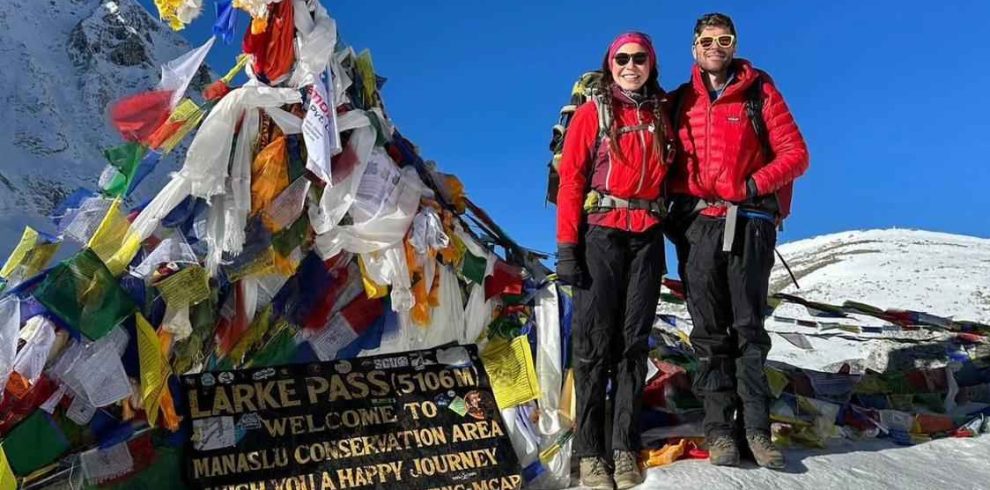
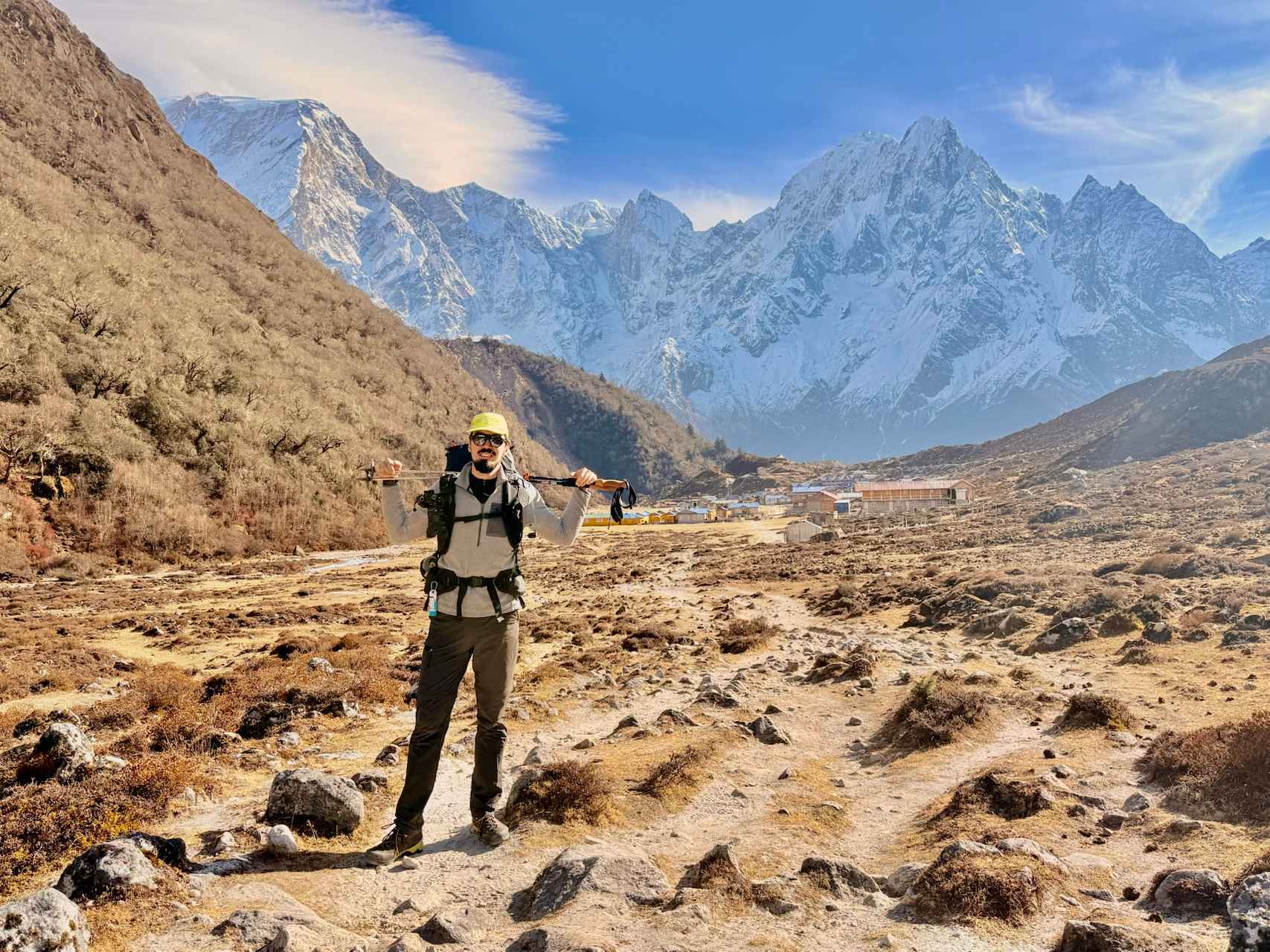
Are you interested in mountain photography and videography and looking for a quieter Himalayan route with more time at key viewpoints? The Manaslu Circuit Photography Trekking 2026 is a specialized trekking package designed for photographers who need flexibility in walking hours and enough time to work with light and changing mountain conditions. The trek follows the Manaslu Circuit route through the Budhi Gandaki valley, traditional Gurung and Tibetan influenced villages, high alpine terrain, and glacier zones before crossing Larkya La Pass at 5,106 meters
Manaslu Circuit Photography Trek Cost 2026
The Manaslu Circuit Photography Trek cost for 2026 starts from USD $885 per person and goes up to USD 1,350 per person.
This is a 100% all-inclusive price, which means there are no hidden costs, no surprise charges, and no extra payments after you arrive.
Manaslu Circuit Photography Trek Overview
The Manaslu Photography Trekking 2026 is a specialised Manaslu Circuit trekking package designed for photographers who require flexibility in walking hours and sufficient time at key viewpoints.
The Manaslu photography trek itinerary is paced to support photography rather than speed. Extra time is planned in visually important areas such as Samagaun and the upper Manaslu region, where light conditions change rapidly during morning and evening hours. Daily distances remain moderate to reduce fatigue and allow better focus on photography at altitude.
The Manaslu Photography Trek 2026 is suitable for photographers with previous trekking experience who are comfortable walking at altitude and prefer quieter trails with minimal crowd presence. The package emphasizes safe logistics, steady acclimatization, and access to strong natural compositions across one of Nepal’s least disturbed trekking regions.
Manaslu Photography Trek – Outline Itinerary
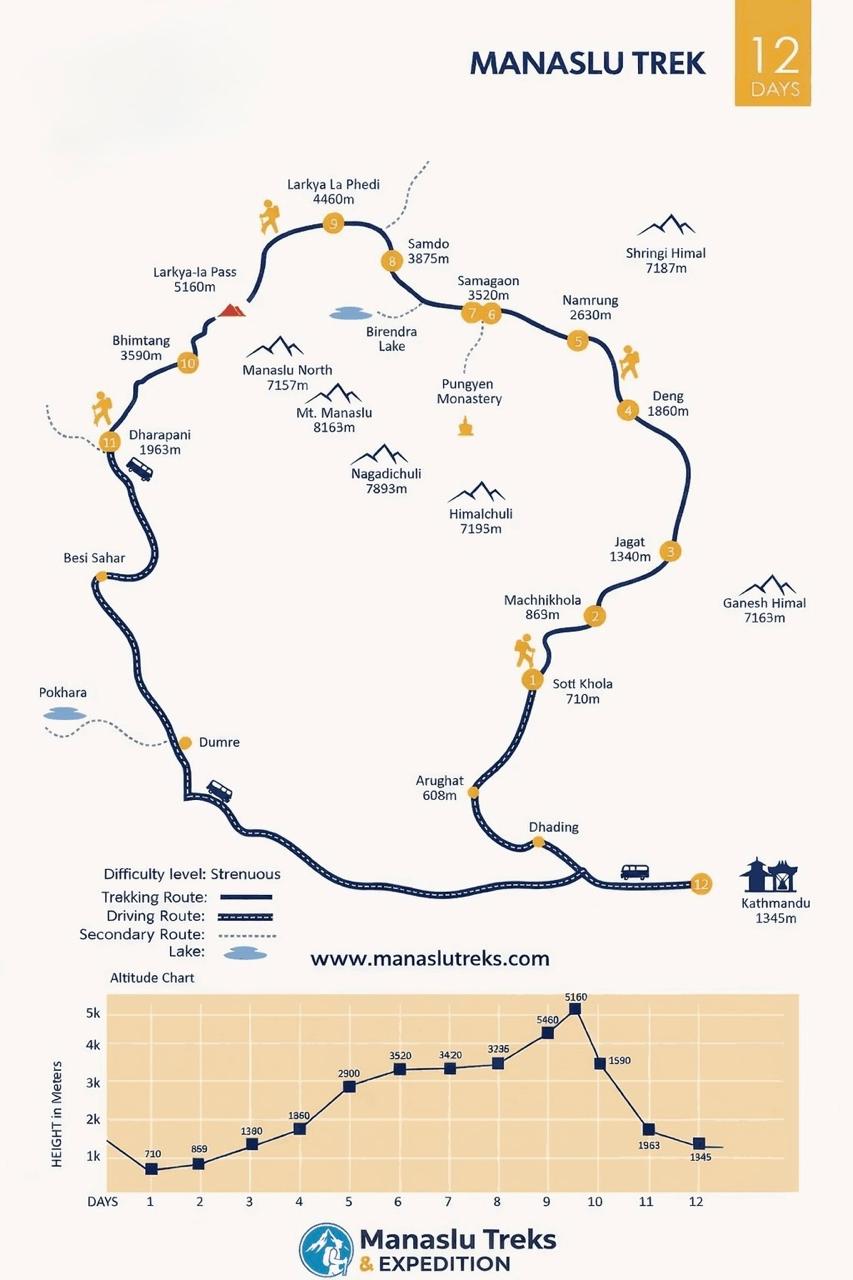
Day 01: Kathmandu to Machhakhola – road journey photography
Day 02: Machhakhola to Jagat – river gorge and village photography
Day 03: Jagat to Deng – stone villages and cultural photography
Day 04: Deng to Namrung – forest trails and mountain views
Day 05: Namrung to Shyala – Mount Manaslu sunset photography
Day 06: Shyala to Samagaun via Pungen Gompa – monastery and wide landscape photography
Day 07: Samagaun acclimatization – sunrise photography, Birendra Lake, yaks, monastery
Day 08: Samagaun to Samdo – high altitude landscape photography
Day 09: Samdo to Dharamsala – sunset mountain photography
Day 10: Dharamsala to Bimthang via Larkya La Pass – sunrise and high pass photography
Day 11: Bimthang to Tilije – greenery, river, mountain angle photography
Day 12: Besisahar to Kathmandu – return journey photography
Best Time to Do the Manaslu Photography Treking
The best time to do a Manaslu photography trek is during autumn (late September to November) and spring (March to May). These seasons offer the most reliable weather, good light conditions, and clear mountain views along the Manaslu Circuit.
Autumn is the best season for photography treks in the Manaslu. After the monsoon, the air is clean and dry, providing sharp visibility of peaks like Mount Manaslu, Himalchuli, and Ganesh Himal. Weather is stable, making sunrise and sunset photography more predictable. Autumn is also ideal for wide landscape and night photography due to clear skies and minimal light pollution.
Spring offers warmer temperatures and more color in the landscape. Rhododendron forests bloom at lower elevations, and snow remains on higher peaks, creating good contrast. Mornings are usually clear, though clouds may form later in the day. This season is well suited for nature, village, and mixed landscape photography.
Best months for photography
- Best overall: October and April
- Best mountain visibility: Late September to early November
- Best color and greenery: March to May
Monsoon and winter are generally not recommended for photography-focused Manaslu treks due to cloud cover, rain, or heavy snow at higher elevations.
Highlights
- Photography focused trekking pace with flexible walking hours
- Quiet Manaslu Circuit route with minimal crowd presence
- Sunrise and sunset photography opportunities near Samagaun, lho,samdo,Dharmasala and Larkya La Pass
- Wide Himalayan landscapes including Mount Manaslu, glaciers, and alpine valleys
- Traditional villages influenced by Tibetan culture and daily mountain life
- Licensed local trekking guide experienced with photography groups
- Porter support for carrying camera equipment and personal gear
- Opportunities to photograph Himalayan wildlife such as yaks, blue sheep, Himalayan birds, and mountain dogs along the trail
- Well planned acclimatization for safe high altitude photography
Manaslu Photography Trek Itinerary
We can adjust the itinerary, duration, or services to match your needs. Contact us directly on WhatsApp or Email.Chat on WhatsApp Email Us
We leave Kathmandu early in the morning, usually between 6:00 and 7:00 am, to avoid city traffic and reach the hills before midday. The drive starts on the Prithvi Highway, following the Trishuli River through Mugling and Malekhu. This section is paved and busy, with roadside towns, local buses, and river views.
A proper lunch break is taken around Malekhu or Arughat area, depending on road conditions and traffic. Most stops are simple local restaurants serving dal bhat, noodles, or fried rice. After lunch, the route turns off the main highway toward Arughat, where the road condition starts to change.
Beyond Arughat, the drive becomes slower and rougher. The road follows the Budhi Gandaki River and passes through small villages, terraced hillsides, and landslide prone sections. A short tea break is usually taken at a roadside shop along this section to rest and stretch after the bumpy ride.
By late afternoon or early evening, we reach Machhakhola, a small settlement beside the river. This is where the Manaslu Circuit Trekking officially begins. After checking into a local teahouse, there is time to relax, organize trekking gear, and have dinner. Overnight stay at Machhakhola.
After breakfast at Machhakhola, the trek starts by following the Budhi Gandaki River upstream. The trail begins with a mix of stone paths and dirt sections, crossing small streams and passing through riverside settlements. Early in the day, there are a few short climbs and descents, which help the body warm up for the trek.
After a few hours of walking, we reach Tatopani, where a short rest is taken. The natural hot spring is located near the river, though most trekkers continue walking rather than stopping for a bath. From here, the trail climbs on stone steps to Doban and then continues through narrow gorges with waterfalls and hanging cliffs.
A lunch break is usually taken at a teahouse along the trail, often around Doban or Yaru depending on walking pace and trail conditions. After lunch, the path continues through forested sections and crosses several suspension bridges. The terrain becomes slightly steeper but remains manageable.
In the afternoon, the trail climbs gradually toward Jagat. The village is clearly different from earlier settlements, with stone paved streets and traditional houses. Jagat is an important stop on the Manaslu Circuit Trekking route as it serves as the entry checkpoint for the restricted area. Permits are checked here. Overnight stay in a local teahouse at Jagat.
After breakfast in Jagat, the trail continues deeper into the Manaslu region. Shortly after leaving the village, permits are checked again, and the path climbs gradually through forest and stone steps. The Budhi Gandaki River remains below the trail, and the gorge becomes narrower as the day goes on.
The walk includes a steady mix of ups and downs. We pass through small villages such as Salleri and Sirdibas, where Tibetan influence becomes more visible in prayer flags, mani walls, and traditional stone houses. A tea break is usually taken at one of these villages, giving time to rest and enjoy the surroundings.
Beyond Sirdibas, the trail crosses a suspension bridge and enters a more rugged section with cliffs and river views. The landscape feels more remote compared to the previous days. A lunch break is taken at a local teahouse, often at Philim or nearby settlements, depending on walking pace.
After lunch, the trail continues through forested areas and climbs gradually toward Deng. The air feels cooler, and the villages become quieter as altitude increases. Deng is a small settlement but an important stop for the Manaslu Circuit Trekking route. Arrival is usually in the mid to late afternoon, leaving time to rest and recover. Overnight stay in a local teahouse at Deng.
After breakfast in Deng, the trail starts with a gradual climb through forested paths and small villages. The sound of the Budhi Gandaki River stays with us for most of the morning. The terrain becomes steeper compared to previous days, and the stone steps are more frequent.
We pass through settlements such as Rana and Bihi Phedi, where the influence of Tibetan culture is more noticeable in houses, chortens, and mani walls. A short tea break is usually taken along the way, often in one of these villages, allowing time to rest and hydrate.
The trail continues with a steady ascent through pine and rhododendron forest. Suspension bridges cross deep river gorges, and waterfalls appear along the cliffs, especially during spring and early autumn. A lunch break is taken at a teahouse on the trail, depending on walking pace and weather.
After lunch, the path climbs more directly toward Namrung. As altitude increases, the air feels cooler, and mountain views begin to open up when the weather is clear. Namrung is a well arranged village with stone houses and open fields, and it marks an important point on the Manaslu Circuit Trekking route for acclimatization. Arrival is usually in the afternoon, with time to rest and explore the village. Overnight stay in a local teahouse at Namrung.
After breakfast in Namrung, the trail climbs gently through forest and stone villages. The walking is relaxed and steady, making this one of the most comfortable days on the Manaslu Circuit Trekking route. As we gain altitude, the landscape opens up and the air feels cooler and cleaner.
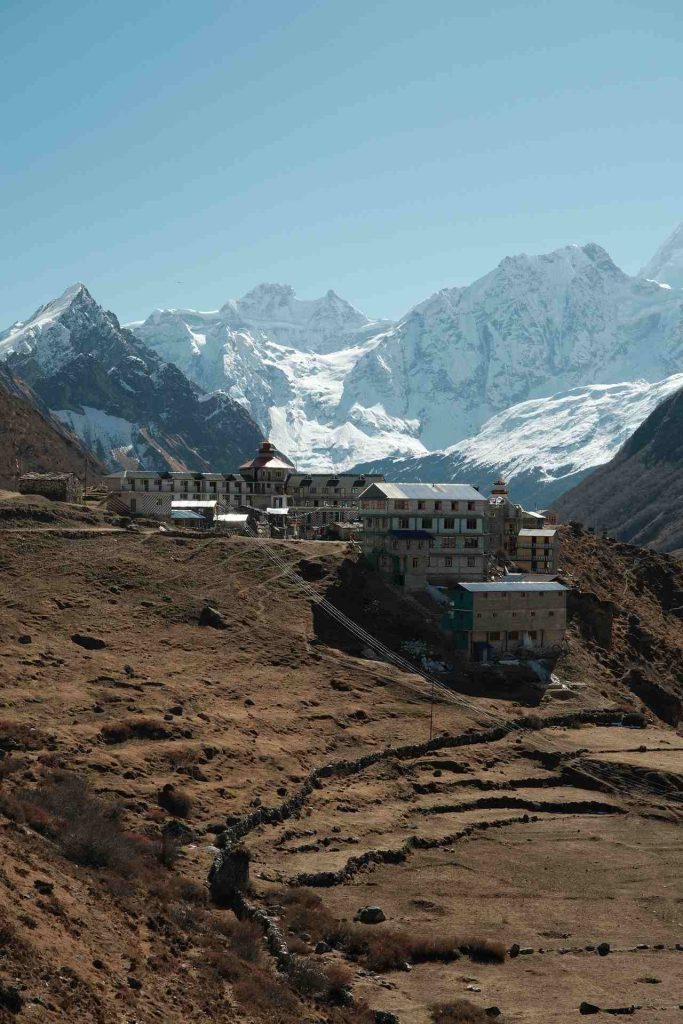
After passing Lho village, the trail continues toward Shyala, a wide open settlement surrounded by mountains on almost every side. Peaks such as Manaslu, Himalchuli, and Ngadi Chuli become clearly visible when the weather is good. The valley around Shyala is broad and flat, which makes walking easy and photography natural.
We usually reach Shyala by late morning or early afternoon, leaving plenty of time to rest and explore the area. Shyala is considered one of the best places for landscape photography on the Manaslu Circuit Trek with Photography because of its wide foregrounds, grazing yaks, stone walls, and uninterrupted mountain views.
The sunset at Shyala is one of the highlights of the Manaslu Photography Trekking experience. In the late afternoon, warm light hits Mount Manaslu and the surrounding peaks from the side, creating strong contrast and depth. The open valley allows clean compositions without obstacles or crowds.
The next morning sunrise at Shyala is equally strong. Early light reaches the peaks directly, often with mist in the valley and yaks moving across the fields. Clear mornings here offer some of the best sunrise photographs of Mount Manaslu during the entire trek.
Overnight stay in a local teahouse at Shyala.
The day starts early in Samagaun with sunrise photography. On clear mornings, the view is wide and powerful, with Mount Manaslu dominating the valley. First light reaches the peaks directly, creating strong contrast between snow, rock, and sky. The open landscape around Samagaun allows clean compositions with stone houses, prayer flags, and yaks moving through the fields. This sunrise is considered one of the most impressive on the Manaslu Circuit Trek with Photography.
After breakfast, we walk toward Pungen Gompa, following a gradual trail that climbs above the valley. The walk is steady and not rushed, allowing time to stop and photograph changing angles of Mount Manaslu and the glacier below. As height is gained, the view becomes broader and more dramatic.
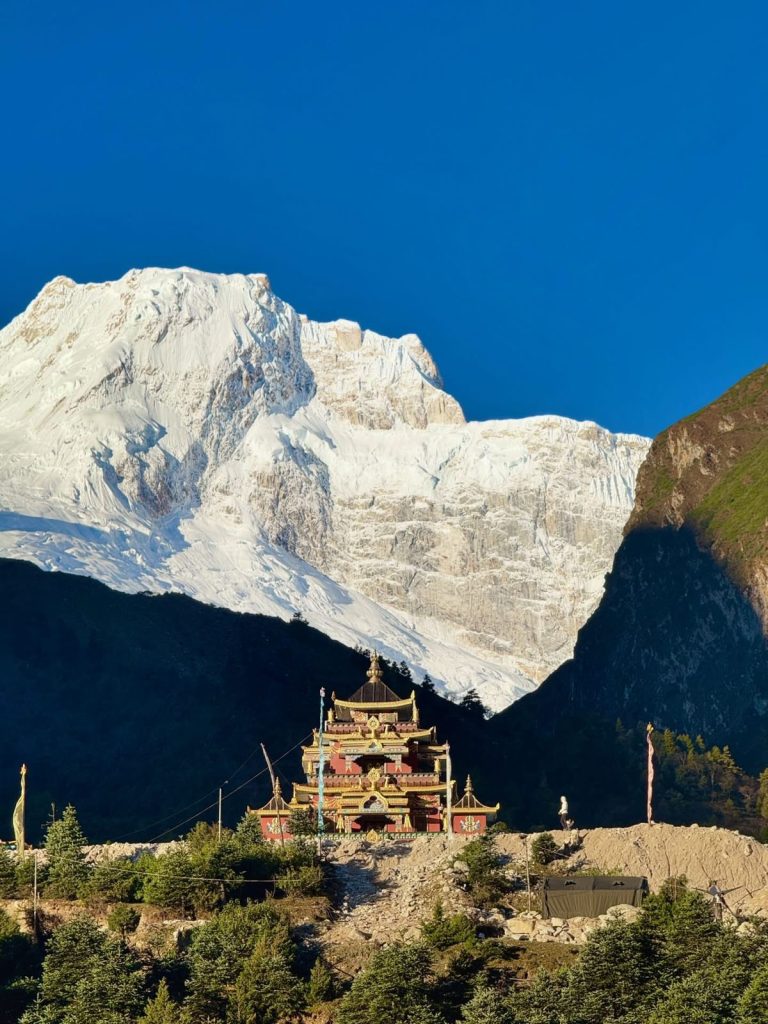
Pungen Gompa offers one of the most open and massive viewpoints in the Manaslu region. From here, Mount Manaslu, surrounding peaks, and the glacier spread out clearly in front. The setting is quiet, surrounded by high mountains and prayer flags, giving a strong sense of space and isolation. Many trekkers describe this place as one of the most peaceful and visually striking locations on the Manaslu photography trekking route.
Time is spent around the gompa for photography and rest before returning to Samagaun in the afternoon. The evening is relaxed, with time to review photographs and prepare for the next section of the Manaslu Circuit Trekking route. Overnight stay in Samagaun.
Day seven is an acclimatization day at Samagaun and one of the most important days for Manaslu photography trekking. Samagaun lies in a wide open valley below Mount Manaslu, offering space, light, and strong mountain views in every direction.
The day begins early with sunrise photography around Samagaun. On clear mornings, first light reaches Mount Manaslu and nearby peaks, creating a massive view across the valley. Stone houses, prayer flags, yaks moving through the fields, and morning smoke from village kitchens provide natural foregrounds that are difficult to find on busier trekking routes.
After breakfast, we walk toward Birendra Lake, following the trail that also leads in the direction of Manaslu Base Camp. The walk is gradual and suitable for acclimatization, allowing the body to adjust while staying active. Along the way, views of glaciers, moraines, and surrounding peaks continue to open up.
Birendra Lake sits below the Manaslu glacier and is one of the most photogenic locations in the region. The turquoise water, ice formations, and mountain backdrop create strong compositions, especially in calm weather. This area is also good for photographing yaks grazing near the lake and along the trail.
After spending time around the lake, we return toward Samagaun, often stopping near a local monastery or small café for tea. These stops offer simple but authentic moments to photograph village life and rest before descending.
The afternoon is relaxed, giving time to recover, review photographs, and prepare for the higher sections of the Manaslu Circuit Trekking route. Overnight stay in a local teahouse at Samagaun.
After breakfast, we trek from Samagaun to Samdo following a gradual trail through open alpine terrain. The walk is short and steady, suitable for high altitude conditions. Along the way, yaks and wide mountain views are common. We reach Samdo by late morning or early afternoon and spend the rest of the day resting and exploring the village. Overnight stay at Samdo.
After breakfast in Samdo, we trek gradually toward Dharamsala, also known as Larkya Phedi. The trail passes through open high altitude terrain with a steady climb. We reach Dharamsala by early afternoon, giving time to rest and adjust to the altitude. In the late afternoon, weather permitting, sunset light on the surrounding peaks offers quiet photography opportunities, with clean mountain views and dramatic shadows. Overnight stay at Dharamsala.
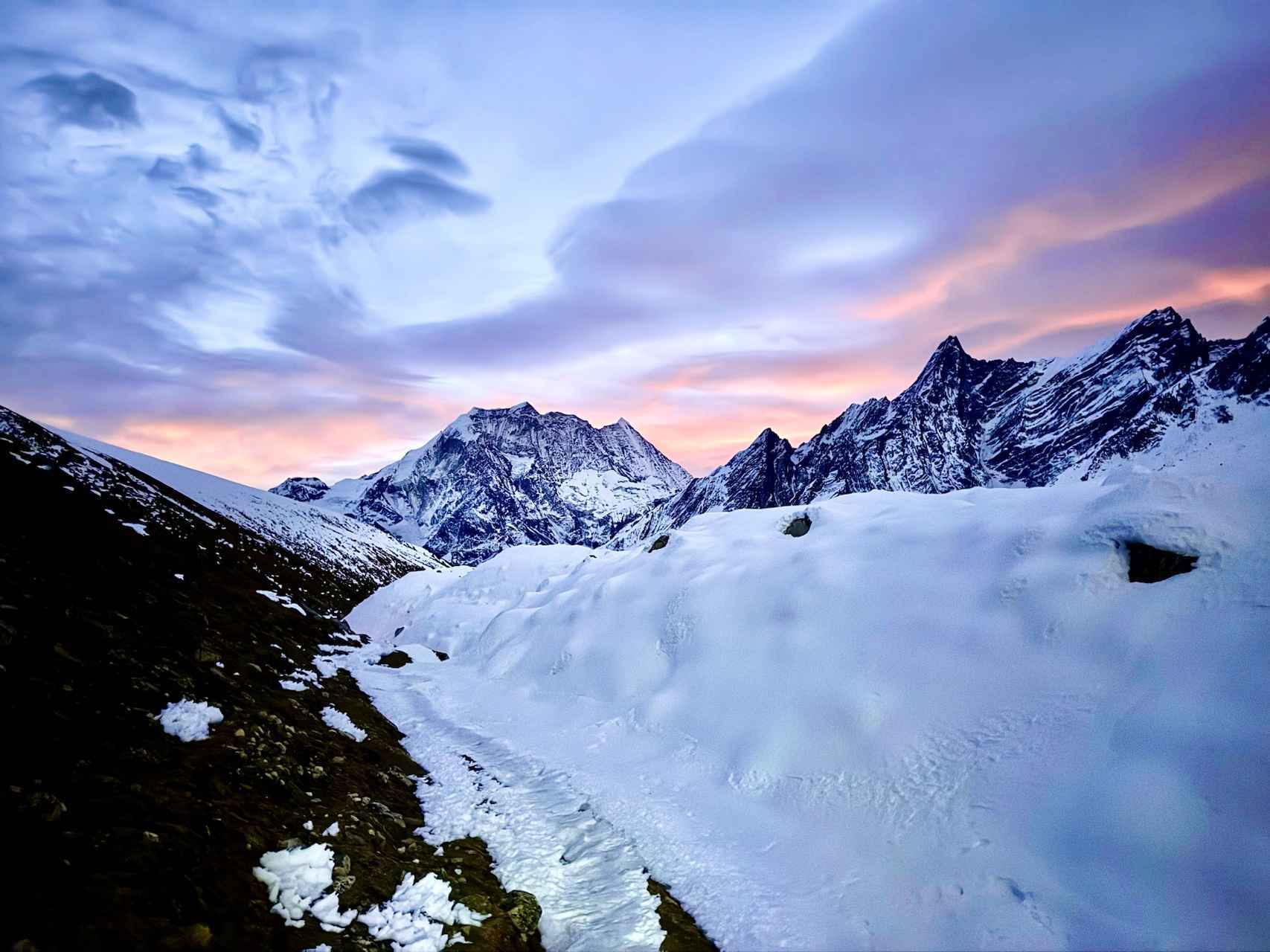
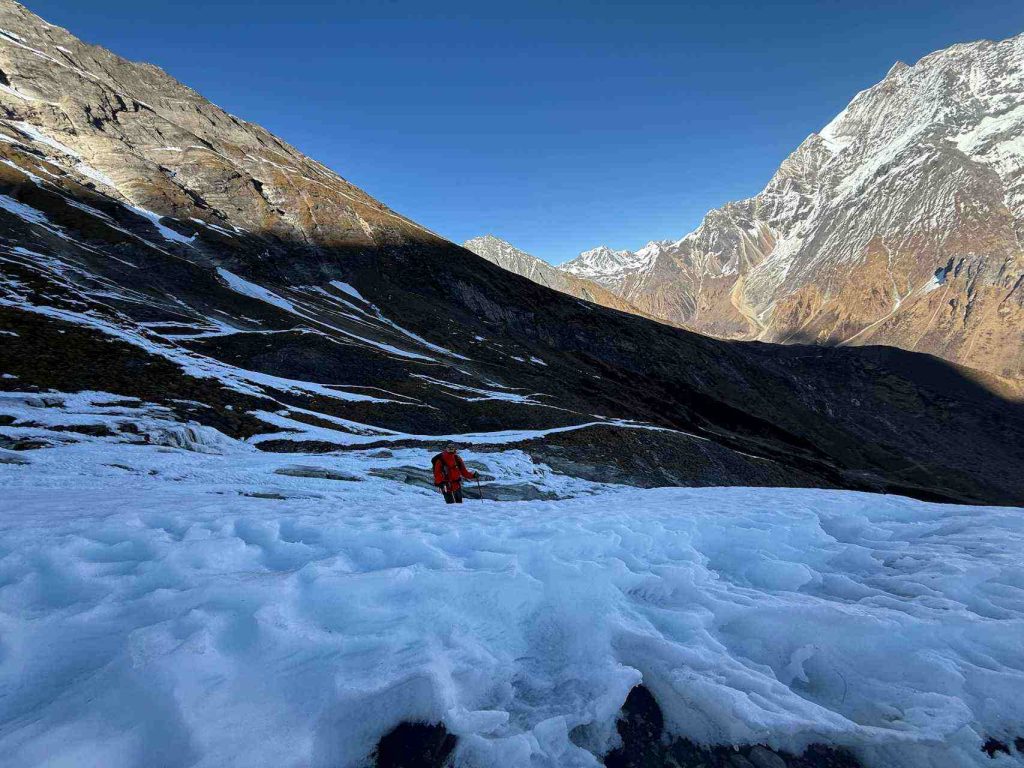
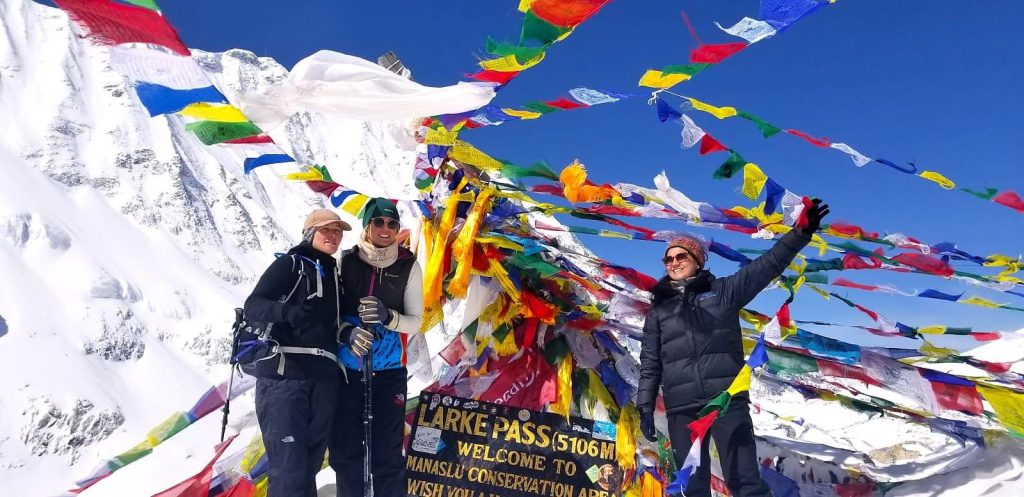
We start early before sunrise for the crossing of Larkya La Pass. The climb is gradual but long, and the air is cold. At the top of the pass, weather permitting, there are wide views of surrounding peaks and glaciers, making this one of the most important photography moments of the Manaslu Circuit Trek with Photography. After crossing the pass, we descend steadily through snow fields and glacial terrain to Bimthang. Overnight stay at Bimthang.
After breakfast at Bimthang, we descend through alpine terrain and forested trails. As altitude decreases, the landscape becomes greener, with forests, rivers, and pasture land along the way. The trail follows mountain streams and passes small settlements. On clear sections, Mount Manaslu can be seen from a different angle, offering a final perspective of the massif. We reach Tilije in the afternoon and have time to rest and relax. Overnight stay at Tilije.
After breakfast in Besisahar, we take a jeep for the short transfer out of the town before continuing the journey to Kathmandu by local bus. The drive follows the Marsyangdi River and later joins the main highway. Total travel time is around 6 to 7 hours, covering approximately 200 kilometers. We arrive in Kathmandu by late afternoon or early evening. In the evening, a farewell dinner is organized, where trekkers receive a trek achievement award to mark the successful completion of the Manaslu Circuit trek.
Includes/Excludes
Cost Includes
- Airport pick-up and drop-off in Kathmandu
- Ground transportation: Kathmandu to Machha Khola and Dharapani to Kathmandu by bus
- All necessary permits: Manaslu Restricted Area Permit, Manaslu Conservation Area Permit (MCAP), and Annapurna Conservation Area Permit (ACAP)
- Licensed, English-speaking local trekking guide
- Porter service (1 porter for every 2 trekkers, carrying up to 22 kg total)
- Three meals a day (breakfast, lunch, dinner) during the trek
- Morning tea or coffee every trekking day
- Lodge/teahouse accommodation during the trek
- Sleeping bag and down jacket (to be returned after the trek)
- Trekking map of the Manaslu Circuit
- Trekking completion certificate from Manaslu Treks & Expedition
- Farewell dinner in Kathmandu hosted by Manaslu Treks & Expedition
- First-aid kit carried by the guide
- All government taxes and local charges
Cost Excludes
- Nepal visa fee (available on arrival at Tribhuvan International Airport)
- International airfare to and from Kathmandu
- Travel insurance (must include emergency evacuation coverage)
- Hotel & Meals in Kathmandu (lunch and dinner)
- Personal expenses like snacks, bottled water, soft drinks, alcohol, Wi-Fi, battery charging, and hot showers during the trek
- Tips for guide and porter
- Any services not mentioned in the “Included” section
Join Our Fixed Trip Starting Date
Contact us for private trip
- SEND EMAIL INFO@MANASLUTREKS.COM
- MAKE CALL ON WHATSAPP
-
Group Discount Available GuaranteedSaturdayMay 30, 2026WednesdayJun 10, 2026$1,350$88534% OFFAvailable
-
Group Discount Available GuaranteedSundayMay 31, 2026ThursdayJun 11, 2026$1,350$88534% OFFAvailable
-
Group Discount Available GuaranteedMondayJun 1, 2026FridayJun 12, 2026$1,350$88534% OFFAvailable
Manaslu Circuit Photography Trek – 12 Days Route Map
Essential Information
What Camera Gear to Bring on the Manaslu Photography Trek
Trekkers who overpack their camera bag struggle most on the high passes. Trekkers who underpack regret it at Shyala. The right setup for this route is built around what the trail actually demands, not what a gear list from the internet suggests.
Camera Body
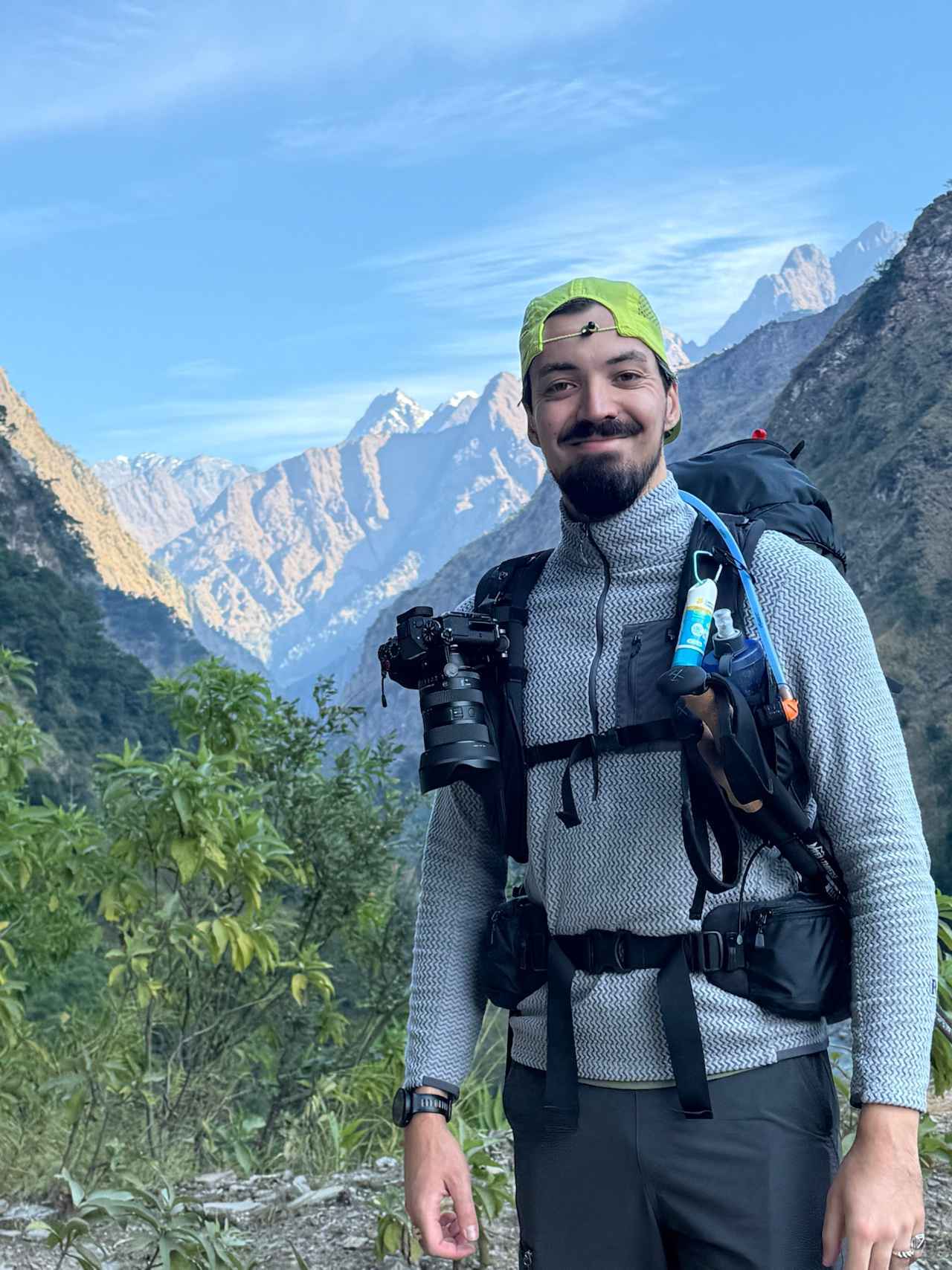
A mirrorless body works better here than a DSLR in most situations. It is lighter, handles cold more consistently, and the electronic viewfinder lets you see your exposure before you press the shutter. This matters when you are shooting snow and dark rock in the same frame at 5,000 metres and you need to get the exposure right quickly. Bring your main body and one compact backup. Above Samagaun there is no repair option and no way to replace equipment.
Lenses
Three focal lengths cover the majority of what this route offers.
A wide angle in the 16 to 24mm range handles the open valley floors at Shyala, the glacier panorama from Pungen Gompa, and monastery interiors where you cannot step back far enough. A mid range zoom from 24 to 70mm is the lens that stays on the body most of the day. It handles village life, yak portraits, trail scenes, and general landscape work without constant lens changes. A telephoto of at least 100 to 400mm is worth the extra weight if wildlife is a priority. Blue sheep on the slopes above Samdo do not come close enough for anything shorter.
Heavy prime lenses are not worth the tradeoff on this trek unless you are shooting for a specific publication assignment. The trails are uneven, the altitude is real, and every extra kilogram in your daypack costs you energy that is better spent staying sharp at 5,000 metres.
Filters
A circular polariser is not optional on this route. High altitude sunlight hits glacier surfaces and snowfields with an intensity that is genuinely different from what you experience at lower elevations. A polariser cuts the glare and brings out texture in the ice. A 3 stop ND filter is useful for slower shutter work on the river sections between Machhakhola and Jagat in the lower gorge, where the water moves fast and the light is manageable.
Batteries
Cold destroys battery performance in ways that catch most photographers off guard on this trek. At Dharamsala the night before the Larkya La crossing, temperatures fall well below zero. A battery showing 80 percent before you sleep will read under 20 percent when you wake at 4am. That is not a product failure. That is what cold does to lithium cells at altitude.
The fix costs nothing: sleep with your batteries. Every night from Samagaun onward, put your spares inside your sleeping bag or in the inner pocket of a jacket. This single habit recovers more usable capacity than any other preparation. Carry three batteries minimum per camera body. Two is not a safe number on a 12 day trek above 5,000 metres.
Teahouse charging is available up to Samagaun for roughly NPR 200 to 300 per charge. Above that point, electricity is solar dependent and unreliable. Do not build your shooting plan around teahouse power above Samagaun. A 20,000mAh power bank kept warm at night alongside your batteries is the reliable option.
Memory Cards
Bring more than you think you will need. Most photographers on this route are not doing nightly transfers to a laptop. Power at higher elevations is too unreliable for that kind of workflow. A 256GB primary card plus two 128GB backups is a solid setup for 12 days of heavy shooting. If your body has dual card slots, write to both simultaneously. It adds no effort and protects everything you shoot.
Protecting Gear from Condensation
The moment most photographers do not think about is coming indoors. When a cold lens enters a warm teahouse, moisture from the air condenses on the glass and can work into the barrel over time. Leave your camera in the bag for 15 to 20 minutes when you first come inside and let the temperature equalise slowly. This is especially worth doing after the Larkya La crossing, when you descend from serious cold at the pass into the comparatively warm valley air at Bimthang.
When the Light Hits: Photography Windows Along the Route
At high altitude, golden hour is shorter than most photographers expect. The air is thinner and cleaner, which means warm light arrives fast and goes flat fast. The window is roughly 25 to 30 minutes of genuinely usable golden light at each location before the quality drops. Knowing the window in advance means you are already in position when it opens, not searching for a composition at the wrong moment.
The timings below are based on October and April, the two recommended seasons for this trek. Adjust 10 to 15 minutes earlier for late September and late March.
| Location | Sunrise window | Sunset window | Best position |
|---|---|---|---|
| Shyala 3,500m — Day 5 |
First light on Manaslu summit around 06:05 in October, 05:50 in April | Last warm light around 17:20 in October, 18:00 in April | 200 to 300m north of the teahouse cluster facing northeast for sunrise. Western edge of the village near stone walls for sunset with yaks returning to enclosures around 16:30. |
| Samagaun 3,530m — Days 6 and 7 |
First light on Manaslu around 06:10 in October. Birendra Lake reflections hold until around 07:30 before wind comes up. | Wide open plateau view from elevated ground south of the village | Slightly raised ground 100m south of the main teahouses for sunrise. The lake is a 45 minute walk and needs to be reached before breakfast for calm water. |
| Pungen Gompa 4,050m — Day 6 |
Not the priority here | Midday light from 11:00 to 13:30 is the usable window. The glacier faces slightly west and the sun rakes across the ice surface during these hours, creating shadow lines in the crevasses that front-lit conditions would not reveal. | Open viewpoint above Samagaun facing directly across at the Manaslu glacier |
| Dharamsala 4,460m — Day 9 |
Not recommended — the pass departure happens well before dawn | Last warm light around 17:10 in October. High open plateau with peaks above 6,000m in every direction and almost no human structure in frame. | Open ground above the teahouses. Temperature drops sharply once the sun goes below the ridge. Keep a spare battery in your jacket pocket. |
| Larkya La Pass 5,106m — Day 10 |
First light reaches the pass around 06:15 to 06:40 in October. Departure from Dharamsala is around 04:00 to 04:30. | Not applicable | The summit cairn area with deep shadow in the valleys below and lit peaks above. Keep the camera in your pack’s top pocket so you can access it quickly without stopping the group for long in the cold. |
Cloud behaviour on this route follows a fairly predictable pattern in the peak seasons. Mornings are generally clear until around 10:00 to 11:00. Clouds build through the afternoon and often clear again by late afternoon. If a morning is unusually clear at a key location, it is worth adjusting the day to stay longer. The photography trek itinerary is built with this kind of flexibility in mind.
Photographing People, Places, and Wildlife on the Manaslu Circuit
The Manaslu region has not been shaped by mass tourism the way Everest and Annapurna have. The villages above Deng and through the high valley settlements are places where people live quietly and on their own terms. That is a large part of what makes the photography here worth the effort. It is also why the way you approach it matters.
Village Life and Portraits
A simple gesture asking permission before photographing someone goes a long way in these communities. When the answer is yes the photograph usually shows it in the person’s comfort and openness. When the answer is no the camera goes down. Older residents and practicing monks are often less comfortable with cameras than younger villagers. Photograph religious ceremonies or prayer sessions only when your trek guide has confirmed it is appropriate for that specific location.
Children in Manaslu villages are curious and often willing to interact. The better portraits usually come from spending a few minutes sitting nearby while they go about what they were already doing rather than approaching with a camera raised. When a child is performing for the camera rather than just being themselves the photograph shows exactly that. Patience produces better results than speed in these situations.
Do not give children money or sweets in exchange for photographs. This is a documented problem on heavily visited trekking routes and it changes the dynamic of small communities that see trekking groups repeatedly over many years.
Religious Sites and Objects
Mani walls, prayer flags, chortens, and gompas along the Manaslu route are active religious structures. Walk around mani walls on the left side. Do not move or rearrange prayer flags or mani stones for a better composition. The gompas at Samagaun and Samdo have monks living and practicing in them. Treat these spaces the way you would want a stranger to treat a place that matters deeply to you. Ask before entering and ask before pointing a camera inside.
Yaks and Wildlife
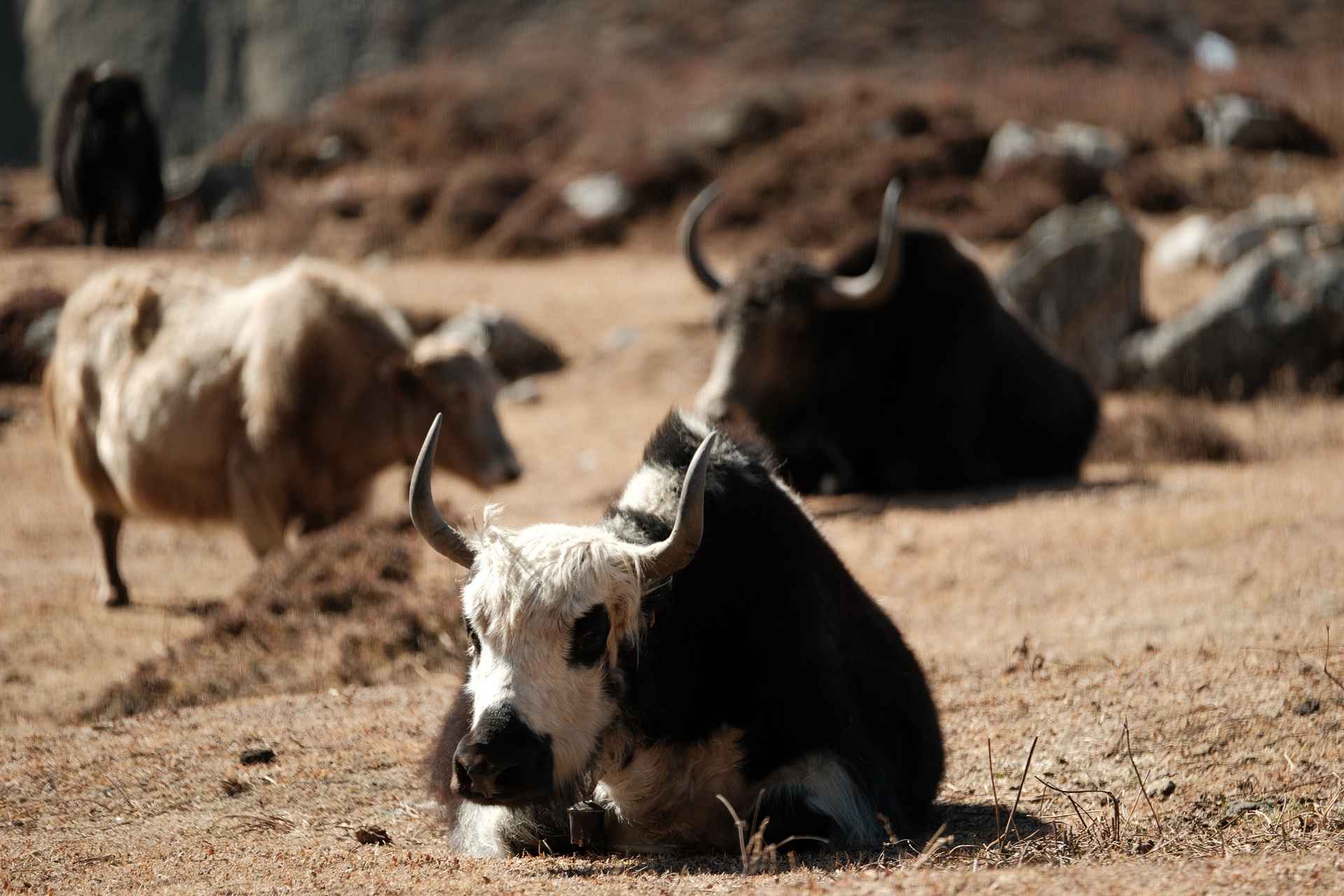
Yaks on the Manaslu trail are working animals, not tame. Keep a safe distance when photographing them and do not step between a yak and its handler on a narrow trail. A 100 to 400mm telephoto lens lets you fill the frame without being close enough to cause a problem. The best yak images on this route come from Shyala in the early morning and from the grazing areas around Samagaun before the herders bring them in for the evening around 16:30.
Blue sheep are most common on the rocky slopes above Samdo and on the terrain approaching Larkya La. They are skittish and will move away from a group that is noisy or moving fast. Staying quiet and keeping the group together gives you the best chance of a close approach. A telephoto lens is not optional for wildlife on this route.
Night Sky Photography
The Manaslu region has almost no artificial light pollution above Samagaun. On clear nights from Samagaun, Samdo, or Dharamsala the sky is the kind that most photographers from cities rarely encounter. The Milky Way is visible to the naked eye on new moon nights from late September through November.
A fast wide angle lens at f/1.8 to f/2.8 works best for astrophotography at this altitude. ISO 3200 to 6400 on a modern mirrorless body produces clean results. The cold air that creates battery problems during the day actually reduces digital noise on long exposures, which works in your favour at night. If night sky photography is a priority for your trip, plan your dates around the new moon calendar. A remote shutter release keeps camera shake out of the equation.
A compact carbon fibre tripod with a ballhead is the practical choice for this route. The ground above 4,000 metres is mostly rock and uneven terrain. A heavy tripod is not practical here and most photographers who bring one regret carrying it by day three.
Porter Support for Camera Equipment
The photography trek includes one porter for every two trekkers, carrying up to 22 kilograms total. For photographers travelling with multiple bodies, lenses, a tripod, and a full personal kit, this ratio is worth thinking through before you pack.
Camera bags are handled differently from a standard trekking duffel. Padded bags and hard cases stay on top of the porter’s load and are not placed on wet ground during rest stops. If you are bringing a rigid camera case, let us know before the trek starts so we can confirm the load arrangement and discuss whether an additional porter makes sense for your specific kit.
A telephoto lens and a second body add roughly 3 to 4 kilograms to a basic photography setup. Combined with a tripod, filters, spare batteries, and cards, a serious kit can run 8 to 10 kilograms on its own. Most photographers carry their active shooting kit in a daypack on the trail and put everything else in the porter’s load. This setup keeps camera access fast without carrying unnecessary weight through the day.
If you have specific packing concerns about your equipment, contact us before departure and we can go through the logistics together.
How the Photography Trek Differs from the Standard Manaslu Circuit
The route is the same. The villages, the permits, the passes, and the accommodation are identical. What changes is how each day is structured and how decisions are made on the trail.
| Standard Manaslu Circuit Trek | Manaslu Photography Trek |
|---|---|
| Departure timed to arrive at the next stop before afternoon clouds build | Departure timed around morning light. The group stays at sunrise viewpoints until the light goes flat and then moves |
| One night at Shyala | Arrival at Shyala in the early afternoon to allow time for scouting positions before the sunset window opens |
| One acclimatisation day at Samagaun | One full day at Samagaun structured around the sunrise session, the morning walk to Birendra Lake, a midday rest, and late afternoon shooting in the village |
| Guide focused on group pace, safety, and daily schedule | Guide familiar with light windows and the specific positions at each key location that produce the strongest compositions |
| Daily distances set to cover the itinerary on schedule | Shorter walking days in the upper section to reduce fatigue at altitude and keep concentration sharp for photography |
| Group sizes up to 10 or more trekkers | Smaller groups work better for wildlife photography and for authentic candid work in the villages |
The extra time at key locations is the core difference. Photography requires patience and stillness that a standard trekking schedule does not always leave room for. The photography trek is built around that reality from the start rather than treating photography as something you do while also trying to cover the circuit on a fixed daily distance plan.
Best Time for the Manaslu Photography Trek
The Manaslu Circuit is open year round but the photography conditions are not equal across all months. Two seasons stand well above the rest and within those two seasons, certain weeks are noticeably better than others for mountain visibility, light quality, and the kind of trail conditions that let you move comfortably with camera equipment.
Autumn — Late September to Late November
This is the strongest season for photography on the Manaslu Circuit. The monsoon ends in mid September and by late September the air has been washed clean. Visibility is sharp, the mountains are clear for long stretches, and the light has a quality that is genuinely different from spring. October is the peak of the season for a reason. The sky is deep blue, snowfall has refreshed the higher peaks, and the villages are active with harvest work, yaks moving between pastures, and daily life happening at its fullest.
Late October into early November is slightly colder but often the clearest period of the year. The crowds on the trail are at their highest during October but the Manaslu Circuit with its restricted permit system stays much quieter than Everest and Annapurna even at peak season. By mid November the temperatures at altitude drop seriously and the Larkya La crossing becomes more demanding with snow on the pass.
Best weeks for photography: first week of October to first week of November.
Spring — March to Late May
Spring is the second best season and it has qualities that autumn does not. Rhododendron forests at the lower elevations between Machhakhola and Jagat bloom from mid March through April, adding colour to the lower trail that the autumn season does not offer. The light in spring mornings is softer and warmer than autumn at the same hours. Snow still sits on the upper peaks but temperatures on the trail are rising, which makes the walking more comfortable for trekkers who find deep autumn cold difficult.
The main drawback in spring is afternoon cloud. By 11am to midday on most spring days, clouds begin building over the high terrain. This compresses your useful photography window into the morning and the brief clearing that sometimes comes in the late afternoon. It is manageable with the right itinerary but it requires more patience than autumn where the clear windows are longer. April is the strongest spring month. May is warm and accessible but haze builds toward the end of the month as the pre-monsoon heat rises.
Best weeks for photography: mid April to first week of May.
Month by Month Breakdown
| Month | Mountain Visibility | Light Quality | Trail Conditions | For Photography |
|---|---|---|---|---|
| January | Clear but very cold | Sharp winter light | Heavy snow above 4,000m, Larkya La difficult | Not recommended |
| February | Clear, cold easing slightly | Good early light | Snow on high sections, cold nights | Not recommended |
| March | Good, increasing haze toward end | Warm morning light, good colour | Rhododendrons blooming lower elevations | Acceptable |
| April | Good in mornings, clouds build afternoon | Soft warm light, strong mornings | Good overall, rhododendrons at peak | Very good |
| May | Moderate, haze increasing | Warm but flatter toward month end | Warm, pre-monsoon humidity building | Early May only |
| June | Poor, monsoon cloud cover | Flat and overcast most days | Rain, leeches on lower trail, trail damage | Not recommended |
| July | Very poor | Flat overcast, heavy rain | Active monsoon, trail closures possible | Not recommended |
| August | Very poor | Overcast, occasional breaks | Active monsoon, highest rain of the year | Not recommended |
| September | Improving rapidly after mid month | Post-monsoon clarity building | Trail wet early, clearing by late September | Late September only |
| October | Excellent, best of the year | Deep blue sky, strong contrast, sharp shadows | Ideal, dry and stable | Best month overall |
| November | Very good, especially early month | Clear, cold, strong directional light | Cold nights, Larkya La requires preparation | Good, early November |
| December | Clear but very cold | Sharp winter light, short days | Snow on pass, very cold above 4,000m | Not recommended |
What the Seasons Actually Look Like on the Trail
October Morning at Shyala
You wake before 6am and the valley is completely still. There is no wind. The temperature is around zero or just below. Manaslu’s summit catches the first light before anything else in the valley, a narrow band of gold on the top third of the mountain while everything below is still in cold blue shadow. That window, from first light on the summit to full illumination of the valley floor, is about 25 minutes. By 6:30 the light is already changing. By 7:00 it is flat. October mornings at Shyala are the reason photographers book this trek.
April Morning at Samagaun
Spring mornings at Samagaun are softer. The light comes up warmer and slower than in autumn and there is often a thin mist sitting in the lower part of the valley that burns off by 8am. The Manaslu massif reflects in Birendra Lake on calm mornings before the wind comes up. The rhododendrons are finished at this altitude but the green of new growth is coming through on the lower slopes. The monastery at Samagaun has a particular quality in April morning light that is harder to find in the harder contrast of October.
What Changes at High Altitude in Each Season
Above 4,000 metres, both seasons are cold at night. In October, daytime temperatures on the trail are comfortable for walking, often reaching 10 to 15 degrees Celsius in the mid morning. Nights at Dharamsala drop to minus 10 or below. In April, daytime temperatures are warmer but the gap between day and night is still significant above Samagaun. Battery management matters in both seasons. The routines around keeping batteries warm at night are not just for winter trekkers. They apply to anyone on this route from late September through November and from March through early May.
Choosing Your Dates Around the Moon
If night sky photography is a priority on your Manaslu trek, plan your dates around the new moon. The Milky Way is visible to the naked eye from Samagaun and Samdo on clear new moon nights from late September through November. The full moon washes out the sky completely. A first or last quarter moon gives you a few usable hours in the early night before it rises or after it sets.
The new moon falls on different dates each month. When you contact us to plan your departure, mention if astrophotography is a priority and we will match your itinerary so the nights at high altitude fall as close to the new moon as the trek schedule allows.
Full departure dates and availability for the Manaslu Photography Trek are listed on the trip page. For questions about specific dates, light conditions, or what to expect in a particular month, reach us directly through the Manaslu Treks contact page.
Photographing Yaks on the Manaslu Circuit
Yaks on the Manaslu trail are working animals and they are not used to strangers getting close. Most of the time they are calm and slow moving, but that changes quickly in one specific situation: when a female yak has a calf nearby. A mother yak protecting her young will charge without much warning and she is large enough to cause serious injury on a narrow trail. If you see a yak with a calf, do not approach. Keep at least 15 to 20 metres of distance and stay to the side of the trail where you have room to move back if needed.
The right lens for yak photography on this route is a telephoto. A 100 to 400mm range lets you fill the frame with a yak’s face, capture the texture of the thick coat, or shoot the herd moving across the valley without being anywhere near close enough to disturb them. The best light for yak photography is in the early morning at Shyala, when the herd is still spread across the open valley floor before the herders begin moving them, and in the late afternoon at Samagaun when they are being brought back toward the village. Both moments have good low angle light and natural movement in the frame.
On trail sections where yaks are being loaded or moved by handlers, always let the handler pass first. Step to the uphill side of the trail and stay still. Do not try to shoot from directly in front of a yak that is moving toward you on a narrow path. The photograph is not worth the risk and the animal has the right of way on its own terrain.
Always shoot from the safe side. Read the animal and the terrain before you raise the camera. A moment spent watching first saves you from a situation that moves faster than you expect.
Photographing Local People Along the Route
The villages on the Manaslu Circuit are among the most genuine communities left on any trekking route in Nepal. People here are not performing for tourism. They are farmers, herders, monastery workers, and families going about their day. That is exactly what makes the photography so rewarding and it is also why the approach matters.
Adults and Village Life
Always ask before you photograph someone. A simple gesture, a smile, pointing toward the camera, is enough in most cases. Most people along this route are warm and genuinely happy to be photographed when the request is respectful. They are not shy. They are not difficult. They are friendly people who respond to being treated as people rather than as subjects. When someone says no with a gesture or by turning away, put the camera down without making it awkward and move on.
Inside monastery kitchens and working areas, the rule is the same: ask first. Some of the most memorable images from this trek come from inside monastery spaces where monks or helpers are working, cooking, or going about daily tasks. These moments are completely accessible if you take a moment to communicate that you would like to photograph. Walk in, make eye contact, smile, gesture toward the camera. More often than not the answer is yes and the person goes back to what they were doing, which is when the real picture happens.
Take your photographs from a position that does not block doorways, disrupt movement, or put you in the middle of someone’s workspace. Step to the side, find an angle that works, and let the scene continue naturally. The best cultural photographs on this route are not posed. They happen when the person has forgotten the camera is there.
Children
Children along the Manaslu Circuit are among the most photogenic subjects on the trek, and they are genuinely friendly. They will often come toward you out of curiosity. The important thing is to still acknowledge their presence before raising the camera. A wave, a smile, a moment of actual interaction first. When a child is comfortable and engaged with you as a person rather than performing for a lens, the photographs are in a completely different category from the standard posed shot.
Do not give children money or sweets in exchange for photographs. It is a habit that has damaged the dynamic of many villages on popular trekking routes and it is not something the communities on the Manaslu Circuit need introduced here. The children are not asking for payment. They are just curious. Treat the interaction accordingly.
Teahouse Security and Protecting Your Gear
Teahouses on the Manaslu Circuit are simple, honest places run by local families. Theft is not a common issue on this route. That said, a 12 day trek through remote terrain with camera equipment, personal electronics, and travel documents requires basic habits that are easy to let slip when you are tired after a long day on the trail.
Lock Your Room
Every time you leave your teahouse room, lock the door with the key. Do not leave your room open with personal gear inside, even for a few minutes while you go to the dining area or the bathroom. This is not about distrust of the teahouse staff. It is a basic habit that removes any possibility of something going missing. Most teahouse rooms have a simple padlock. Use it every single time.
Before you leave the teahouse in the morning, do a final check of the room. Open the wardrobe, check under the bed, look on the window ledge. It takes 60 seconds and it is the only way to catch what you have left behind before you are two hours down the trail with no way back.
Battery Care at Night
This is one of the most practical habits on the entire trek and most photographers only learn it after losing a day of shooting to dead batteries. At high altitude, overnight temperatures drop well below freezing. A battery left exposed in your room overnight will lose a significant portion of its capacity by morning, sometimes enough to make it effectively useless for a full day of shooting.
Before you sleep, cover your batteries. Wrap them in a dry cloth, put them inside a small bag, and tuck them under your blanket or inside your sleeping bag. The body heat keeps them at a temperature where the cells hold their charge properly. This one habit makes a real difference from Samagaun onward where the cold at night is serious. It is not complicated and it costs nothing, but it is something a large number of photographers on high altitude treks miss until it causes a problem.
Things People Commonly Forget on the Manaslu Photography Trek
After many trips on this route, the same items come up again and again as things people wish they had brought or realise they left at the teahouse. Some of these are small. Some will affect your whole trek if they are missing. Go through this before you leave Kathmandu and again before you leave each teahouse.
- Camera charger. Not the cable. The actual wall charger. It gets left on the plug socket in Kathmandu hotel rooms more than almost anything else. Check it the night before you leave the city.
- GoPro and 360 camera. These get packed last and left behind first. They also do not require any special permit on the Manaslu Circuit, which means there is no reason not to bring them. Pack them with your main camera kit, not separately in a side bag where they are easy to forget.
- Camera lens caps and rear caps. A front element left exposed in a dusty pack for several hours creates problems that are expensive to fix. Carry a spare front cap for each lens.
- Trekking poles. People leave them leaning against the teahouse wall at the start of the day and walk out without them. Before you leave each morning, look back at the wall next to the entrance.
- Watch or basic timepiece. Your phone is useful but at high altitude with cold temperatures and limited charging, a simple watch for timing the light windows and the early morning pass departure is worth carrying separately.
- Dry cloth for lenses. Not a lens tissue. A soft, dry cloth you can use to wipe condensation off a lens quickly in the field without scratching the coating. Keep one in your jacket pocket, not buried in the bag.
- A small notebook. For writing down settings that worked at specific locations, light conditions at each viewpoint, or details about the people you photographed that you want to remember. Phone notes work until your phone battery is at 8 percent in the cold. A notebook always works.
- Small resealable bags. For keeping memory cards, lens caps, and small items separated and dry inside your camera bag. Dust and moisture on the trail get into everything. A few small bags weigh almost nothing and keep your kit organised.
The full packing checklist for the Manaslu Photography Trek is available on our trip page, along with the detailed itinerary, cost breakdown, and departure dates. If you have questions about specific gear for the route, contact us directly through the Manaslu Treks contact page and we will give you an honest answer based on what we have seen work on this route over many seasons.
Frequently Asked Questions (FAQ)
This trek is best suited for trekkers with previous hiking or trekking experience. The route involves long walking days, high altitude, and crossing Larkya La Pass at 5,160 meters, which requires good fitness and preparation.
Yes. The Manaslu region is a restricted area, and trekking is only allowed with a licensed guide. Independent trekking is not permitted on the Manaslu Circuit.
The itinerary is designed with shorter walking days, extra time at key locations like Shyala and Samagaun, and flexible schedules to allow sunrise and sunset photography without rushing.
The best seasons are spring from March to May and autumn from September to November. These periods offer clear skies, stable weather, and good light conditions for mountain photography.
Temperatures can drop below freezing at night above Samagaun, especially near Dharamsala and Bimthang. Warm clothing and proper layering are essential, particularly for early morning photography.
Yes, camera batteries can be charged at teahouses, but electricity is limited and often solar powered at higher altitudes. Carrying spare batteries or a power bank is strongly recommended.
You need the Manaslu Restricted Area Permit, Manaslu Conservation Area Permit, and Annapurna Conservation Area Permit. These are arranged as part of the trekking package.
Larkya La Pass is the most challenging day of the trek due to altitude and length. The ascent is gradual but long, and weather conditions can affect the crossing. A slow pace and early start are important.
Accommodation is provided in local teahouses along the route. Rooms are basic but clean, usually with twin beds. Facilities become simpler at higher elevations.
No. The Manaslu Circuit is much quieter than Everest and Annapurna routes. The restricted permit system limits the number of trekkers, making it ideal for photography and a peaceful trekking experience.
Yes. The Manaslu region is a restricted area, and flying a drone requires special government permission. Drone use is not allowed without prior approval. If you plan to fly a drone during the Manaslu Photography Trek, the required permits can be arranged in advance.
No. GoPro and 360 cameras do not require any special permission on the Manaslu Circuit Trek, as long as they are handheld and used for personal photography or video. These cameras are fully allowed throughout the trekking route.
The Manaslu Circuit Trek is better for quiet, raw landscapes and authentic village life with fewer crowds. The Everest Base Camp Photography trek offers more iconic mountain views like Everest and Ama Dablam, with easily accessible viewpoints.
For photography, Manaslu suits unique and peaceful shots, while Everest is ideal for classic Himalayan views.
-
 A Perfect Manaslu Trek for PhotographyBy Marco L October 23, 2025I joined the Manaslu Photography Trek and it was exactly what I was hoping for. The pace was slower than normal treks, which made a big difference for photography. We had time for sunrise and sunset, especially around Shyala and Samagaun, without feeling rushed. Susam, our guide, understood photography needs very well and was patient whenever we wanted to stop for light or compositions. The route itself is quiet and feels untouched compared to Everest or Annapurna. Mountains look different every day, and even the villages and yaks made great photo subjects. Binod, our porter, was strong, reliable, and always helpful, which made the trek much more comfortable. Overall, it was a well organized trek with space to enjoy the mountains and focus on photography. I came back with photos I wouldn’t have been able to take on a faster or busier trek.
-
A Peaceful and Beautiful Manaslu Trek ExperienceBy Jonas K September 3, 2025I recently completed the Manaslu Circuit trek with Manaslu Treks & Expedition, and it was an amazing experience from start to finish. We also included a monastery side visit along the route, which was absolutely worth the extra time and effort. The trip began with a detailed briefing in Kathmandu the evening before departure. Everything was clearly explained, and I felt well prepared for the days ahead. The company provided essential gear like a warm sleeping bag and jacket, along with water bottles and purification tablets, which made things much easier, especially at higher altitude. Our guide Sudip made the whole journey feel smooth and stress free. He was very experienced, knew the route well, and always chose good teahouses for meals and overnight stays. What I appreciated most was how closely he paid attention to everyone’s health and comfort. He regularly checked how we were feeling, gave advice on food if someone felt off, and explained the plan for the next day every evening, including what kind of weather to expect and what to wear. We also had porters with our group, and they were always helpful and positive. Their support made a big difference on longer trekking days, and we are very grateful for their hard work. The scenery on the Manaslu Circuit is hard to describe. The mountains, valleys, and villages are incredibly beautiful and much quieter than other popular trekking areas. This trek felt more remote and authentic, which made the experience even better. Overall, the trek was memorable and very well organised. I would confidently recommend Manaslu Treks & Expedition to anyone planning to trek in Nepal. If you’re thinking about Manaslu, it’s better to go sooner rather than later, as road construction is slowly reaching parts of the trail. Some places are best experienced before they change.Date of Experience: September 11, 2025
-
A Well-Organized Manaslu Circuit Trek in NepalBy John M April 11, 2025Had a blast with our trek to the Manaslu Circuit Trek. Our guide, Susam, was really good at crafting a plan and customizing it depending on our condition at the end of each trekking day. Will trek again with the same company, Manaslu Treks and Expedition, if I ever plan to trek in Nepal again.
-
Manaslu Circuit Trek in MarchBy Michael T March 14, 2025My recent experience on the Manaslu Circuit Trek was outstanding, primarily due to the expertise and professionalism of our guide, Nakul. I cannot recommend him highly enough. Nakul demonstrated a comprehensive and proactive commitment to our group’s well-being. His primary focus was on safety and altitude management, carefully monitoring our health, hydration, and energy levels throughout the trek. This constant, professional oversight gave us complete confidence and allowed us to fully enjoy the journey. A key strength was his adaptability and deep local knowledge. Nakul was excellent at understanding the group’s needs and adjusting the itinerary accordingly, even taking the initiative to make a short detour so we could spot the Himalayan Monal, Nepal’s national bird. This thoughtful approach kept the pace challenging yet sustainable without compromising safety. Nakul’s great sense of humour, positive attitude, and supportive mindset kept the trip enjoyable and full of laughter, making it a truly memorable trekking experience.
-
 A Perfect First Trek Experience in NepalBy Sarah L February 14, 2025I had a wonderful experience as a solo traveler on the Manaslu Circuit Trek with Manaslu Treks & Expedition. I was lucky to have Hom as my guide, and from the very beginning he made sure I felt comfortable, supported, and confident on the trail. This was my first long trek in Nepal, and I honestly couldn’t have asked for a better introduction to high altitude trekking. Hom was calm, kind, and very knowledgeable. He regularly checked in to see how I was feeling, explained the route clearly, and made sure I was always well prepared for each day. I never once felt unsafe, which allowed me to relax and really enjoy the journey. What I appreciated most was his flexibility and experience. When conditions allowed, he adjusted the route slightly and guided us through quieter sections, which made the Manaslu Circuit feel even more special and less crowded. Those small decisions added a lot to the overall experience. If you are new to trekking or traveling solo and want a reliable local company, Manaslu Treks & Expedition is a great choice. Having a guide like Hom truly makes a big difference on the Manaslu Circuit Trek.

Write a Review Cancel reply
Thank you. Your review will appear after admin approves it.
Please fill all the fields.