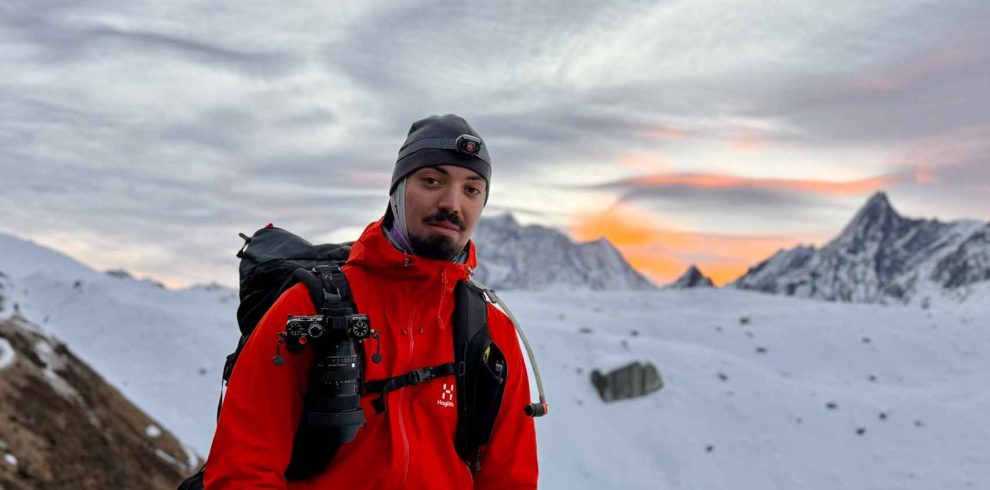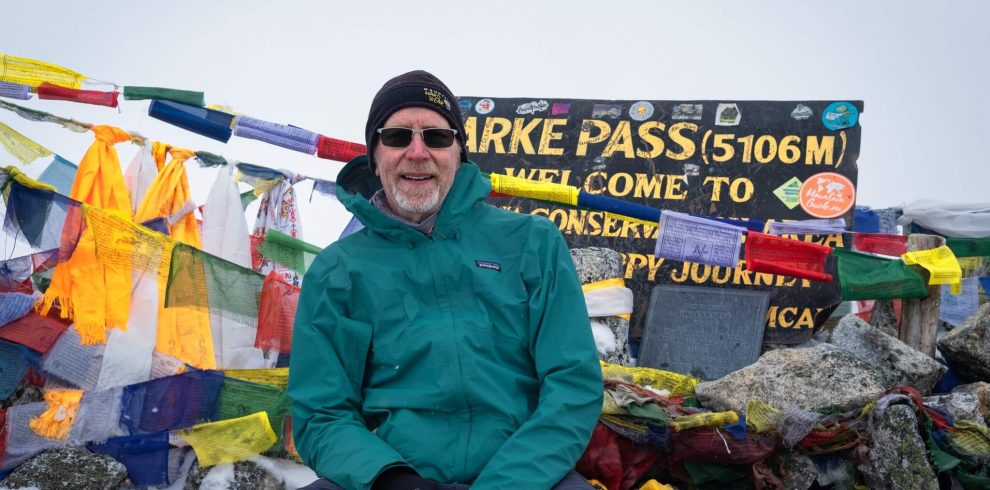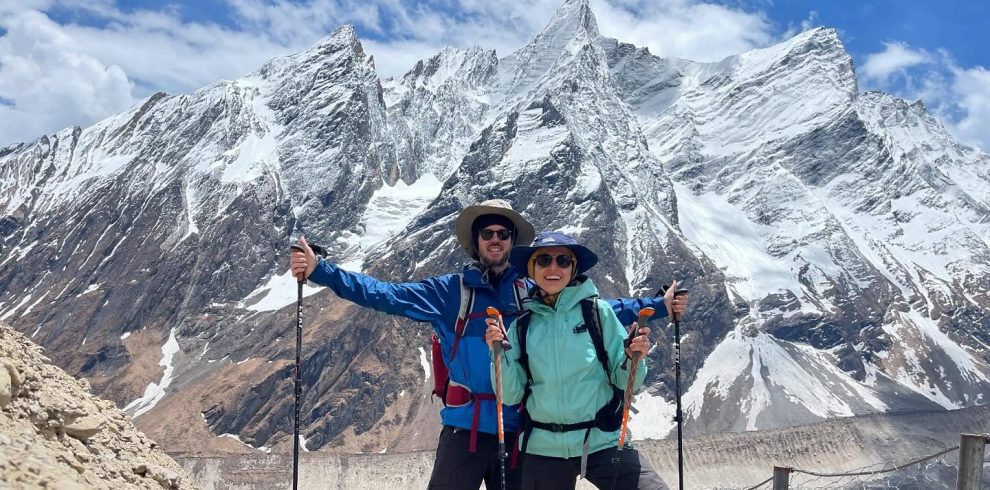
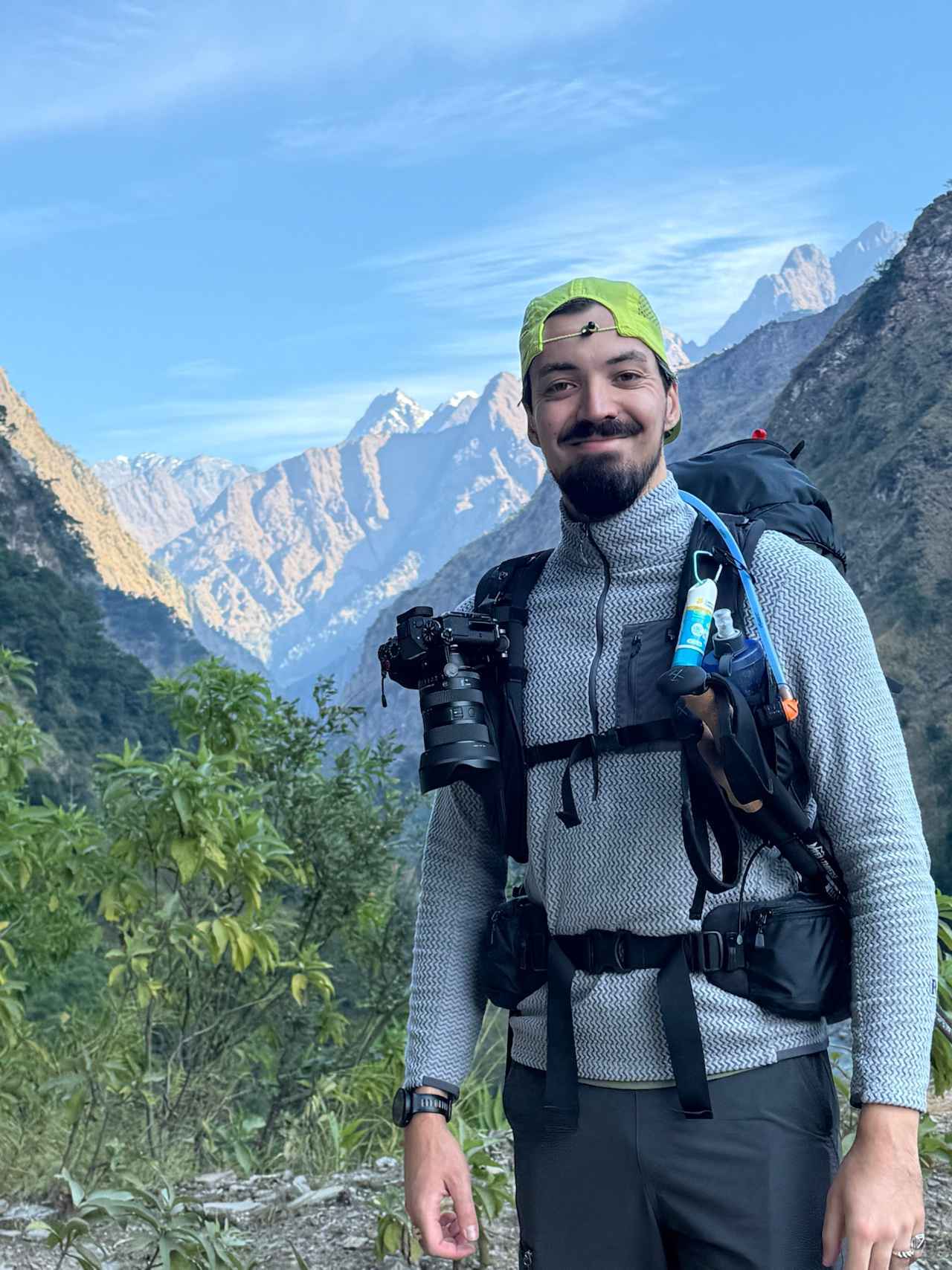
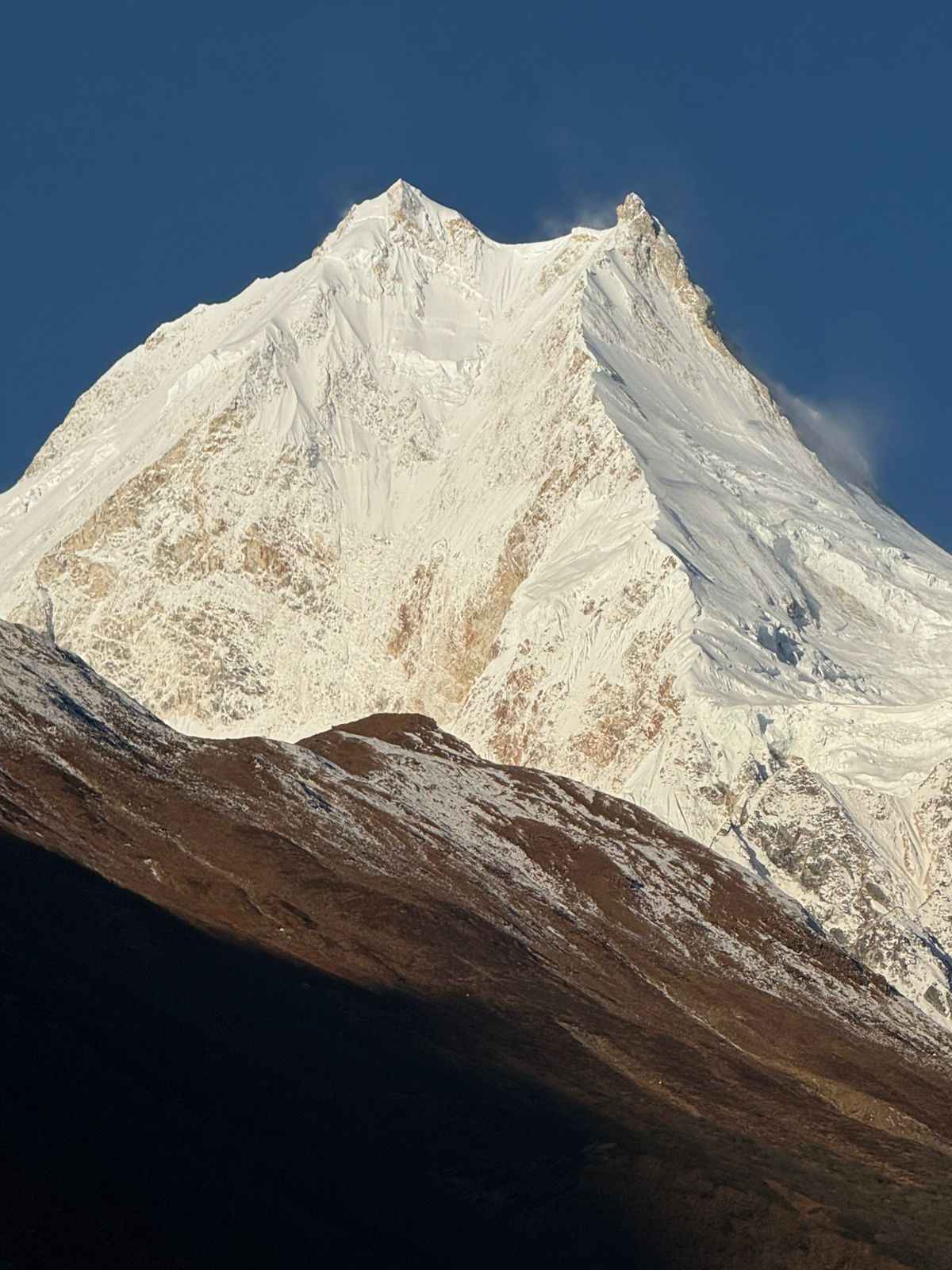
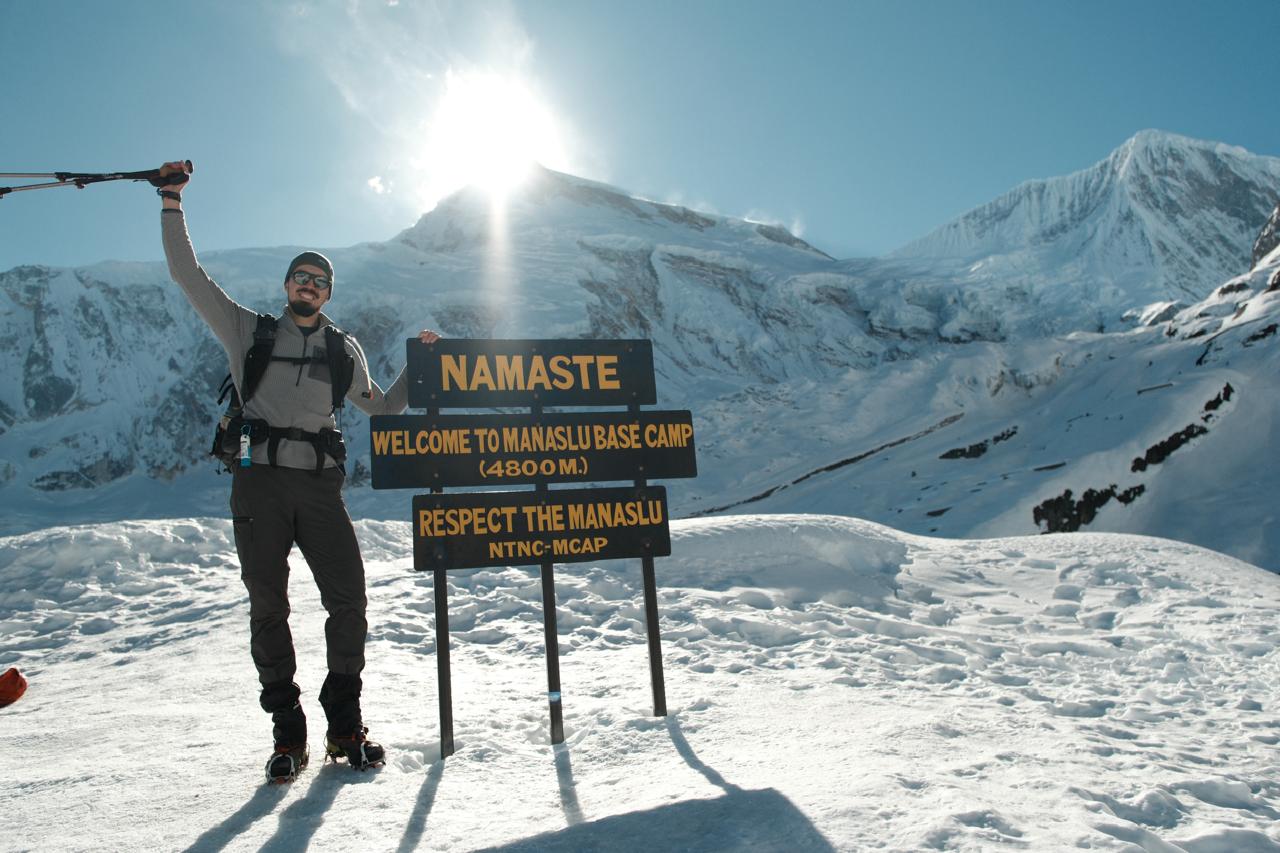
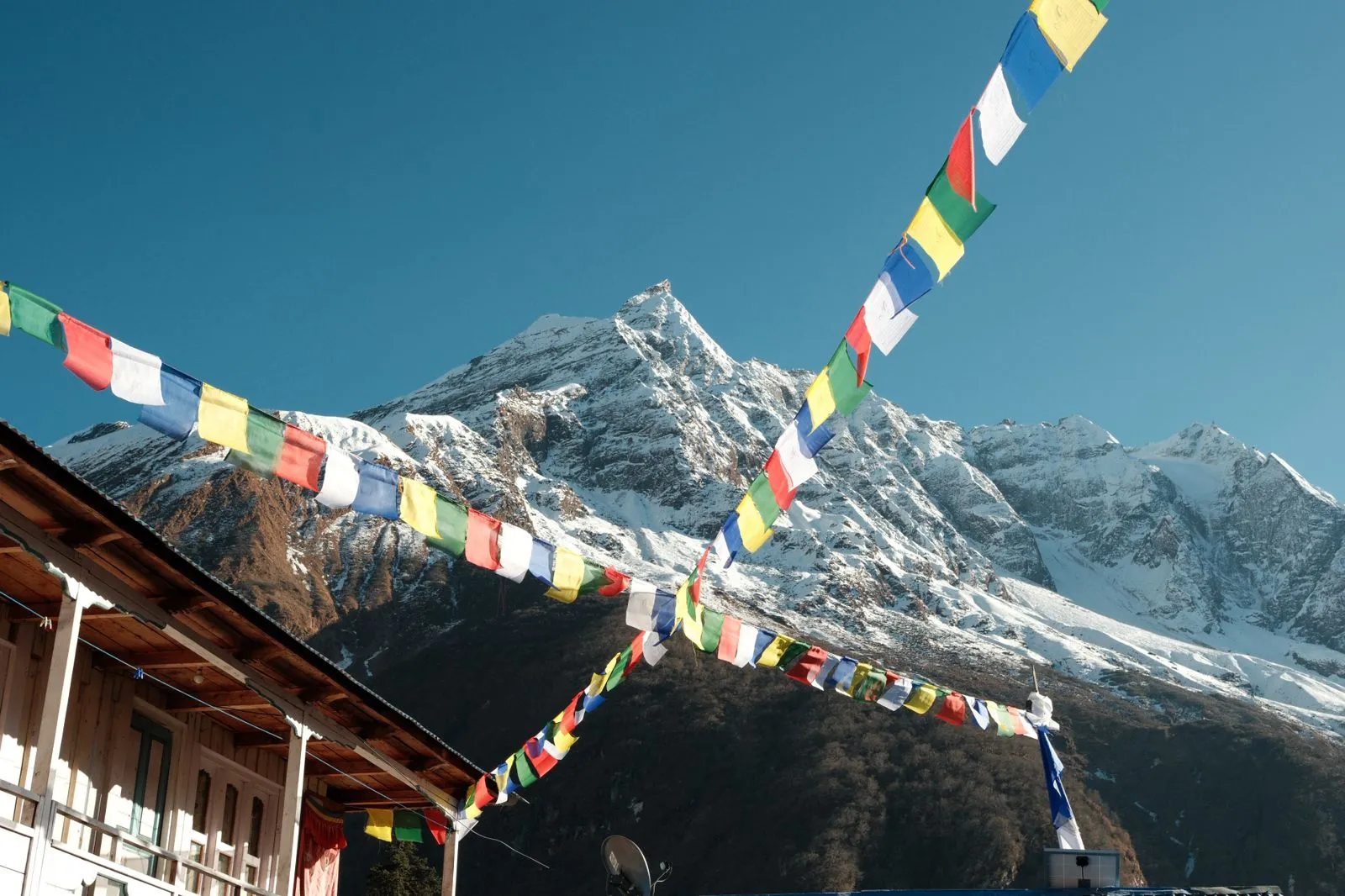
The Manaslu Circuit Trek is a spectacular journey around Mount Manaslu (8,163 m), the eighth-highest mountain in the world. Located in northern Nepal between Gorkha and Manang districts, the Manaslu region stretches from subtropical foothills to high Himalayan landscapes bordering Tibet. The name Manaslu comes from the Sanskrit word Manasa, meaning “Mountain of the Spirit.”
The classic Manaslu Circuit follows the Budhi Gandaki River, an ancient Himalayan route that historically formed part of the trade connection between the middle hills and the Tibetan borderlands. The trail gradually changes from warm, forested valleys and terraced farmland into narrow river gorges, pine and rhododendron forests, traditional mountain villages and finally the dry, high-altitude landscape around Samagaon and Samdo.
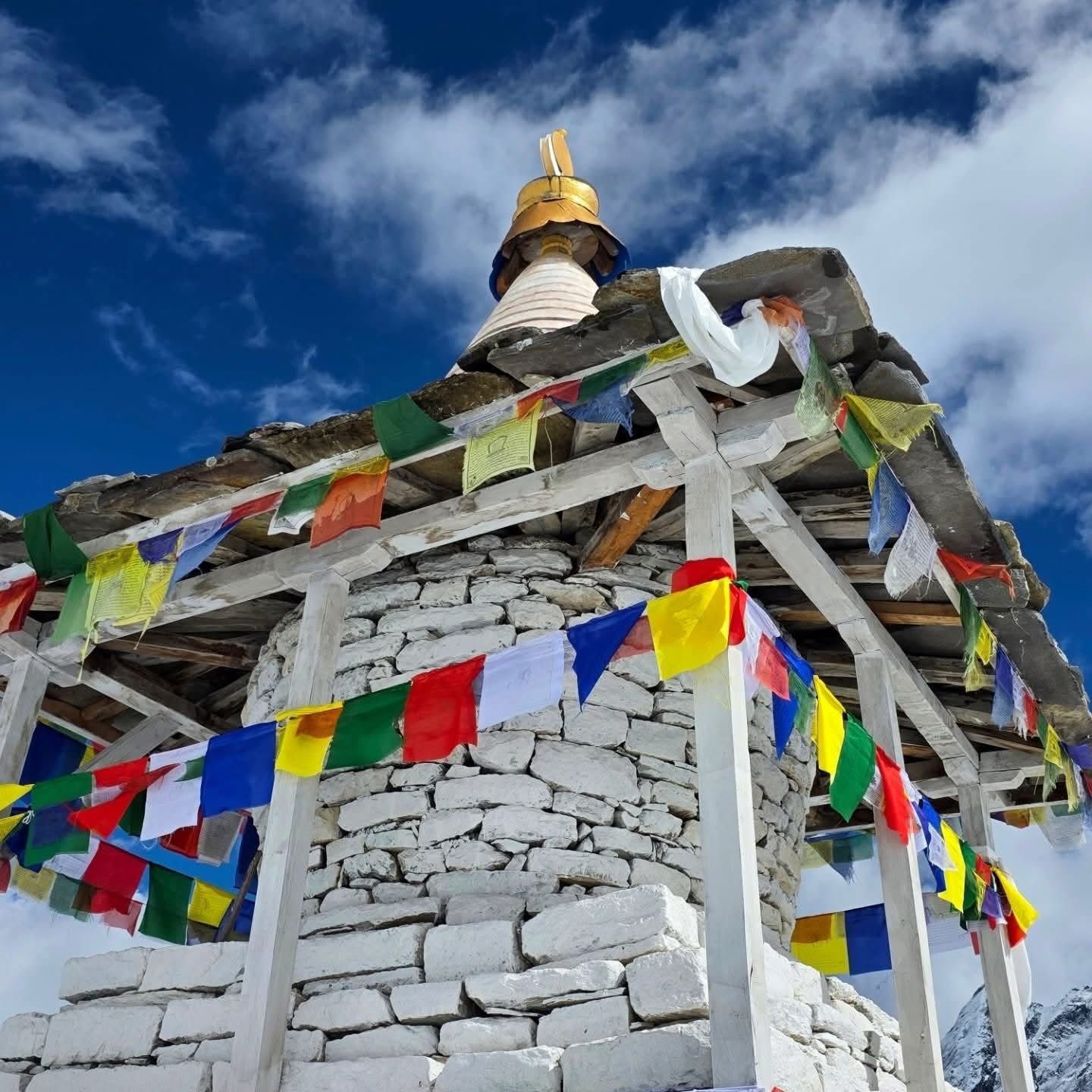
One of the defining features of the trek is its remarkable change in landscape and culture with altitude. The lower section is home to communities with strong Gurung and other Himalayan traditions, while higher settlements such as Namrung, Lho, Samagaon and Samdo show a much stronger Tibetan Buddhist influence. Mani walls, chortens, prayer flags, monasteries and traditional stone houses become increasingly common as you move deeper into the Manaslu region.
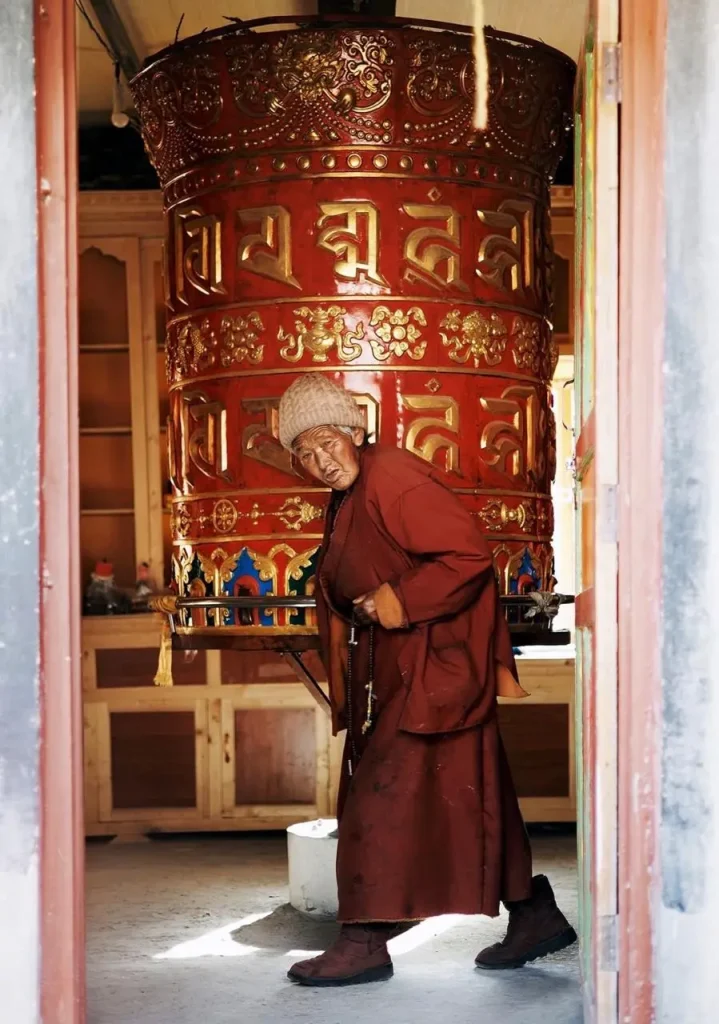
The route passes through the Manaslu Conservation Area, which covers approximately 1,663 square kilometres and ranges from around 600 m to the summit of Mount Manaslu. The conservation area supports a wide variety of vegetation and wildlife, including Himalayan species such as the snow leopard, musk deer and Himalayan tahr.
The landscape becomes particularly impressive around Samagaon (approximately 3,500 m), the main settlement in the upper Manaslu Valley. From here, trekkers can explore the surrounding alpine landscape with excursions toward Birendra Lake, Pungyen Gompa and Manaslu Base Camp. Samagaon is also an important acclimatization point before continuing toward the higher villages of Samdo and Dharmasala.
From Samdo, the trail continues toward Dharmasala (Larkya Phedi) before reaching the highest point of the journey, Larkya La Pass at approximately 5,106 m.
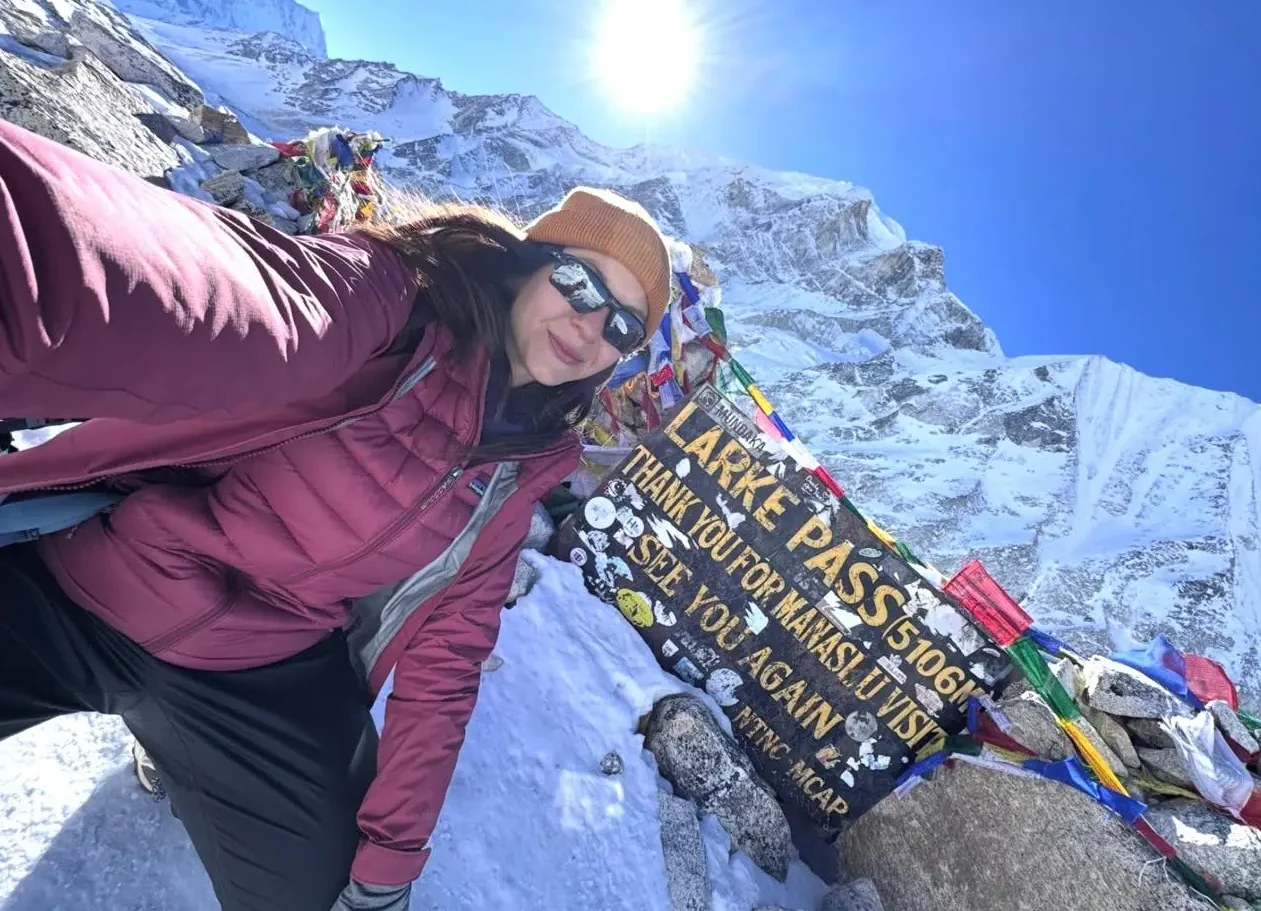
The crossing is the major physical challenge of the Manaslu Circuit, but it also provides one of the most rewarding mountain experiences of the trek, with wide views across the surrounding Himalayan peaks. From the pass, the trail descends steeply toward Bimthang and eventually connects with the Marsyangdi Valley and the Annapurna region.
The Manaslu Circuit is also different from many of Nepal’s more accessible trekking routes because part of the region is officially designated as a restricted area. Trekkers need a special restricted-area trekking permit, and the Manaslu Circuit is among the routes where a licensed trekking guide and agency-issued TIMS card are required under Nepal’s current trekking regulations.
For trekkers, this combination of 8,000-meter mountain scenery, remote Himalayan villages, Tibetan Buddhist culture, changing landscapes, and a high mountain pass is what makes the Manaslu Circuit so distinctive. It is not simply a walk around a mountain; it is a gradual journey from the lower Budhi Gandaki Valley into the high Himalayas, with each section offering a noticeably different environment and cultural experience.
The standard Manaslu Circuit can be completed in different durations depending on the starting point, transportation arrangements, acclimatization schedule and optional side trips. The trekking distance is commonly estimated at roughly 177–200 km, although the exact distance varies according to the route used and whether side excursions are included.
Manaslu Circuit Trek Updated Cost 2026 and 2027
The Manaslu Circuit Trek cost varies depending on the number of travelers in your group. Our pricing is based on group size, with better rates available for larger groups.
Top 10 Highlights of Manaslu Circuit Trek
- Mount Manaslu (8,163 m) – Trek around the world’s eighth-highest mountain with spectacular Himalayan views.
- Larkya La Pass (5,106 m) – Cross the highest point of the trek and enjoy panoramic mountain scenery.
- Remote Himalayan Trails – Experience a quieter and less-developed trekking route compared with Nepal’s popular trails.
- Budhi Gandaki Valley – Walk through dramatic river gorges, waterfalls, forests and suspension bridges.
- Traditional Mountain Villages – Explore Jagat, Deng, Namrung, Lho, Samagaon and Samdo.
- Tibetan Buddhist Culture – Discover monasteries, mani walls, chortens, prayer flags and traditional Buddhist communities.
- Samagaon – Experience the cultural heart of the upper Manaslu Valley beneath the Manaslu massif.
- Birendra Lake & Pungyen Gompa – Enjoy scenic acclimatization hikes around Samagaon.
- Diverse Landscapes – Travel from subtropical forests and terraced hills to alpine meadows and rugged high mountains.
- Bimthang & Larkya La Descent – Descend from the high pass toward Bimthang through spectacular mountain scenery.
13 Days Manaslu Circuit Trek Outline Itinerary – Kathmandu Arrival to Departure
Day 01: Arrival in Kathmandu (1,300 m)
Distance: — | Time: Airport transfer
Arrive at Tribhuvan International Airport. Our team will welcome you and transfer you to your hotel. After check-in, you will receive a trek briefing and have time to prepare for the journey.
Highlight: Welcome to Nepal, airport pickup and trek preparation.Day 02: Drive from Kathmandu to Machha Khola (930 m)
Distance: Approx. 160 km | Time: 8–9 hours drive
Drive from Kathmandu toward Machha Khola, following the scenic countryside, hills and Budhi Gandaki River. The journey takes you from the Kathmandu Valley into the remote mountain region.
Highlight: Scenic Himalayan road journey and Budhi Gandaki Valley.Day 03: Trek from Machha Khola to Jagat (1,410 m)
Distance: Approx. 11–12 km | Time: 5–6 hours walking
Begin the trek along the Budhi Gandaki River. The trail passes through forests, waterfalls, rocky sections and traditional settlements before reaching Jagat.
Highlight: First day on the trail, suspension bridges, waterfalls and river valleys.Day 04: Trek from Jagat to Deng (1,860 m)
Distance: Approx. 19 km | Time: 6–7 hours walking
Continue through the narrow Budhi Gandaki gorge, crossing several suspension bridges and passing through forests and small Himalayan villages. The landscape gradually becomes more rugged as you gain altitude.
Highlight: Dramatic gorges, suspension bridges and changing Himalayan landscapes.Day 05: Trek from Deng to Namrung (2,900 m)
Distance: Approx. 19 km | Time: 6–7 hours walking
The trail continues through pine and fir forests, mountain streams and traditional villages. As you approach Namrung, the scenery opens up and the influence of Tibetan Buddhist culture becomes increasingly visible.
Highlight: Forest trails, mountain scenery and the beginning of the upper Manaslu landscape.Day 06: Trek from Namrung to Samagaon (3,500 m)
Distance: Approx. 17 km | Time: 6–7 hours walking
Continue toward the upper Manaslu Valley through Lho and other traditional mountain settlements. The views of Manaslu and surrounding peaks become increasingly impressive as you approach Samagaon.
Highlight: Mount Manaslu views, Lho village and Tibetan-influenced Himalayan culture.Day 07: Acclimatization Day in Samagaon (3,500 m)
Distance: Approx. 8–10 km | Time: 4–5 hours hiking
Spend the day acclimatizing at Samagaon. Take a scenic hike toward Birendra Lake and Pungyen Gompa while enjoying views of the Manaslu massif and surrounding alpine landscape.
Highlight: Birendra Lake, Pungyen Gompa and mountain views.Day 08: Trek from Samagaon to Samdo (3,860 m)
Distance: Approx. 8–9 km | Time: 3–4 hours walking
Leave Samagaon and continue through high-altitude terrain toward Samdo. The trail passes through open landscapes and yak pastures before reaching the remote Tibetan-influenced village of Samdo.
Highlight: High-altitude landscapes, yak pastures and Samdo village.Day 09: Trek from Samdo to Dharmasala (4,450 m)
Distance: Approx. 11–12 km | Time: 4–5 hours walking
Continue toward Larkya Phedi, also known as Dharmasala. The trail becomes increasingly rugged as you enter the high Himalayan zone. Take the afternoon to rest and prepare for the Larkya La crossing.
Highlight: High Himalayan scenery and preparation for Larkya La Pass.Day 10: Cross Larkya La Pass (5,106 m) and Trek to Bimthang (3,720 m)
Distance: Approx. 17–19 km | Time: 8–10 hours walking
Start early for the most challenging day of the trek. Climb gradually toward Larkya La Pass at 5,106 m, then descend through spectacular mountain scenery toward Bimthang.
Highlight: Cross Larkya La Pass, the highest point of the trek.Day 11: Trek from Bimthang to Tilije (2,300 m)
Distance: Approx. 12–13 km | Time: 5–6 hours walking
Descend from Bimthang through forests, mountain landscapes and traditional settlements. As the altitude decreases, the vegetation becomes greener and the trail gradually enters the lower Marsyangdi Valley.
Highlight: Beautiful descent from the high Himalayas through forests and villages.Day 12: Drive from Tilije to Kathmandu
Distance: Approx. 210 km | Time: 8–10 hours drive
After breakfast, begin the drive back to Kathmandu. Travel through the Marsyangdi Valley and Himalayan foothills before reaching the Kathmandu Valley. Enjoy a relaxing evening in Kathmandu.
Highlight: Scenic return journey and farewell evening in Kathmandu.Day 13: Final Departure from Kathmandu
Distance: — | Time: Airport transfer
Our team will arrange your airport transfer according to your international flight schedule. Depart Nepal with unforgettable memories of the Manaslu Circuit Trek.
Highlight: Airport transfer and final departure from Nepal.Cost Includes
- Airport pickup and drop-off in Kathmandu by private vehicle.
- 2 nights hotel accommodation in Kathmandu with breakfast — 1 night before and 1 night after the trek.
- Kathmandu to Machha Khola by public/local bus.
- Tilije to Kathmandu by public/local transportation.
- Manaslu Restricted Area Permit (MRAP).
- Manaslu Conservation Area Permit (MCAP).
- Annapurna Conservation Area Permit (ACAP).
- Licensed, experienced and English-speaking trekking guide.
- Porter service — 1 porter for every 2 trekkers, carrying up to 20 kg total.
- Guide and porter wages, meals, accommodation, insurance and transportation.
- Teahouse/lodge accommodation throughout the trek.
- Three meals a day during the trek — breakfast, lunch and dinner.
- Morning tea or coffee during the trek.
- Sleeping bag and down jacket, provided for the trek and returned after the trek.
- Manaslu Circuit trekking map.
- Trekking completion certificate.
- First-aid medical kit carried by the trekking team.
- Government taxes and applicable service charges.
- Farewell dinner in Kathmandu.
Cost Excludes
- International airfare to and from Nepal.
- Nepal entry visa fee.
- Travel insurance, including emergency medical and helicopter evacuation coverage.
- Personal expenses such as laundry, phone calls, Wi-Fi and charging fees.
- Bottled or mineral water and other bottled drinks.
- Soft drinks, alcoholic beverages and extra beverages.
- Snacks and personal food items during the trek.
Why Book the Manaslu Circuit Trek with Manaslu Treks & Expedition?
Choosing a trekking company for the Manaslu Circuit is important because the route involves restricted-area permits, remote villages, changing trail conditions and high-altitude trekking. Manaslu Treks & Expedition is a Nepal-based trekking company focused specifically on the Manaslu and Tsum Valley region. Our local team handles the practical details while you focus on enjoying the journey.
30 Reasons to Choose Manaslu Treks & Expedition
Manaslu & Tsum Valley Specialist
Our primary focus is the Manaslu region and Tsum Valley.
Dedicated Manaslu Expertise
We have in-depth practical knowledge of the Manaslu Circuit, from the lower Budhi Gandaki Valley to Larkya La Pass.
Nepal-Based Local Company
Work directly with a local Nepal trekking company rather than a foreign intermediary.
No Advance Payment Policy
We offer a simple booking process with no advance payment required for eligible bookings.
Hassle-Free Trek Planning
We take care of permits, transportation, accommodation, guides, porters and other arrangements.
Transparent Pricing
Our package clearly explains what is included and excluded before you confirm your trek.
No Hidden Charges for Included Services
The services listed in your package are clearly explained, so you know exactly what your trek price covers.
Experienced Local Guides
Our guides have practical experience trekking in the Manaslu region and understand the realities of the route.
First-Hand Trail Knowledge
Our team knows the villages, trails, teahouses, transportation options and changing conditions along the circuit.
Proper Altitude Planning
We build realistic itineraries with appropriate acclimatization before the highest sections of the trek.
Safety-Focused Approach
Our guides monitor the group and respond appropriately to altitude, weather and trail-related challenges.
First-Aid Support
Our trekking team carries a first-aid kit and is prepared to handle common trekking emergencies.
Emergency Coordination
If a serious situation occurs, our team can help coordinate emergency assistance and evacuation arrangements.
Private Trek Options
Enjoy the Manaslu Circuit with your own private group rather than being required to join a large group.
Customized Itineraries
We can adjust the itinerary according to your available time, walking ability and travel plans.
Tsum Valley Combination Treks
We can combine the Tsum Valley with the Manaslu Circuit for travelers who want a longer and more culturally focused journey.
Local Teahouse Knowledge
We work with accommodation providers along the route and understand where trekkers can stay at different stages of the journey.
Responsible Porter Policy
We maintain reasonable porter loads and value the welfare of the local trekking staff who support your journey.
Sleeping Bag & Down Jacket
We provide a sleeping bag and down jacket for the trek, which are returned after the journey.
Airport Pickup & Drop-Off
We arrange your Kathmandu airport transfers so you do not have to organize transportation after a long international flight.
Pre-Trek Briefing
Before departure, our team explains the route, altitude, accommodation, meals, packing and practical trekking conditions.
Packing & Gear Guidance
We help you understand what equipment you actually need for the Manaslu Circuit and what you can leave behind.
Direct Communication
You can communicate directly with our team before and during your trek for practical and timely assistance.
Local Community Connections
Our relationships with local guides, porters, teahouses and communities help us manage logistics in remote areas.
Responsible Tourism
We support local businesses and communities by working with local service providers throughout the Manaslu region.
Flexible Transportation Options
We can advise you on the most practical transportation arrangements for reaching and leaving the trekking route.
Support From Arrival to Departure
Our service covers the complete journey, from your arrival in Kathmandu through your return from the mountains.
Realistic Trekking Advice
We give practical advice based on the actual route and conditions rather than promising an unrealistic or rushed itinerary.
Focus on Quality, Not Just Volume
Because our work is concentrated on the Manaslu region, we can give more attention to the details that matter on this particular trek.
Local Experience You Can Rely On
Our goal is simple: to provide a well-organized, transparent and comfortable trekking experience while you explore one of Nepal’s most impressive Himalayan regions.
Manaslu Circuit Trek Packing List
Packing for the Manaslu Circuit Trek is about preparing for a wide range of conditions. The trail starts in the lower Budhi Gandaki Valley and gradually climbs above 5,000 meters at Larkya La Pass, so you need clothing and gear for warm days, cold nights, rain, wind and possible snow. The checklist below covers the essential items we recommend bringing, with some equipment also available for rent in Kathmandu.
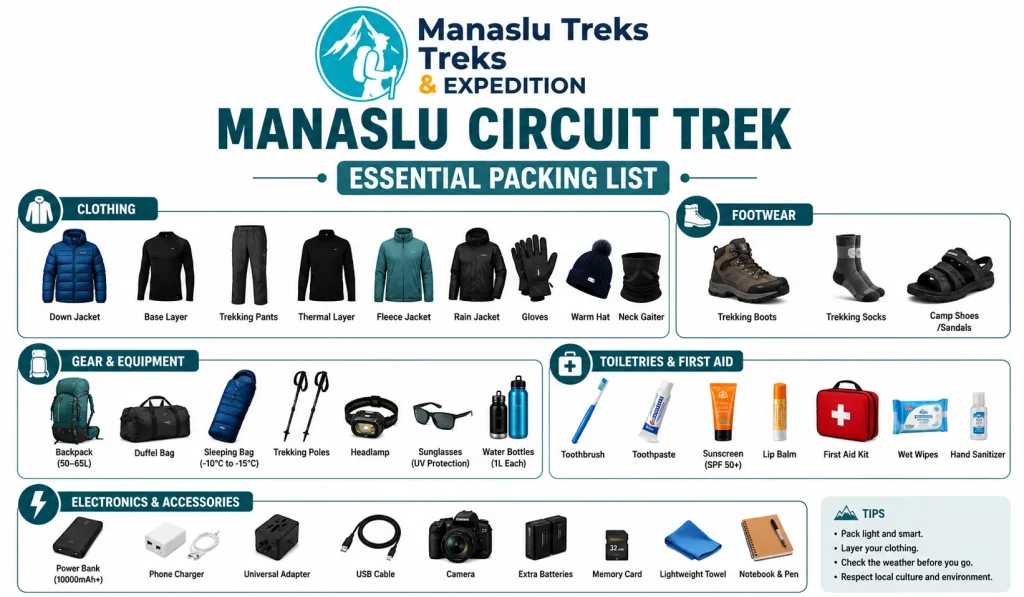
Everything you need to pack for the Manaslu Circuit Trek, organized by category. Tick items off as you pack.
| Item | Description | Qty | ✓ |
|---|---|---|---|
| Trekking Poles | Trail stabilizers, save those knees downhill! | 1 Pair | |
| Backpack | With Porter 25–35L, Going Solo 40–60L. | 1 | |
| Reusable Water Bottles | Hydrate and hug at night when it’s filled with hot water! | 1 | |
| MicroSpikes EssentialAvailable for rent | Grip it, handle icy paths like a boss. | 1 Pair | |
| Trekking Boots Essential | Boots for support, trail runners for pros. | 1 Pair | |
| Headlamp | Keeps hands free, early hikes and midnight nature calls! | 1 | |
| Dry Bag / Zip Lock Bag | Stay organized and stash the stinky. | 1 | |
| Rain Cover for Backpack | Shields your bag from rain and rough rides! | 1 | |
| Sunglasses | Lose one, break one, still look cool. | 2 Pairs | |
| Sun Hat / Cap Essential | Shield your face, no one likes a sunburned selfie. | 1 | |
| Organizers | Tame your packing chaos like a pro-level trekker. | 1 | |
| Toilet Paper | Don’t get caught short, carry your own roll. | Varies |
Garments
| Item | Description | Qty | ✓ |
|---|---|---|---|
| Base Layer Set (Thermal) | A thermal hug for windy ridges. | 2 | |
| Fleece / Microfiber Jacket Essential | Like a wearable hug — light, warm, essential. | 1 | |
| Quick Dry Tees (Merino) | Sweat less, smell less, hike more. | 3 | |
| Quick Dry Pants | Dries fast — cross rivers, dodge rain. | 1 | |
| Trekking Pant (Soft Shell) Essential | Built for Nepal’s trails, tough and comfy. | 1 | |
| Trekking Pant (Hard Shell) | Bring the big guns for snow and storm duty. | 1 | |
| Windbreaker Jacket | Windproof your journey without packing bulk. | 1 | |
| Waterproof Jacket | Because soggy trekkers aren’t happy trekkers. | 1 | |
| Waterproof Pant | Wet pants? No thanks — bring these just in case. | 1 | |
| Down Jacket | Your puffy cloud for chilly dawns and nights. | 1 | |
| Cosy Outfit for Teahouses | Trade hiking boots for this once you’re in the teahouse. | 1 Set | |
| Socks (Liner / Trekking) | Happy feet = happy trek. Bring extras! | 6 Pairs | |
| Gloves Liner | Wear under gloves or for chilly tea stops. | 1 Pair | |
| Gloves Windproof | Block those winds sweeping down from the peaks. | 1 Pair | |
| Woolen Hat | Block out wind and keep your brain warm. | 1 | |
| Beanie Essential | Extra warmth while sipping tea in the yard. | 1 | |
| Neck Gaiter | Neck protector, face warmer, and style icon in one. | 1 | |
| Undergarments | Laundry day is rare, pack backups! | 3 | |
| Bra | Supportive and breathable for long trail days. | 3 |
Sleeping
| Item | Description | Qty | ✓ |
|---|---|---|---|
| Sleeping Bag EssentialAvailable for rent | Sleep snug — from stars to teahouse beds. | 1 | |
| Sleeping Bag Liner | Add warmth and avoid funky smells. | 1 | |
| Earplugs | Snorers in the next room? Problem solved. | 2 Sets | |
| Travel Pillow | Nap like royalty, even in the Himalayas. | 1 | |
| Eye Mask | Sun’s up? Not till you are. | 1 |
Toiletries / Hygiene
| Item | Description | Qty | ✓ |
|---|---|---|---|
| Microfiber Towel | Dries fast, packs light, towel off in style. | 1 | |
| Tooth Brush & Tooth Paste | Morning breath? Not on these trails. | 1 Set | |
| Wet Wipes | No shower? No problem — wipes to the rescue. | 2 Pack | |
| First Aid Kit Essential | Leeches, scrapes, bruises — be ready. | 1 | |
| Sunscreen Essential | High-altitude sun bites — lather up. | 1 | |
| Blister Kit | Blisters sneak up, treat them quick. | 1 | |
| Soap / Shampoo | Bucket shower? You’ll still feel fresh. | 1 Set | |
| Lip Balm | Wind or sun, protect those lips. | 1 | |
| Comb or Brush | Brush off the dust, hair’s still happy. | 1 | |
| Period Supplies | Periods don’t pause for mountains, pack well. | As Needed | |
| Nail Clippers / Tweezers | Snagged gear or sharp toenail? Clip it clean. | 1 | |
| Sanitising Gel | Sanitize before snack time, at every stop. | 1 | |
| Deodorant | Feel fresh, even 3 days from a shower. | 1 | |
| Mirror (Optional) | For grooming or checking windburn. | 1 | |
| Water Purification Tablets / Filters Essential | Turn glacier melt into safe drinking water. | 1 |
Electronics
| Item | Description | Qty | ✓ |
|---|---|---|---|
| Camera | Snap yaks, peaks, and village smiles. | 1 | |
| Phone Essential | Call home, check maps, jam tunes — one device. | 1 | |
| GPS Watch / Device | Track your climbs, brag later. | 1 | |
| External Hard Drive | No backup, no proof — save it all. | 1 | |
| Cables | Juice up your phone, cam, or headlamp. | 1 | |
| Power Bank Essential | Dead battery? This keeps you going. | 1 | |
| E-Book | Books in your pocket, read and relax. | 1 | |
| Travel Adapter (Type D, C & M) | Stay charged from Kathmandu to Jomsom. | 1 | |
| Earphones | Tunes or podcasts, your trail soundtrack. | 1 |
Miscellaneous
| Item | Description | Qty | ✓ |
|---|---|---|---|
| Lightweight Shoes / Sandals Essential | Post-hike bliss, slip into comfort. | 1 | |
| Gaiters | Keep snow and grit out of your boots. | 1 Pair | |
| Playing Cards / Card Games | Perfect for rest days or teahouse hangs. | — | |
| Multitools | Solves (almost) everything in one flip. | 1 | |
| Journal / Pen | Write. Reflect. Doodle. Dream. | 1 Set | |
| Repair Kit | Patch up gear before it falls apart. | 1 | |
| Insulated Flask | Sip hot tea in icy wind like a local. | 1 | |
| USD 15–20 in Nepalese Currency Essential | Tea, snacks, or surprise tips — always handy. | As Needed | |
| Snacks (Energy Bar, Protein, Trail Mix) Essential | Fuel your hike with tasty trail treats. | Varies | |
| Electrolyte Tablets or Powder Essential | Beat cramps — fuel up with electrolytes. | Varies |
Essential Recommended must-have item Available for rent Don’t have it? Ask us — gear rental available in Kathmandu
Latest Manaslu Circuit Trek Updates for 2026
The Manaslu Circuit Trek continues to change gradually as road access, trekking infrastructure, communication services and permit systems develop. However, the character of the trek remains very different from Nepal’s more developed trekking routes. The upper Manaslu region is still remote, accommodation becomes basic at higher elevations, and weather and trail conditions can change quickly.
Licensed Guide and TIMS Are Still Required
One important point for 2026 is that the Manaslu Circuit is not a normal independent solo-trekking route. Trekkers must be accompanied by a licensed trekking guide and carry the required trekking documentation. The restricted-area trekking permit is obtained through a registered trekking agency.
Manaslu Restricted-Area Permit Rates
The Manaslu Restricted Area Permit remains an important part of the trek. Permit fees vary according to the season and number of days spent inside the restricted area. Your trekking agency handles the permit application and required documentation before the trek.
TIMS Is Now Digitally Managed
Trekker information and TIMS registration are increasingly managed through digital systems. This makes trekker information easier to register, verify and manage along regulated trekking routes.
Road Access Has Changed the Lower Manaslu Route
Road construction has significantly changed the beginning and ending sections of the Manaslu journey. Depending on current road conditions, season and local transportation, trekkers may use local buses or shared/private jeeps on some sections.
Machha Khola Is a Common Trek Starting Point
Machha Khola remains one of the most common starting points for the Manaslu Circuit. Improved road access means modern itineraries can begin trekking farther up the Budhi Gandaki Valley than older classic routes.
Lower-Trail Conditions Continue to Change
Trail conditions between Machha Khola, Jagat, Deng and the higher villages continue to change because of both road construction and trail improvements. Some sections have improved bridges and walking paths, while others can still be rough or affected by landslides after heavy rainfall.
Teahouse Facilities Have Improved
Accommodation along the Manaslu Circuit has improved compared with earlier years. Many villages now have better dining areas, charging facilities and more established teahouses. However, facilities become increasingly basic at higher elevations, particularly around Samdo and Dharmasala.
Wi-Fi and Mobile Connectivity Are Available in Parts of the Route
Connectivity has improved in several lower and middle sections of the Manaslu Circuit. Some teahouses offer Wi-Fi and charging facilities, although speed and reliability vary. Above Samagaon, connectivity becomes increasingly limited.
Charging Phones and Cameras Is Easier
Many established teahouses provide charging facilities, although charging may involve an additional fee and availability is not guaranteed at higher elevations. Carrying a power bank is still recommended.
Weather Can Change Quickly
Weather remains one of the biggest variables on the Manaslu Circuit. Conditions can change rapidly as the trail climbs from the lower valleys toward Larkya La. Lower sections can be warm while higher areas can experience freezing temperatures, strong winds and snowfall.
Monsoon Has Different Effects at Different Elevations
Lower sections of the Manaslu route receive more rainfall during the monsoon season. Rain can affect roads, river levels, landslide-prone sections and lower trails. The upper valley is generally much drier, but weather conditions still need to be checked before departure.
Larkya La Remains the Major Challenge
Despite improvements to infrastructure, crossing Larkya La Pass at approximately 5,106 m remains a serious high-altitude trekking day. Trekkers must be prepared for altitude, cold, wind, possible snow, a long ascent and a substantial descent to Bimthang.
Acclimatization Is Still Essential
Better roads and improved teahouses do not change the effects of altitude. A properly planned itinerary remains essential, with time around Samagaon commonly used for acclimatization before continuing toward Samdo, Dharmasala and Larkya La.
Manaslu Remains a Restricted Trekking Region
Although infrastructure is improving, Manaslu remains a regulated trekking region. The required restricted-area permits, licensed guide arrangements and trekking documentation continue to apply.
What Has Not Changed
Despite better roads, connectivity and accommodation, the main attraction of the Manaslu Circuit remains the same: remote mountain villages, Tibetan Buddhist culture, spectacular Manaslu views and the challenging crossing of Larkya La.
What This Means for Trekkers in 2026
For 2026, the Manaslu Circuit is becoming more accessible without becoming fully developed. Road access can shorten some lower walking sections, accommodation and connectivity have improved in many villages, and permit administration is increasingly digital.
At the same time, the route still requires proper permits and licensed guide arrangements. The upper section remains remote, weather can change quickly, and the Larkya La crossing requires genuine preparation.
For travelers planning the Manaslu Circuit in 2026, the best approach is to use a current itinerary based on present road and trail conditions rather than simply following an older itinerary from previous years.
Best Time to Trek the Manaslu Circuit
The best time to trek the Manaslu Circuit is during spring and autumn, with April, October and early November generally offering the most favorable combination of weather, trail conditions and mountain visibility.
The Manaslu Circuit starts at a relatively low elevation around Machha Khola and gradually climbs above 5,000 meters at Larkya La Pass. Because of this large change in elevation, weather can be very different between the lower Budhi Gandaki Valley and the high Himalayan section.
There is no month that guarantees perfect mountain weather. A good trekking season simply gives you a much better chance of dry trails, clear views and suitable conditions for crossing Larkya La.
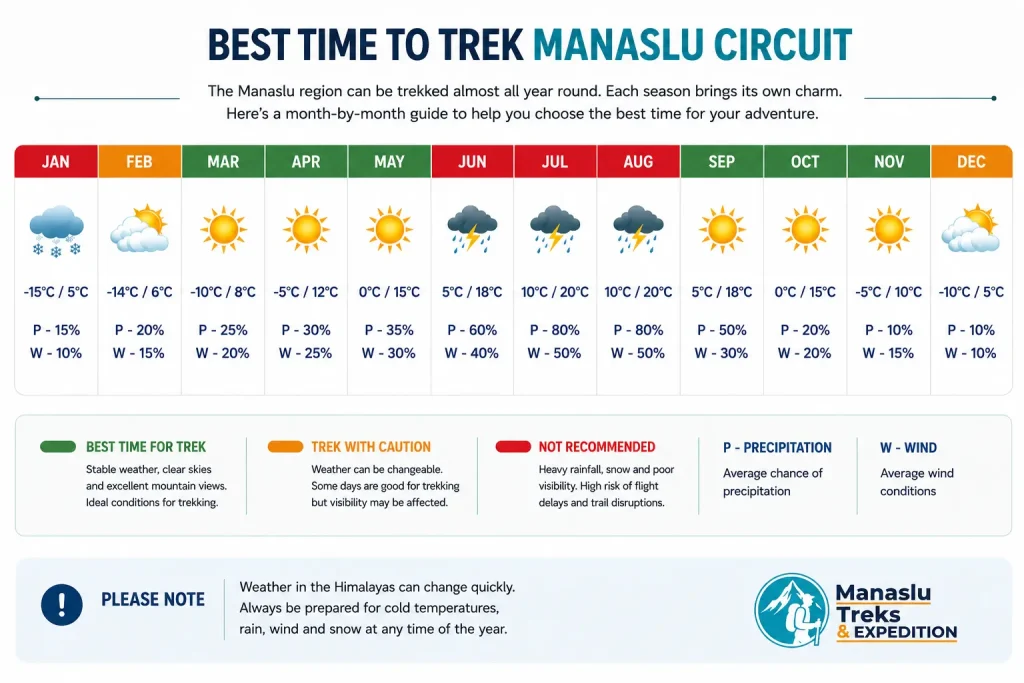
Late September to November
Autumn is our first choice for the Manaslu Circuit Trek. After the summer monsoon, the atmosphere generally becomes clearer, the trails dry out and mountain visibility improves.
Late September
Late September is a good transition into the main trekking season. Early September can still receive monsoon rainfall, particularly in the lower Budhi Gandaki Valley, so we prefer late September.
- Improving mountain visibility
- Drier trekking trails
- Fresh green landscapes after the monsoon
- Comfortable daytime temperatures in lower areas
- Increasingly stable conditions toward the high mountains
October – The Best Overall Month
October is generally the best month for the Manaslu Circuit Trek. The post-monsoon atmosphere is usually clear, trails are generally dry and conditions are often favorable for the Larkya La crossing.
October is particularly suitable for:
- Clear views of Mount Manaslu
- Dry trekking trails
- Larkya La Pass crossing
- Comfortable daytime walking
- Photography and mountain views
- First-time Manaslu trekkers
October is also one of the busiest trekking months, so popular teahouses can be busier than during the shoulder seasons.
November
Early and mid-November can also be excellent. Mountain visibility can remain very good and the trails are generally dry. The main difference is colder mornings and nights, especially around Samdo, Dharmasala and Larkya La.
Late November becomes increasingly winter-like, so trekkers should be prepared for colder temperatures and possible snowfall at high elevations.
March to May
Spring is the other major trekking season for the Manaslu Circuit. Temperatures gradually become warmer, the lower forests become greener and rhododendrons bloom in parts of the route.
March
March is a transition from winter to spring. Late March is generally preferable to early March because high-altitude sections can still have winter snow and cold conditions.
If you trek in March, it is sensible to keep some flexibility around Larkya La rather than assuming completely spring-like conditions.
April – Excellent Spring Conditions
April is one of the best months for the Manaslu Circuit. The weather is generally comfortable for walking, spring vegetation appears in the lower sections and mountain views can be excellent when skies are clear.
- Pleasant trekking temperatures
- Spring landscapes
- Rhododendron flowers
- Good mountain visibility
- Generally favorable Larkya La conditions
- Longer daylight hours
May
May can still be a good month, particularly early May. However, the weather gradually becomes more influenced by the approaching monsoon.
Lower valleys become warmer and afternoon clouds or pre-monsoon showers become more possible. For this reason, we generally prefer early May over late May.
June to August
The monsoon is not our preferred season for the standard Manaslu Circuit.
The important point is that the lower Manaslu route is much more affected by monsoon rainfall than the high Himalayan section. Before reaching Samagaon and Larkya La, trekkers must travel through the lower Budhi Gandaki Valley.
- Heavy rainfall
- Wet and slippery trails
- Muddy sections
- Landslide-prone areas
- Cloud-covered mountain views
- Possible road delays
- Unpredictable transportation conditions
- More difficult conditions in lower gorges
We therefore do not recommend choosing July or August simply because some parts of the upper Manaslu region can receive less rainfall. The trek still begins in the lower valleys where monsoon conditions can significantly affect transportation and walking.
December to February
Winter is possible in parts of the Manaslu region, but it is not the season we normally recommend for a standard 13-day Manaslu Circuit Trek.
The main concern is the high section around Samdo, Dharmasala and Larkya La. Snow, freezing temperatures and winter storms can make the pass substantially more difficult.
Winter departures require more flexibility and close monitoring of actual trail and weather conditions.
Which Season Is Best for Crossing Larkya La Pass?
Larkya La Pass at 5,106 m is the highest and most demanding section of the Manaslu Circuit. Weather conditions around the pass are therefore more important than conditions in Kathmandu or the lower valley.
Our preferred periods are:
Important: A good trekking season does not guarantee a clear pass. Snowfall, strong wind and sudden weather changes can occur at 5,106 m even during spring and autumn.
October or April: Which Should You Choose?
Choose October If You Want
- Clear post-monsoon atmosphere
- Excellent mountain visibility
- Dry trails
- Generally stable autumn weather
- Strong conditions for Larkya La
Choose April If You Want
- Spring landscapes
- Rhododendron flowers
- Warmer lower valleys
- Good mountain views
- Comfortable walking conditions
Our choice: If we had to choose only one month for a first Manaslu Circuit Trek, we would choose October. April would be our next choice.
Is September Good for the Manaslu Circuit?
Yes, particularly late September. Early September can still feel like monsoon in the lower Budhi Gandaki Valley. As the month progresses, rainfall normally decreases and conditions become more suitable for trekking.
Late September can offer a useful balance between fewer trekkers, fresh green landscapes and improving weather.
Is November Too Cold?
Early November is not too cold for most well-prepared trekkers. In fact, it can be one of the best periods for Manaslu because visibility is often excellent and the trails are generally dry.
Temperatures become noticeably colder at higher elevations, particularly around Dharmasala and during the early morning start for Larkya La. By late November, winter conditions become increasingly important.
Weather Changes as You Gain Altitude
One important thing about Manaslu is the huge elevation range. The trek starts around Machha Khola at approximately 900 m and gradually climbs toward Samagaon, Samdo, Dharmasala and Larkya La.
You should therefore not judge Manaslu’s weather simply by looking at the forecast for Kathmandu.
Your clothing should be suitable for both warm lower-valley conditions and freezing temperatures around the high pass.
Manaslu Circuit Trek: Month-by-Month Guide
| Month | Typical Conditions | Our Recommendation |
|---|---|---|
| January | Very cold with winter conditions at high altitude | Not recommended for most trekkers |
| February | Cold with possible snow at high elevations | Not recommended for most trekkers |
| March | Improving conditions; high areas can remain snowy | Better from late March |
| April | Spring, good visibility and comfortable temperatures | Excellent |
| May | Good early; increasing pre-monsoon clouds | Good, especially early May |
| June | Monsoon begins | Generally avoid |
| July | Main monsoon period | Generally avoid |
| August | Wet lower valleys | Generally avoid |
| September | Improving after monsoon | Late September is good |
| October | Clear, dry and generally stable | Best overall |
| November | Clear but progressively colder | Excellent early November |
| December | Increasing winter conditions | Possible with careful planning |
Our Practical Recommendation
For the standard 13-day Kathmandu-to-Kathmandu Manaslu Circuit Trek, our preferred departure periods are:
At Manaslu Treks & Expedition, we do not look at the month alone when planning a departure. We also consider the actual weather forecast, recent snowfall, trail conditions, road conditions in the lower valley and the situation around Larkya La before and during the trek.
Mountain weather can change quickly, so a responsible trekking plan should allow some flexibility rather than promising that the Larkya La crossing will always be clear on a particular date.
Solo vs Group Manaslu Circuit Trek: Which Is Better?
The Manaslu Circuit Trek is a restricted-area trekking route, so the meaning of “solo trekking” is different here from independent trekking on unrestricted routes in Nepal. A traveler may come to Nepal alone and arrange a private Manaslu trek, but the restricted-area regulations still require the appropriate permit and authorized trekking arrangements.
For travelers planning the Manaslu Circuit, the practical choice is usually between a private trek with a dedicated guide or a group trek with other trekkers. Both options follow the same spectacular route, but the experience, flexibility and cost can be quite different.
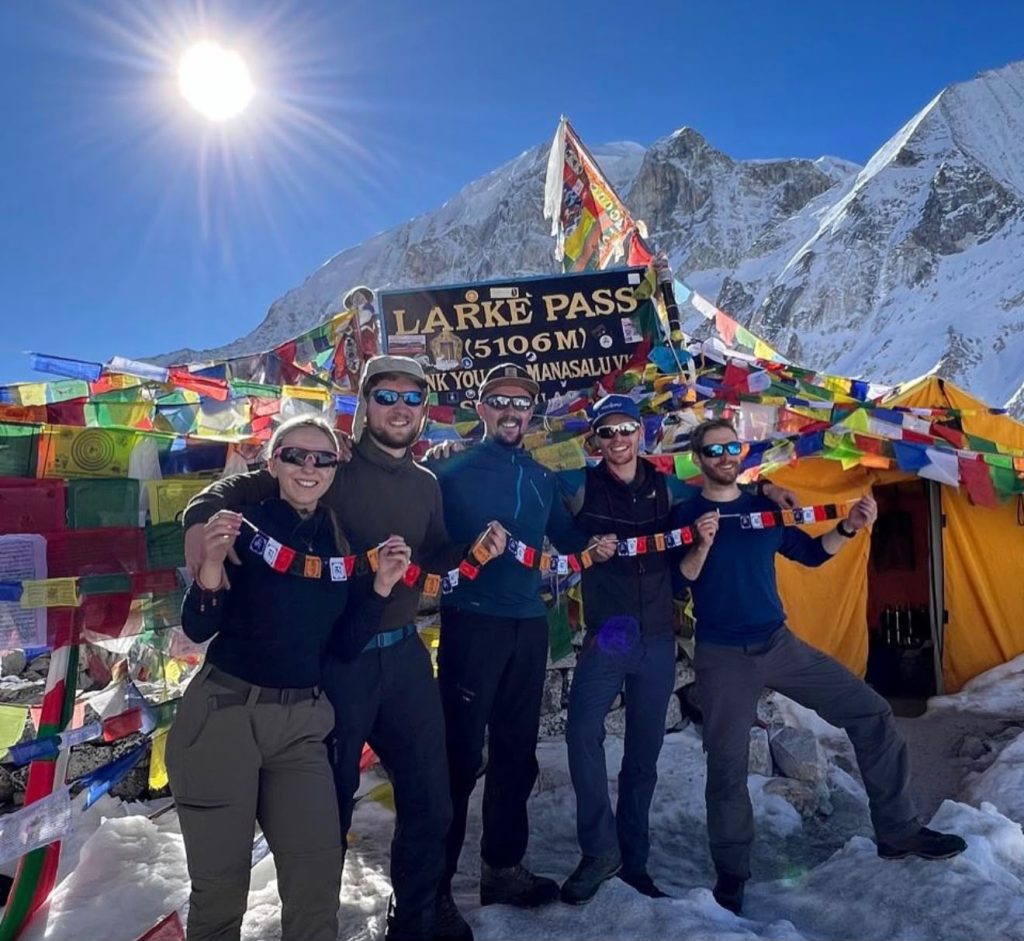
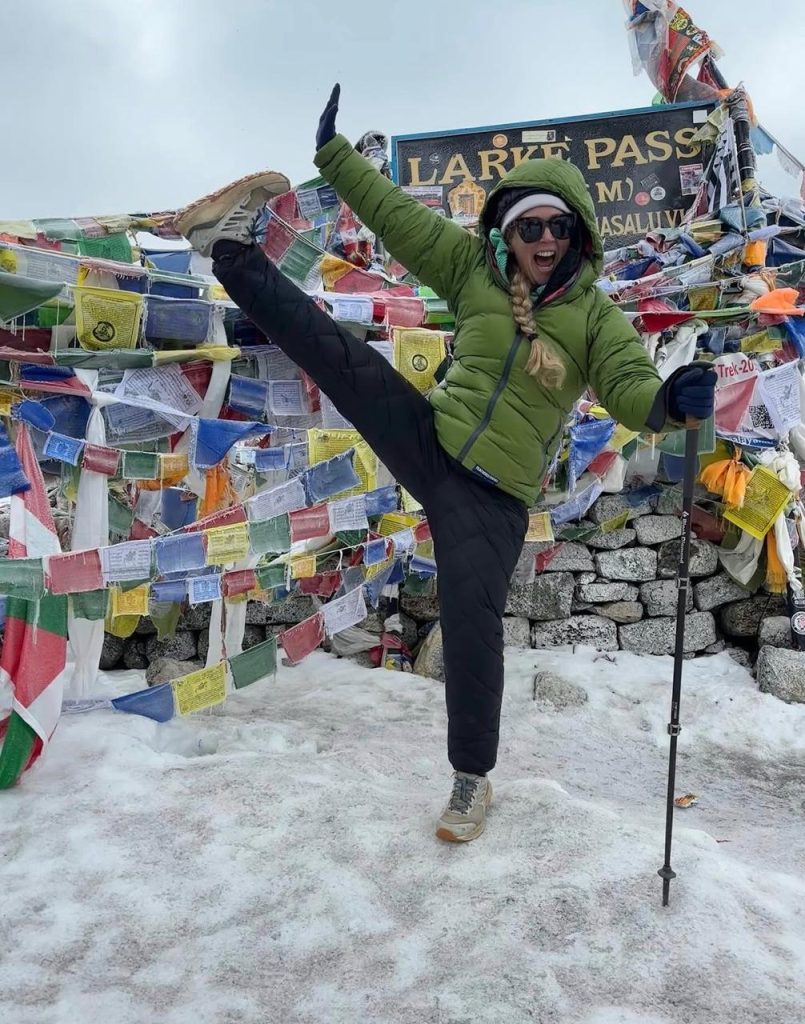
Private / Solo Traveler Manaslu Circuit Trek
Traveling alone to Nepal does not mean you have to join a large group. You can book a private Manaslu Circuit Trek through a registered trekking agency and travel with your own guide and, if required by your package, porter support.
This is the best option for travelers who value privacy, flexibility and a more personalized experience.
Advantages of a Private Manaslu Trek
- Your own trekking schedule – Choose your preferred departure date rather than waiting for a fixed group departure.
- Flexible walking pace – Your guide can adjust the pace according to your fitness, altitude response and trail conditions.
- More personalized acclimatization – Rest days and walking distances can be discussed according to how you are adapting to the altitude.
- Greater privacy – You are not required to follow the preferences of a large group.
- Flexible photography stops – Stop for mountain views, villages, monasteries or photography when conditions allow.
- Easier itinerary customization – Add or remove suitable side trips depending on your available time.
- Direct communication with your guide – Discuss the route, local culture, weather and daily plans directly with your guide.
- Good for experienced trekkers – Particularly suitable for travelers who already know their preferred walking rhythm.
The biggest disadvantage is cost. When you travel privately, the fixed costs of the guide, permits, transportation and other logistics are shared among fewer people. This normally makes the per-person price higher than joining a larger group.
Group Manaslu Circuit Trek
A group Manaslu Circuit Trek allows several trekkers to travel together under the leadership of a licensed trekking guide and through an authorized trekking agency.
A group can be made up of friends or family members who book together, or travelers who join a scheduled departure with other trekkers.
Advantages of a Group Trek
- Lower cost per person – Shared guide, transportation and other group-related expenses can make the trek more economical.
- Meet other travelers – A good option if you enjoy meeting people from different countries.
- Shared trekking experience – Long walking days can be more enjoyable with companions.
- Group support – You have other trekkers around you during the journey.
- Good for solo travelers on a budget – You can arrive in Nepal alone but join a suitable trekking group.
- Fixed departure convenience – Once the departure is confirmed, the main logistics are already organized.
- More social atmosphere – Meals and evenings in teahouses can become opportunities to share experiences.
The main trade-off is less flexibility. Everyone needs to maintain a reasonably similar pace and follow the agreed itinerary. Changes to accommodation, rest days or daily walking distances may also be more difficult than on a private trek.
Private vs Group Manaslu Circuit Trek
| Feature | Private / Solo Traveler | Group Trek |
|---|---|---|
| Trip Style | Private | Shared |
| Guide | Dedicated to your trip | Shared with the group |
| Departure Date | Flexible | Usually fixed |
| Walking Pace | More flexible | Group pace |
| Itinerary Changes | Easier | More limited |
| Privacy | High | Moderate |
| Social Experience | More private | More social |
| Cost Per Person | Higher | Usually lower |
| Photography Stops | Flexible | Based on group pace |
| Acclimatization | Easier to personalize | Planned for the group |
| Best For | Privacy and flexibility | Value and companionship |
Is Solo Manaslu Trekking Allowed?
“Solo traveler” and “solo trekking” are not the same thing.
You can travel to Nepal alone and book a private Manaslu Circuit Trek, but you should not interpret this as permission to independently enter the Manaslu restricted area without the required trekking agency, guide and permits.
Travelers should arrange their Manaslu trek through a properly registered trekking agency that can obtain the necessary restricted-area permit and arrange the required guide and documentation.
Which Option Should You Choose?
Choose a Private Manaslu Trek If:
- You are traveling alone and want your own guide.
- You prefer privacy.
- You want flexibility with your daily walking pace.
- You want to customize the itinerary.
- You have specific photography or exploration interests.
- You prefer not to follow a fixed group schedule.
- You are comfortable paying more for a personalized experience.
Choose a Group Manaslu Trek If:
- You want to keep the cost lower.
- You enjoy meeting other travelers.
- You prefer trekking with companions.
- You are comfortable following a shared itinerary.
- You are traveling alone but would like company.
- You want a more social trekking experience.
What About a Small Private Group?
For many trekkers, a small private group of 2–5 people is actually the most balanced option. You get the advantages of traveling together while retaining considerably more flexibility than a large group. Costs can also be lower per person than a completely private single-person trek.
This is particularly suitable for friends, couples, families and small groups of experienced trekkers who want their own guide and itinerary.
Manaslu Treks & Expedition: Private or Group?
At Manaslu Treks & Expedition, we specialize specifically in the Manaslu Circuit and Tsum Valley region. We can organize private trips for individual travelers, couples, families and small groups, as well as suitable group departures.
Our approach is simple: no unnecessary complexity, transparent pricing and practical local support. We help with the required permits, transportation, accommodation, guides and porters while planning the itinerary around the actual conditions of the Manaslu route.
For travelers who want a private experience, we can arrange the trek around your preferred dates and walking pace. For those looking for a more economical option, we can discuss an appropriate group arrangement.
40 Facts Manaslu Circuit Trek Facts
Manaslu Is the Eighth-Highest Mountain
Mount Manaslu stands at 8,163 m (26,781 ft), making it the eighth-highest mountain in the world.
The Name Manaslu Means “Mountain of the Spirit”
The name Manaslu is associated with the Sanskrit word “Manasa”, commonly interpreted as spirit or intellect.
Manaslu Is Located in Gorkha District
Mount Manaslu and much of the trekking region lie in northern Gorkha District of Gandaki Province, Nepal.
The First Successful Ascent Was in 1956
The first recorded successful ascent of Mount Manaslu took place on 9 May 1956 during a Japanese expedition.
Toshio Imanishi and Gyalzen Norbu Reached the Summit First
Japanese climber Toshio Imanishi and Sherpa Gyalzen Norbu reached the summit on 9 May 1956.
The 1956 Expedition Was Led by Yuko Maki
The successful Japanese expedition was led by veteran Japanese mountaineer Yuko Maki.
Manaslu Was Attempted Before the First Ascent
Earlier Japanese expeditions explored the mountain before the successful 1956 climb.
Reinhold Messner Climbed Manaslu Without Supplementary Oxygen
Reinhold Messner made the first ascent of Manaslu without supplementary oxygen in 1972.
The Trek Circles the Manaslu Massif
The Manaslu Circuit travels around the Manaslu massif, connecting the Budhi Gandaki and Marsyangdi valleys.
The Route Follows the Budhi Gandaki River
Much of the lower and middle route follows the Budhi Gandaki Valley through gorges, forests and villages.
Machha Khola Is a Common Starting Point
Many modern itineraries begin the walking section around Machha Khola after transportation from Kathmandu.
Road Access Has Changed the Classic Route
Road development allows transportation to reach farther into the lower Budhi Gandaki Valley than in the past.
The Landscape Changes With Altitude
The trek moves from warm green valleys and forests to alpine terrain and the high Himalayan environment.
Jagat Is an Important Route Settlement
Jagat is one of the established settlements along the lower Manaslu trekking route.
Deng Leads Toward Higher Mountain Terrain
After Deng, the trail continues through increasingly rugged landscapes toward Namrung and the upper valley.
Namrung Offers Excellent Mountain Views
The scenery becomes more alpine around Namrung, with impressive views of Manaslu and surrounding peaks.
Lho Is an Important Cultural Village
Lho is known for its traditional mountain settlement, Buddhist culture and views toward Manaslu.
Samagaon Is the Main Upper-Valley Settlement
At approximately 3,500 m, Samagaon is one of the most important settlements on the Manaslu Circuit.
Samagaon Is Important for Acclimatization
Trekkers commonly spend an additional night here before continuing toward Samdo and higher elevations.
Birendra Lake Is Near Samagaon
Birendra Lake is a popular acclimatization excursion offering beautiful alpine scenery below Manaslu.
Pungyen Gompa Is an Important Cultural Site
The monastery can be visited from Samagaon and offers insight into the Buddhist traditions of the region.
Manaslu Base Camp Can Be Added
Trekkers with sufficient time and suitable conditions can include an excursion toward Manaslu Base Camp.
Samdo Has Strong Tibetan Cultural Influence
Samdo is a high-altitude settlement where Tibetan Buddhist traditions and mountain culture are particularly visible.
Dharmasala Is the Pre-Pass Stop
Dharmasala, also known as Larkya Phedi, is commonly used as the overnight stop before crossing Larkya La.
Larkya La Reaches 5,106 m
Larkya La Pass is the highest point of the standard Manaslu Circuit at approximately 5,106 m.
Larkya La Is Usually the Hardest Day
The crossing combines high altitude, a long walking day, cold conditions and a major descent toward Bimthang.
Bimthang Comes After the Pass
The trail descends from Larkya La toward Bimthang through spectacular mountain scenery and changing vegetation.
The Route Connects With the Marsyangdi Valley
After Bimthang, the route continues toward the Marsyangdi Valley and the wider Annapurna region.
Manaslu Is a Restricted Trekking Region
The Manaslu restricted area is regulated by the Government of Nepal and requires appropriate trekking permits.
Several Permits Apply
The trek requires the appropriate restricted-area permit, conservation-area permits and applicable local fees.
A Licensed Guide Is Required
Current regulations require the appropriate licensed guide and trekking agency arrangements for the Manaslu restricted area.
Most Trekkers Stay in Teahouses
The Manaslu Circuit is primarily a teahouse trek, with locally operated lodges along the established route.
Local Food Is Available Along the Route
Dal bhat, noodles, rice, pasta, soups, potatoes and other simple meals are commonly available in teahouses.
Tibetan Buddhist Culture Is a Major Feature
Mani walls, prayer flags, chortens, prayer wheels and monasteries are important parts of the upper Manaslu landscape.
Manaslu Conservation Area Protects the Region
The conservation area protects important Himalayan landscapes, forests and wildlife habitats.
Spring and Autumn Are the Main Seasons
March to May and September to November are generally considered the most favorable trekking periods.
Connectivity Varies Along the Route
Wi-Fi and mobile networks are available in some villages, but connectivity becomes less reliable at higher elevations.
The Trek Can Be Combined With Tsum Valley
Tsum Valley can be added to create a longer trek with deeper cultural and Himalayan exploration.
Private and Group Treks Are Available
You can arrange a private trek or a suitable group journey depending on your dates, budget and preferred experience.
Manaslu Still Offers a Genuine Remote-Trail Experience
Despite improved roads and accommodation, the upper Manaslu region remains remote and combines high mountains, traditional villages, Buddhist culture and a demanding Himalayan pass.
Who Can Do the Manaslu Circuit Trek?
The Manaslu Circuit Trek can be completed by both beginners and experienced trekkers with proper preparation, reasonable fitness and a well-planned itinerary.
Beginners Can Do the Manaslu Circuit
You do not need years of Himalayan trekking experience. A reasonably fit beginner can complete the trek with proper preparation, a steady pace and a suitable itinerary.
The Trek Starts at a Lower Elevation
The trekking section commonly starts around Machha Khola at approximately 900 m. Starting relatively low allows you to gain elevation progressively instead of beginning the trek at high altitude.
The Elevation Increases Gradually
The route gradually climbs through Jagat, Deng, Namrung and Samagaon before reaching Samdo and Dharmasala. This gradual progression is important for acclimatization.
Good Fitness Is More Important Than Experience
You should be comfortable walking for several hours on consecutive days and managing uphill, downhill and uneven mountain trails.
Previous High-Altitude Experience Helps
Previous trekking above 3,000 m can be useful, especially for understanding how your body responds to altitude, although it is not an absolute requirement.
No Technical Climbing Skills Are Required
The standard Manaslu Circuit is a trekking route rather than a technical mountaineering expedition. The main challenges are endurance, altitude, terrain and weather.
Experienced Trekkers Can Enjoy the Challenge
Experienced trekkers will appreciate the remote trails, changing landscapes, high mountain scenery and the demanding crossing of Larkya La Pass.
Couples and Friends Can Join
The trek is suitable for couples, friends and small private groups. A private itinerary can provide greater flexibility with walking pace and daily arrangements.
Solo Travelers Can Also Trek
Solo travelers can arrange a private trek with the required licensed guide and trekking agency support. Manaslu is a regulated restricted-area trekking route.
Proper Preparation Makes the Difference
Beginners should build their fitness before arriving in Nepal, walk at a comfortable pace and allow enough time for acclimatization before attempting the high sections.
Can a Beginner Really Trek the Manaslu Circuit?
Yes. A reasonably fit beginner can take on the Manaslu Circuit. The route starts at a relatively low elevation and gains altitude progressively, giving trekkers time to adapt along the way.
However, the trek reaches 5,106 m at Larkya La Pass, so it should not be treated as an easy trek. Good preparation, gradual acclimatization, a sensible walking pace and experienced local support are important for a successful journey.
Manaslu Circuit Trek Permits and Fees
The Manaslu Circuit Trek passes through a government-designated restricted area and protected conservation areas. Trekkers therefore need the appropriate trekking permits and registration documents before entering the route.
The permit process is more detailed than for many ordinary trekking routes in Nepal. The application requires trekker information, passport and visa details, insurance documents and information about the trekking team. The Manaslu Restricted Area Permit is processed through an authorized trekking agency.
When you book with Manaslu Treks & Expedition, our team handles the permit application, documentation and coordination before you begin your trek. You do not need to visit the Department of Immigration yourself.
What Permits and Documents Are Required?
For the standard Manaslu Circuit Trek, the main permits and trekking documentation include:
- Manaslu Restricted Area Permit (RAP)
- Manaslu Conservation Area Permit (MCAP)
- Annapurna Conservation Area Permit (ACAP)
- Local Government / Municipality Fee – NPR 100
- TIMS / Trekking Registration – arranged according to the current applicable regulations
Manaslu Restricted Area Permit (RAP)
The upper Manaslu region is designated as a restricted trekking area. Foreign trekkers therefore need a Manaslu Restricted Area Permit before entering the regulated section of the route.
The permit is processed through the Department of Immigration using the registered trekking agency system. The fee depends on the season and the number of days covered by the permit.
| Season | First 7 Days | After 7 Days |
|---|---|---|
| September–November | USD 100 / person / week | USD 15 / person / day |
| December–August | USD 75 / person / week | USD 10 / person / day |
Important: Your exact RAP cost depends on your trekking dates and the number of days covered by the restricted-area permit.
Manaslu Conservation Area Permit (MCAP)
The Manaslu Circuit passes through the Manaslu Conservation Area, which protects the region’s forests, wildlife, Himalayan environment and local communities.
Foreign trekkers need the Manaslu Conservation Area entry permit in addition to the Restricted Area Permit.
The MCAP is a separate conservation-area entry permit and does not replace the Manaslu Restricted Area Permit.
Annapurna Conservation Area Permit (ACAP)
After crossing Larkya La Pass, the standard Manaslu Circuit descends toward Bimthang, Tilije and the Marsyangdi Valley before continuing through the Annapurna Conservation Area.
Therefore, trekkers following the standard circuit also require an Annapurna Conservation Area Permit.
The ACAP is separate from the MCAP. One conservation-area permit does not cover both protected areas.
Local Government / Municipality Fee
In addition to the national trekking permits, a local government or municipality fee may apply to the Manaslu trekking area.
Included in our package: We arrange and pay the applicable local fee for our guests as part of the trekking documentation and logistics.
TIMS / Trekking Registration
TIMS stands for Trekkers’ Information Management System. It is used to register trekkers and maintain trekking information for management and safety purposes.
Current Nepal Tourism Board information lists the Manaslu Circuit Trek among the routes for which trekkers should arrange a guide and TIMS through a government-registered trekking agency.
Our service: We check the current TIMS and trekking-registration requirements for your departure and arrange the applicable documentation through our registered agency.
What Is Required to Get a Manaslu Trek Permit?
The Manaslu Restricted Area Permit requires more than simply paying the permit fee. The registered trekking agency must submit the required trekker information and supporting documents through the official permit system.
Passport
A clear copy of your valid passport is required for the trekking permit application.
Nepal Visa
Your valid Nepal visa information is required. The visa number or visa submission information is entered as part of the permit application.
Travel Insurance
Insurance documentation for foreign trekkers must be submitted as part of the restricted-area permit process.
Guide Insurance
Insurance documentation for the Nepali guide accompanying the trek is also required for the permit application.
Porter Insurance
Insurance documentation for the porters accompanying the trekking group must also be maintained as required.
Trek Schedule
The agency submits the planned trekking route, dates and other required program information.
Trekker Name List
The full names and required personal information of the trekkers are submitted with the permit application.
Passport Photograph
A recent passport-style photograph may be required for trekking permit and registration documentation.
Registered Trekking Agency
The restricted-area permit is processed through an authorized registered trekking agency rather than by an ordinary traveler independently.
Only an Authorized Trekking Agency Can Process the Restricted-Area Permit
Manaslu is a government-regulated restricted trekking area. Foreign trekkers cannot simply arrive at the trailhead and purchase the Restricted Area Permit themselves.
The Department of Immigration requires the application to be submitted through the appropriate trekking agency system. The agency must provide its own registration, trekking license, PAN and other required business documents together with the trekker’s application.
The application also includes the trekker’s passport and valid visa, trekker insurance information, guide and porter insurance documents, trekking schedule and other required paperwork.
Manaslu Treks & Expedition handles this process for our guests before the trek so that the required documents are prepared before entering the restricted section.
Documents We Need From You Before the Trek
Valid Passport
Send us a clear copy of your passport so we can prepare your trekking documentation.
Nepal Visa Information
Your valid Nepal visa details, including the applicable visa number or submission information, are required.
Travel Insurance
Provide your current travel insurance document showing appropriate coverage for your trekking plans.
Passport Photograph
A recent passport photograph may be required for permit processing and trekking registration.
Confirmed Trekking Dates
Your exact trekking dates are needed because the Restricted Area Permit fee depends on the season and duration.
Trekking Details
We use your itinerary and personal details to prepare the correct permit application.
Who Arranges Your Manaslu Trek Permits?
You do not need to visit the Department of Immigration or conservation-area offices yourself. Our trekking team handles the permit preparation and coordination before your departure.
- Passport and visa information checked before application
- Trekker insurance documents collected
- Guide and porter insurance documentation prepared
- Trekker name list and itinerary prepared
- Manaslu Restricted Area Permit processed
- Manaslu Conservation Area Permit arranged
- Annapurna Conservation Area Permit arranged
- Applicable local government fee handled
- TIMS / applicable trekking registration arranged
Where Are Manaslu Trek Permits Checked?
Your permits should be kept safely throughout the trek. Authorized personnel can check your trekking documents and registration at official checkpoints along the route.
Restricted-Area Checkpoints
Your Manaslu Restricted Area Permit and trekker information can be checked while traveling through the regulated area.
Conservation Checkpoints
Conservation-area entry permits may be checked when entering or traveling through protected areas.
Registration
Trekker information can also be registered at designated checkpoints along the route.
Keep Documents Safe
Do not leave important trekking documents behind in Kathmandu. Your guide will also help keep the paperwork organized during the trek.
What About Solo Trekkers?
The Manaslu Circuit is a regulated restricted-area trekking route. A traveler cannot simply enter the restricted section independently without meeting the current guide, agency, permit and registration requirements.
If you are traveling alone, we can arrange the required trekking services and documentation through our registered trekking company. You can also ask us about joining a group departure or arranging a private trek.
The important point is that the restricted-area permit and required trekking documentation must be properly arranged before entering the regulated section of the Manaslu region.
Adding Tsum Valley? You Need an Additional Permit
If you combine the Manaslu Circuit with the Tsum Valley Trek, an additional Tsum Valley Restricted Area Permit is required. This is separate from the Manaslu Restricted Area Permit.
September–November
USD 40 / person / weekUSD 7 per person per day after the first week.
December–August
USD 30 / person / weekUSD 7 per person per day after the first week.
Important: Tsum Valley permit fees are separate from the Manaslu Restricted Area Permit.
Are the Manaslu Trek Permits Included in Our Package?
Yes. The required permits and government documentation listed in your Manaslu Circuit Trek package are included. You do not need to visit the permit offices or arrange these documents independently after arriving in Nepal.
No hidden permit charges: We explain the required permits and applicable government fees before your trek. The permit services included in your package are handled by our team rather than leaving you to arrange them at checkpoints.
Important Note About Permit Fees and Regulations
Government permit fees and trekking regulations can be revised by the Department of Immigration, Nepal Tourism Board, NTNC or relevant local authorities.
The Restricted Area Permit fee depends on your trekking season and the number of days covered by the permit. Conservation-area fees and registration requirements are separate from the RAP.
We check the current requirements when preparing your documents so that your permits, insurance documents and trekking registration are correctly arranged before you enter the Manaslu region.
Manaslu Circuit Trek Distance, Walking Time & Elevation
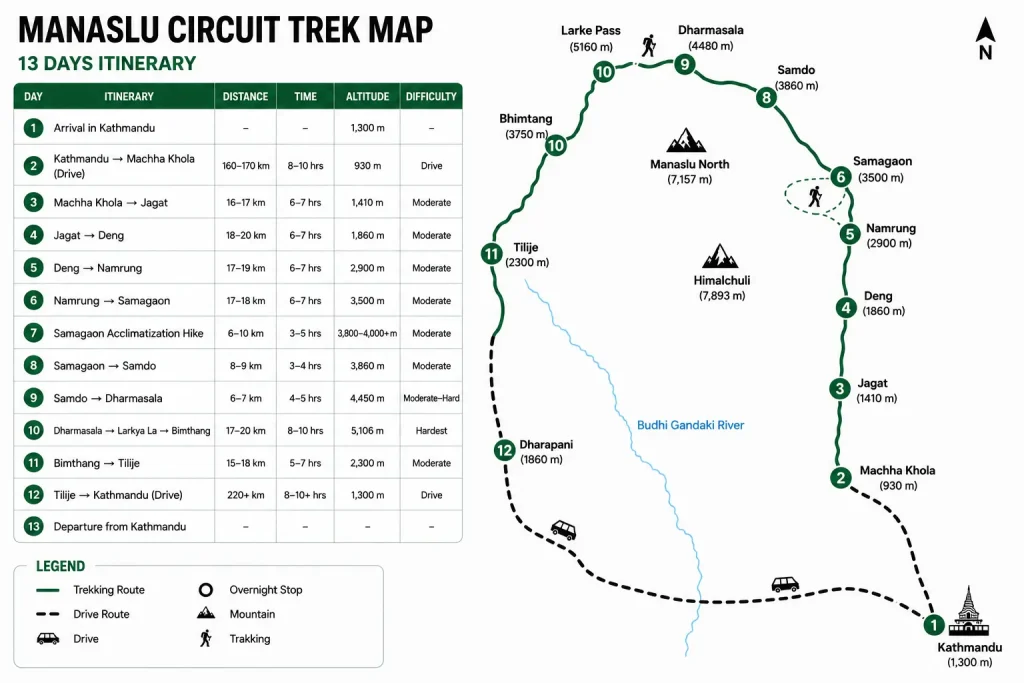
The Manaslu Circuit covers approximately 160–180 km of trekking, depending on the exact trail, road access and optional side trips. Walking time varies with altitude, terrain, weather and individual pace.
| Day | Route | Approx. Distance | Walking / Driving Time | Elevation | Difficulty |
|---|---|---|---|---|---|
| 01 | Kathmandu → Machha Khola | 160–170 km Drive |
8–10 hrs | 930 m | Drive |
| 02 | Machha Khola → Jagat | 16–17 km | 6–7 hrs | 1,410 m | Moderate |
| 03 | Jagat → Deng | 18–20 km | 6–7 hrs | 1,860 m | Moderate |
| 04 | Deng → Namrung | 17–19 km | 6–7 hrs | 2,900 m | Moderate |
| 05 | Namrung → Samagaon | 17–18 km | 6–7 hrs | 3,500 m | Moderate |
| 06 | Samagaon Acclimatization Hike | 6–10 km | 3–5 hrs | 3,800–4,000+ m | Moderate |
| 07 | Samagaon → Samdo | 8–9 km | 3–4 hrs | 3,860 m | Moderate |
| 08 | Samdo → Dharmasala | 6–7 km | 4–5 hrs | 4,450 m | Moderate–Hard |
| 09 | Dharmasala → Larkya La → Bimthang Highest and most demanding day | 17–20 km | 8–10 hrs | 5,106 m | Hardest |
| 10 | Bimthang → Tilije | 15–18 km | 5–7 hrs | 2,300 m | Moderate |
| 11 | Tilije → Dharapani / Road Point | 10–15 km | 4–6 hrs | ~1,860 m | Moderate |
| 12 | Dharapani → Kathmandu | 220+ km Drive |
8–10+ hrs | 1,300 m | Drive |
| 13 | Kathmandu → International Airport | — | 30–60 min | 1,300 m | Departure |
Distance Is Not the Only Measure of Difficulty
The number of kilometres does not tell the complete story on the Manaslu Circuit. A shorter day at high altitude can feel more demanding than a longer day in the lower valley because altitude, steep ascents, rocky trails, weather and reduced walking speed all affect the experience.
The Dharmasala → Larkya La → Bimthang section is normally the most demanding day. It combines a long walking day with the highest elevation of the trek, 5,106 m at Larkya La Pass.
Approximate total trekking distance: 160–180 km (99–112 miles), depending on the exact route, transportation arrangements and optional side trips.
13 Day Manaslu Circuit Trekking Map
Teahouse Facilities on the Manaslu Circuit Trek
The Manaslu Circuit Trek is now a well-established teahouse trek. Trekkers do not need to sleep in tents on the standard route because teahouses and guesthouses are available throughout the trekking villages from the lower Budhi Gandaki Valley to the high-altitude section.
Facilities have improved significantly in recent years. Most teahouses now provide electricity, Wi-Fi, charging facilities, hot meals and basic internet access. The facilities become more basic as you reach the highest part of the route, particularly around Dharmasala, but the standard Manaslu Circuit can be completed comfortably using teahouse accommodation.
Teahouse Accommodation
You can stay in teahouses or local guesthouses in the villages along the entire standard Manaslu Circuit route. Camping is normally not required for the main circuit.
Rooms are generally simple and practical, with beds, mattresses and blankets. Twin-sharing rooms are common, although the exact room facilities vary from village to village.
Electricity
Electricity facilities have improved considerably along the Manaslu Circuit. Most teahouses now have access to electricity, allowing trekkers to charge phones, cameras, power banks and other electronic devices.
Dharmasala is the main exception. Electricity there is more limited and the teahouse relies on solar power. Apart from this high-altitude stop, electricity facilities are generally good at the teahouses along the route.
Phone and Laptop Charging
In most teahouses, guests can charge their mobile phones, cameras, power banks and even laptops in their rooms or at designated charging points.
Some teahouses previously charged around USD 1–2 for charging phones or laptops. However, charging has become much more accessible and is now often free at many teahouses along the Manaslu route.
Availability can still depend on the individual lodge, electricity supply and the number of guests using the system.
Wi-Fi and Internet
Wi-Fi is now available at most teahouses and villages along the Manaslu Circuit. You can generally use Wi-Fi for messaging, email, social media and normal internet browsing.
Dharmasala is the main exception, where internet and Wi-Fi facilities are very limited or unavailable. Once you leave Dharmasala, connectivity improves again as you descend toward Bimthang and the lower villages.
Internet speed can vary depending on the village, weather, network traffic and the number of people using the connection, but connectivity on the Manaslu Circuit is considerably better than it was in the past.
Namaste SIM and Mobile Data
A local Namaste SIM can be useful for trekkers who want mobile data instead of depending entirely on lodge Wi-Fi.
Mobile connectivity is available in many parts of the route, although coverage becomes less reliable in remote and high-altitude sections. Where the network is available, a good Namaste data package can provide useful internet access.
Food at Teahouses
Food is available at the teahouses throughout the standard Manaslu Circuit. You do not need to carry all of your meals or food supplies from Kathmandu.
Typical menus include dal bhat, rice, noodles, pasta, soups, potatoes, momos, Tibetan-style dishes, eggs, bread, porridge, pancakes and other simple trekking meals.
Vegetarian meals are widely available, and many teahouses can prepare food according to basic dietary preferences when requested.
Drinking Water
Drinking water is available at teahouses and villages along the route. Trekkers can purchase boiled or treated drinking water and refill bottles where available.
We recommend carrying a reusable water bottle and using a suitable water purification method or treated water rather than relying on untreated natural water sources.
Hot Showers
Hot showers are available at many teahouses, particularly in the lower and middle sections of the Manaslu Circuit. The exact availability depends on the lodge and local power or heating system.
At higher elevations, shower facilities become more basic and availability can be limited, especially around Dharmasala.
What Is Different at Dharmasala?
Dharmasala (Larkya Phedi) is the highest and most basic overnight stop before crossing Larkya La Pass. Facilities here are more limited than in the other villages.
- Electricity is mainly dependent on solar power.
- Wi-Fi and internet facilities are very limited compared with other teahouses.
- Charging facilities are more limited.
- Accommodation is basic because of the high altitude and remote location.
- Food and basic accommodation are still available, so camping equipment is not normally required for the standard itinerary.
Do You Need to Carry a Tent?
No. For our standard Manaslu Circuit Trek, you do not need to carry a tent or camping equipment. Teahouse and guesthouse accommodation is available throughout the regular Kathmandu-to-Kathmandu route.
Our team selects practical teahouses along the route and arranges your overnight accommodation in advance. This allows you to travel lighter and focus on the trek rather than carrying camping gear.
Manaslu Teahouse Facilities at a Glance
| Facility | Availability |
|---|---|
| Teahouse Accommodation | Available throughout the standard route |
| Electricity | Good in most villages |
| Phone Charging | Available at most teahouses |
| Laptop & Camera Charging | Available at many teahouses |
| Wi-Fi | Available at most teahouses except Dharmasala |
| Mobile Data | Available in many areas with local SIM coverage |
| Food | Available throughout the route |
| Drinking Water | Available at teahouses and villages |
| Hot Shower | Available at many lower and middle-altitude teahouses |
| Camping Required | No, not for the standard Manaslu Circuit |
Guides and Porters on the Manaslu Circuit Trek
Guides and porters are an important part of trekking in the Manaslu region. They do different jobs, but both contribute to a safer, smoother and more meaningful trekking experience. Understanding their roles also helps trekkers appreciate the local people who make Himalayan trekking possible.
What Does a Manaslu Trekking Guide Do?
A trekking guide leads and supports trekkers throughout the journey. Their responsibilities can include route guidance, daily planning, accommodation coordination, communication with local communities, altitude awareness and assistance when unexpected situations occur.
Why Is a Guide Important on Manaslu?
The Manaslu Circuit passes through remote mountain areas and reaches 5,106 m at Larkya La Pass. A knowledgeable guide understands the route, changing conditions and practical challenges of the high-altitude sections.
Guides Help With Daily Trekking Logistics
Your guide helps organize the day’s walking plan, check accommodation arrangements, coordinate meals and communicate with teahouses and local service providers along the route.
Guides Monitor Altitude and Well-Being
Experienced guides pay attention to how trekkers are coping with increasing elevation and can recommend appropriate rest, slower pacing or changes to the day’s plan when needed.
Guides Know the Local Trail
A local guide can explain different sections of the route, including river crossings, suspension bridges, steep climbs, villages and the changing landscape between the lower valley and high Himalayas.
Guides Explain Manaslu Culture
Trekking with a local guide gives you the opportunity to understand the traditions, monasteries, mani walls, prayer flags, festivals and Tibetan Buddhist influences found in the upper Manaslu region.
Guides Assist During Difficult Situations
Weather changes, trail problems, illness or transportation disruptions can happen in remote mountain areas. A local guide can communicate with the trekking agency and help coordinate an appropriate response.
What Does a Porter Do?
A porter carries trekking equipment and luggage, allowing trekkers to walk with a lighter daypack. Porters are an essential part of Nepal’s trekking industry, particularly on longer routes with multiple nights in the mountains.
Why Hire a Porter?
Carrying less weight can make long walking days more comfortable, especially when the route becomes steeper and reaches higher elevations. Hiring a porter also creates employment for people from Nepal’s mountain and trekking communities.
What Does a Porter Usually Carry?
A porter normally carries the traveler’s main trekking bag containing clothing, sleeping equipment and other personal belongings. Trekkers generally keep essential items such as water, documents, valuables, medication and personal necessities in their own daypack.
Porter and Guide Are Different Jobs
A porter primarily provides load-carrying support, while a licensed trekking guide is responsible for guiding, route management, communication and other professional responsibilities during the trek.
Some Porters Progress Into Guide Roles
Trekking can provide a career path in Nepal’s tourism industry. An experienced porter may gain trail knowledge, language ability and practical experience before undertaking the required training and certification to work as a guide.
Experience on the Trail Matters
Working as a porter allows someone to become familiar with trekking routes, mountain communities, weather patterns, teahouses and the practical realities of working in the Himalayas.
How Does Someone Become a Trekking Guide?
Becoming a professional trekking guide involves more than simply having trekking experience. In Nepal, guides need appropriate government-recognized training and certification. Training can cover subjects such as tourism, culture, geography, first aid, communication, trekking and mountaineering.
Porter-Guide Is Another Career Step
Nepal’s trekking industry also has porter-guide roles. These professionals can combine load-carrying and basic guiding responsibilities, depending on their training, experience and the requirements of the trekking agency.
Professional Guides Need More Than Route Knowledge
A good guide needs communication skills, leadership, knowledge of local culture, practical mountain experience, basic first-aid awareness and the ability to manage different situations while working with trekkers.
Guides Help Bridge the Language Gap
Local guides can communicate with teahouse owners, transport operators, porters and village residents while also explaining local information to international trekkers.
Hiring Local Staff Supports Mountain Communities
Trekking provides important employment opportunities for people from Nepal’s mountain and hill communities. Hiring local guides and porters helps keep tourism income within the communities along the trekking routes.
Responsible Porter Treatment Matters
Porters should be provided with reasonable loads, suitable equipment and fair working conditions. Responsible trekking means treating the people supporting the journey with the same respect given to the trekkers themselves.
Manaslu Requires Professional Guide Arrangements
The Manaslu Circuit is listed by Nepal Tourism Board among trekking routes requiring a licensed trekking guide and trekking-agency-issued TIMS card. This makes choosing a properly organized local trekking company particularly important for the route.
Guide, Porter and Local Experience Make a Difference
A porter and a guide perform different roles, but both are valuable to a successful Manaslu trek. Your porter helps reduce the physical load, while your guide provides route knowledge, organization, communication and local insight throughout the journey.
At Manaslu Treks & Expedition, we believe that local trekking staff should be treated as an important part of the journey, not simply as support staff. Our focus on the Manaslu and Tsum Valley region allows us to work closely with local guides, porters and communities who understand the area from real experience.
People, Culture and Festivals of the Manaslu Region
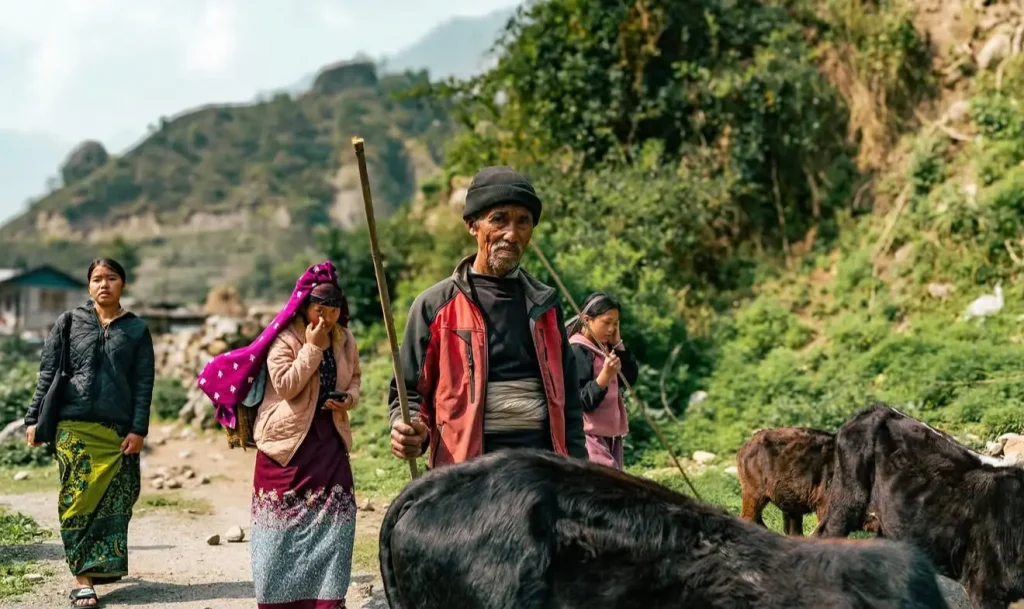
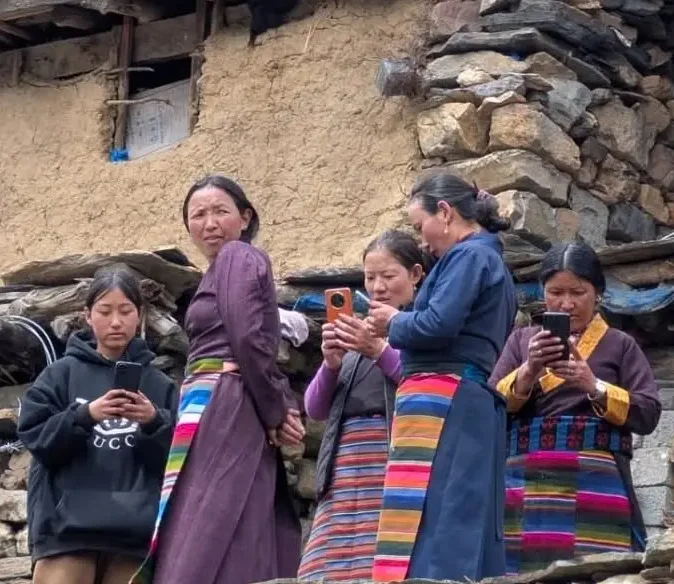
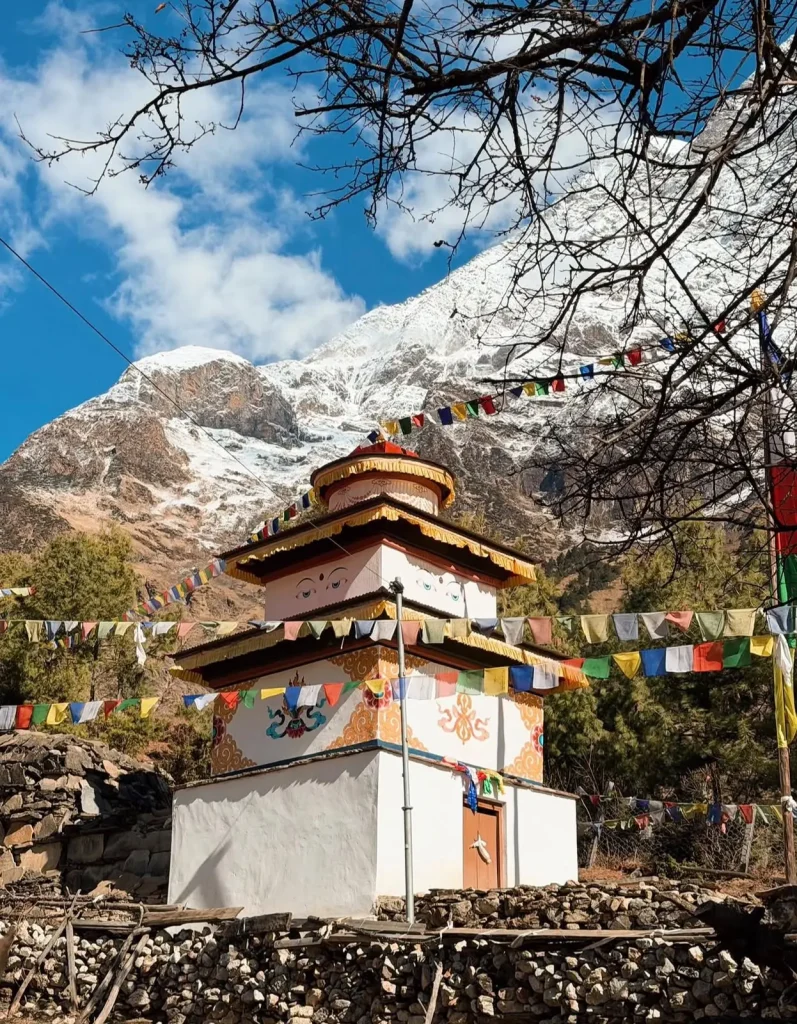
The Manaslu Circuit Trek is also a journey through living Himalayan culture. The communities, languages, religious traditions, food, architecture and festivals change noticeably as the trail rises from the lower Budhi Gandaki Valley toward the culturally distinctive Nubri and upper Manaslu valleys.
The Manaslu Conservation Area includes three broad cultural areas: Nubri, Kutang and Tsum. Villages such as Samagaon, Lho and Prok belong to the Nubri area, while Chumchet and Chhekampar form part of Tsum Valley. The region has a rich mixture of Himalayan communities and traditions shaped by geography, Buddhism and historical connections with Tibet.
The People of the Manaslu Region
Different communities and cultural traditions are encountered along the Manaslu trekking route. The cultural character becomes increasingly Tibetan-influenced as you travel toward the higher villages.
Gurung Communities
Gurung communities are particularly important in the lower and middle sections of the Manaslu region. Trekkers can experience traditional village life, food, architecture, music, dress and community customs.
Nubri Communities
The upper Budhi Gandaki area around Lho, Samagaon and nearby villages is known as Nubri. Nubri has a distinctive Himalayan identity strongly connected with Tibetan Buddhist traditions and the mountain environment.
Tsumba Culture
Tsum Valley has its own distinctive cultural identity, traditions and community life. The valley is known for its strong Buddhist heritage and comparatively preserved traditional practices.
Tibetan Cultural Influence
The upper Manaslu settlements have long-standing cultural connections with the Tibetan plateau. This influence can be seen in religion, architecture, language, clothing, food, monasteries and village traditions.
Religion and Spiritual Traditions
Tibetan Buddhism
Buddhism is deeply connected with everyday life in the upper Manaslu region. Monasteries, prayer wheels, mani walls, chortens and prayer flags are visible throughout the villages and trails.
Monasteries and Gompas
Gompas and monasteries serve as important religious and cultural centers for prayer, ceremonies, meditation and preservation of local traditions.
Mani Walls
Long walls built with carved Buddhist prayer stones are common along the upper trail and are important religious structures.
Prayer Wheels
Prayer wheels are found beside trails, monasteries and villages. Local people spin them as part of Buddhist devotional practice.
Prayer Flags
Colorful prayer flags are placed around monasteries, bridges, viewpoints and mountain passes and are an important part of the spiritual landscape.
Chortens and Sacred Sites
Chortens and other sacred structures can be found throughout the upper valleys. Trekkers should treat these places with respect and follow local guidance.
Festivals Celebrated in the Manaslu Region
Festival traditions differ between communities and valleys. Dates follow local lunar calendars and therefore change from year to year. If your trek coincides with a festival, celebrations may provide a particularly memorable insight into local life.
Lhosar
Lhosar is celebrated as New Year by several Himalayan communities. Celebrations can include family gatherings, religious ceremonies, traditional food, music and dancing.
Saga Dawa
Saga Dawa is an important Buddhist observance associated with the life of Buddha. Religious activities may include prayers, offerings, visits to monasteries and devotional practices.
Dumji
Dumji is observed in Himalayan Buddhist communities and can involve religious ceremonies, communal gatherings and traditional practices. The exact form and timing vary between communities.
Tamu Lhosar
Gurung communities celebrate Tamu Lhosar as their New Year. Family gatherings, blessings, traditional food, music and dance are important parts of the celebration.
Community Festivals
Villages may also observe local religious and seasonal celebrations connected with monasteries, agriculture, livestock, family traditions and the Buddhist calendar.
Monastery Ceremonies
Religious ceremonies held at village monasteries can include prayers, offerings and traditional Buddhist rituals. Access and photography may be restricted during certain ceremonies.
Traditional Lifestyle and Daily Life
Traditional Agriculture
Farming has traditionally been an important part of life in the region. Crops suitable for the mountain environment include barley, buckwheat, potatoes and other locally adapted crops.
Yak and Livestock
Yak and other livestock have long been important at higher elevations, providing transport, food, agricultural support and other resources for mountain households.
Traditional Trade
Communities in the northern Manaslu valleys historically had connections with Tibet through mountain trading routes. These historical links have influenced culture and livelihoods.
Tourism Today
Trekking has become an important source of income for many local families. Teahouses, guiding, portering, transportation and local services contribute to the regional economy.
Mountain Hospitality
Guests are often welcomed with traditional meals, tea and warm hospitality. Staying in local teahouses provides a closer look at everyday mountain life.
Community Life
Family, religion, agriculture, livestock and community relationships remain important parts of life in the remote Himalayan villages.
Food and Traditional Drinks
Dal Bhat
A staple Nepalese meal of rice, lentils, vegetables and accompanying dishes, commonly available throughout the trek.
Tsampa
Roasted barley flour is traditionally important in Tibetan Himalayan communities and may be encountered in the upper Manaslu region.
Thukpa
A warm noodle soup with Tibetan-Himalayan roots that is commonly found in mountain teahouses.
Tibetan Bread
A simple fried bread commonly served for breakfast or snacks in Himalayan trekking villages.
Butter Tea
Traditional butter tea is associated with Tibetan Himalayan culture and may be available in some upper villages.
Local Produce
Potatoes, barley, buckwheat and locally available vegetables form part of traditional mountain food systems.
Traditional Architecture and Village Life
Stone Houses
Thick stone walls and compact village layouts reflect the need to adapt architecture to cold Himalayan conditions.
Wooden Details
Wood is traditionally used for doors, windows, beams and other structural or decorative elements.
Compact Settlements
Villages in the upper valleys are often tightly grouped, creating sheltered communities in an otherwise rugged landscape.
Monastery-Centered Villages
Religious buildings and sacred structures are important visual and social elements within many upper Manaslu settlements.
Language, Dress, Music and Social Traditions
Local Languages
Different communities use their own Himalayan languages and dialects, while Nepali is widely used for communication across Nepal. In the upper valleys, Tibetan-related linguistic traditions are particularly important.
Traditional Clothing
Traditional clothing varies between communities and is particularly visible during festivals, ceremonies and special occasions.
Music and Dance
Singing, traditional instruments and community dances form an important part of celebrations and festivals. Visitors may see these traditions during major local events.
Family and Community
Family relationships, religious institutions and community cooperation remain important parts of life in remote Himalayan villages.
How Trekkers Should Respect Local Culture
- Ask permission before photographing people, especially monks and children.
- Follow local instructions when entering monasteries or religious buildings.
- Dress respectfully when visiting monasteries and during religious ceremonies.
- Walk around Buddhist monuments such as chortens and mani structures according to local custom, generally clockwise.
- Do not touch religious objects unless invited or permitted.
- Avoid loud behavior around monasteries and during religious ceremonies.
- Do not remove stones, prayer objects or cultural items as souvenirs.
- Support locally owned teahouses, shops and services where possible.
- Respect village privacy and ask before entering private homes or community spaces.
- Follow responsible trekking practices and help keep villages and trails clean.
More Than a Trek Around Mount Manaslu
The cultural experience of the Manaslu Circuit develops gradually. You begin among the communities of the lower Budhi Gandaki Valley and eventually enter the culturally distinctive upper valleys where Tibetan Buddhist traditions are deeply connected with everyday life.
For travelers interested in more than mountain scenery, this combination of people, religion, festivals, food, traditional villages, monasteries and Himalayan lifestyles is one of the defining experiences of the Manaslu Circuit Trek.
At Manaslu Treks & Expedition, our local team works specifically in the Manaslu and Tsum Valley region, allowing us to introduce trekkers to the route with practical knowledge of its communities, traditions and local way of life.
Transportation for the Manaslu Circuit Trek
Transportation is an important part of the Manaslu Circuit Trek because the route begins in a remote Himalayan valley rather than near an airport. Road access has improved significantly over the years, and depending on the season and current road conditions, jeeps can travel beyond the traditional road points toward Machha Khola and even farther toward Jagat.
we manage the transportation for our guests as part of the overall trekking logistics. Depending on the group size and road conditions, we use our own Land Cruiser, Bolero and Scorpio vehicles to provide practical and comfortable transportation.
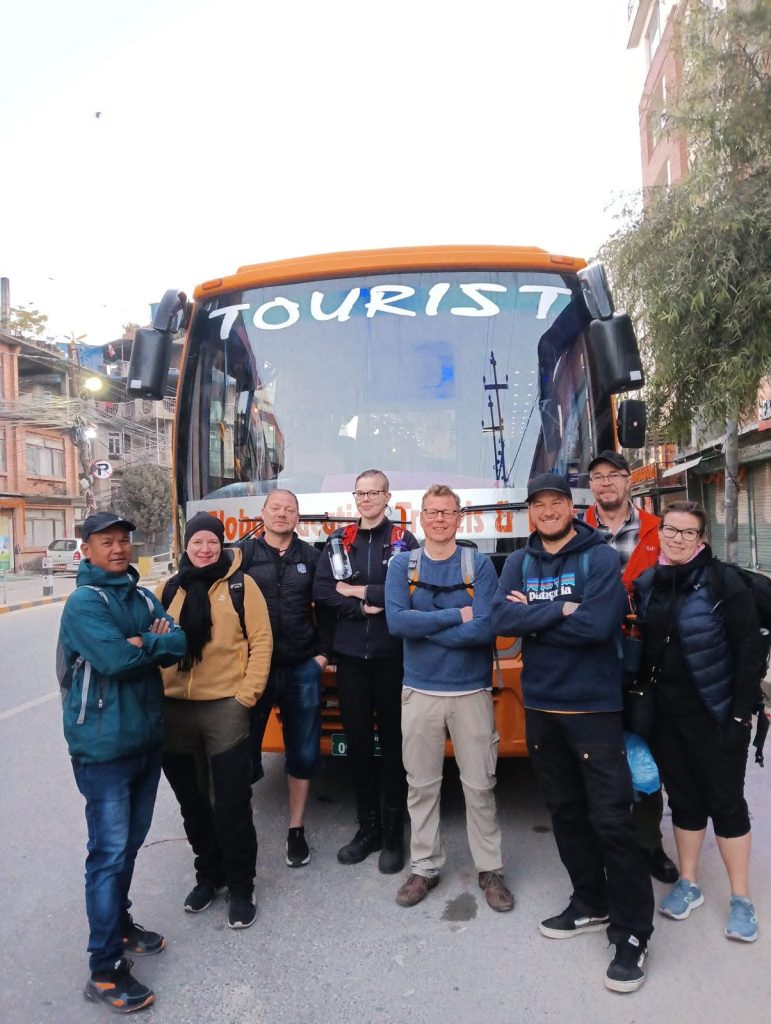
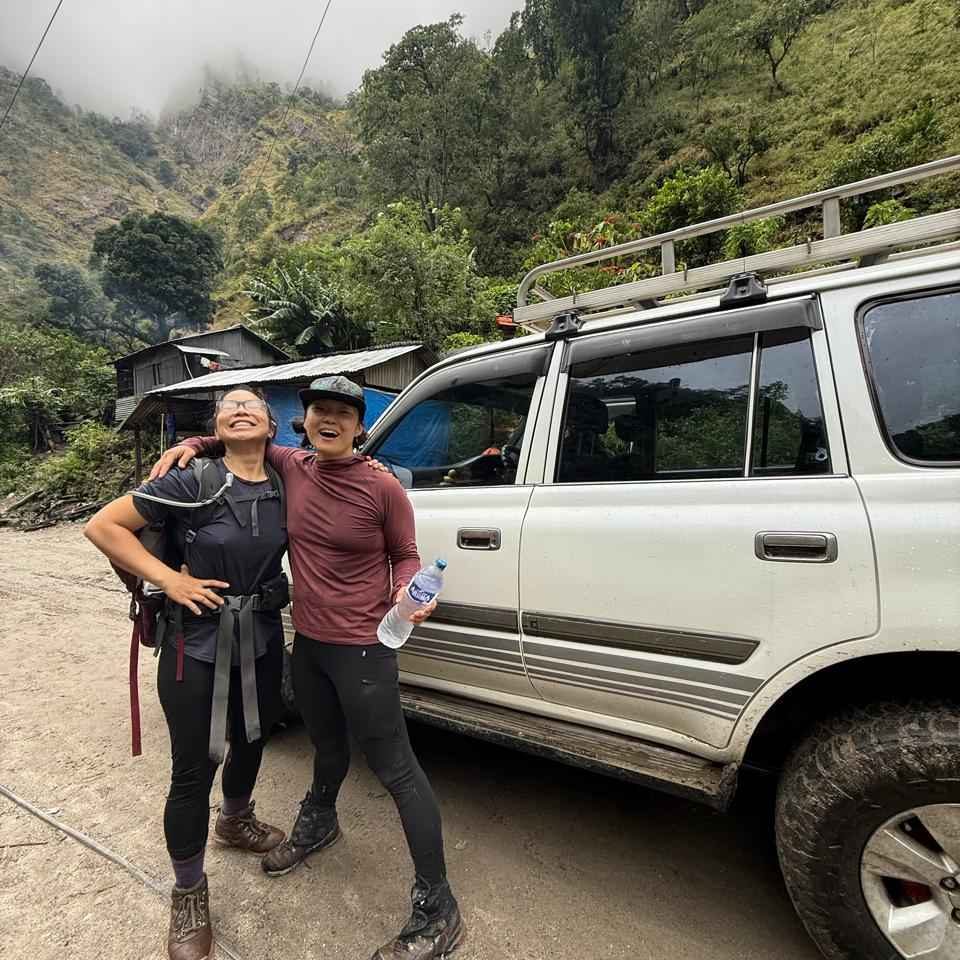
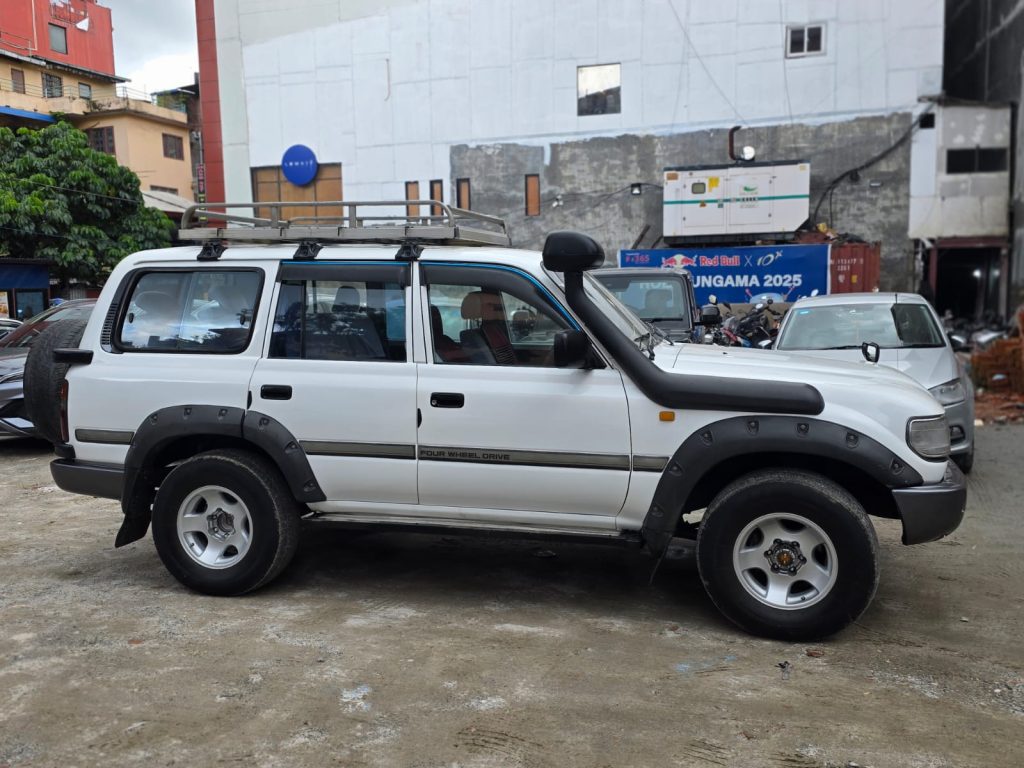
Kathmandu to Machha Khola and Beyond
Machha Khola is one of the most common starting points for the Manaslu Circuit Trek today. However, the actual road endpoint is not permanently fixed. Depending on current conditions, a private jeep can travel beyond Chisapani toward Machha Khola and potentially farther toward Jagat.
This improved road access can reduce the amount of walking required in the lower Budhi Gandaki Valley compared with older Manaslu itineraries. Our team checks the current road condition before departure and adjusts the transportation plan accordingly.
Road Access During the Monsoon Season
Road conditions are particularly important during the monsoon season. Heavy rainfall can cause muddy sections, landslides, damaged road sections and temporary interruptions.
During periods of difficult monsoon conditions, vehicles may not be able to operate farther than Machha Khola. When this happens, we adjust the trekking and transportation plan according to the actual conditions rather than relying on an outdated road schedule.
Kathmandu to Machha Khola Transportation Comparison
| Transportation | Approx. Cost | Approx. Time | Comfort | Flexibility |
|---|---|---|---|---|
| Public Bus | USD 10–12 / person | 7–8 hours | Basic | Limited |
| Reserved Private Jeep | Approx. USD 150 / jeep | 5–6 hours | Better | High |
What to Expect During the Road Journey
The drive from Kathmandu toward the Manaslu region is a long mountain journey. We plan the road section with reasonable breaks so trekkers can travel comfortably before beginning the main trekking section.
Breakfast
Breakfast is arranged according to the transportation schedule and your trekking package.
Lunch
Lunch is arranged during the journey according to the itinerary and road schedule.
Bathroom Breaks
We arrange suitable stops during the long road journey for bathroom facilities and rest.
Photo Stops
Where road and traffic conditions allow, we can make suitable stops for photographs and short breaks.
Return Transportation: Tilije to Besisahar
Transportation on the return journey is another important advantage of arranging your Manaslu Circuit Trek with our local team. Our standard itinerary finishes the trekking section at Tilije.
A public bus generally requires trekkers to reach Dharapani to connect with road transportation. However, our private jeep can travel directly to Tilije, subject to current road conditions.
This means our guests do not need to walk farther to Dharapani just to find public transportation after completing the trek.
Our Private Jeep: Tilije to Besisahar
We provide a private jeep for our trekkers from Tilije toward Besisahar. This is more convenient after completing the Larkya La crossing and the long descent through the Manang region.
- Direct pickup from Tilije
- No need to walk to Dharapani for public transport
- More comfortable after completing the trek
- Transportation coordinated by our team
- Subject to current road conditions
Public Bus: Dharapani to Besisahar
Trekkers using public transportation generally need to reach Dharapani to find the available bus or shared transportation toward Besisahar. This can require additional walking or local transportation from Tilije.
- Generally accessed from Dharapani
- Less flexibility
- Public departure schedules
- Less convenient after a long trekking day
We Provide Jeep Transportation to Besisahar
For guests booking our Manaslu Circuit Trek package, we do not simply send trekkers from Dharapani by public bus. We arrange jeep transportation from Tilije toward Besisahar, according to the road conditions and group requirements.
This gives our team better control over the return journey and allows us to coordinate the vehicle around the group’s trekking schedule.
After reaching Besisahar, we arrange or assist with onward transportation to Kathmandu according to the package and your travel plans.
Why Local Transportation Knowledge Matters
Road Endpoints Change
The road endpoint can change depending on weather, construction, landslides and local road conditions. A jeep that can reach one village during one season may not be able to reach the same point during another.
Jeep Access Beyond Chisapani
Depending on conditions, jeeps can travel beyond Chisapani toward Machha Khola and potentially farther toward Jagat.
Monsoon Requires Flexibility
During heavy monsoon conditions, road access can be reduced and vehicles may not operate beyond Machha Khola.
Private Jeep Saves Time
A private jeep normally takes around 5–6 hours from Kathmandu to Machha Khola in favorable conditions, compared with approximately 7–8 hours by public bus.
Direct Tilije Pickup
Our return jeep can collect trekkers directly from Tilije, avoiding the need to reach Dharapani simply to find public transportation.
Local Drivers
Local drivers familiar with the mountain roads are an important part of reliable transportation in remote areas.
Important Note About Road Access
All travel times and road endpoints mentioned above are approximate. Mountain roads can be affected by rainfall, landslides, traffic, construction and seasonal conditions.
We check the current road situation before departure and make the transportation arrangements according to the conditions on the ground. Our priority is to provide a practical and safe journey, rather than promising a fixed road endpoint regardless of conditions.
Flora and Fauna of the Manaslu Circuit Trek
The Manaslu Circuit Trek takes you through the Manaslu Conservation Area, one of the protected mountain areas of Nepal. The conservation area covers about 1,663 square kilometers in northern Gorkha and includes the Nubri and Tsum valleys.
One of the interesting things about the Manaslu trek is how quickly the landscape changes with altitude. You start in green valleys with forests and farmland, then gradually walk through rhododendron and pine forests, alpine meadows and finally the high mountain landscape around Larkya La Pass at 5,106 meters.
According to the National Trust for Nature Conservation (NTNC), the Manaslu Conservation Area has recorded more than 2,000 plant species, 39 mammal species, 201 bird species, 3 reptile species and 11 butterfly species.
Manaslu Conservation Area
The Manaslu Conservation Area was established in 1998. Conservation work focuses on protecting wildlife, forests, natural resources and local cultural heritage while supporting sustainable tourism and local communities.
During the Manaslu Circuit Trek, you pass through forests, traditional villages, farmland, alpine pastures and high mountain areas. Each zone has its own plants and wildlife.
For official information, visit the National Trust for Nature Conservation – Manaslu Conservation Area Project .
You can also find information from the Department of National Parks and Wildlife Conservation .
Flora of the Manaslu Circuit Trek
The vegetation changes as you gain altitude. The lower part of the trail is greener and warmer. As you walk toward Namrung, Lho and Samagaun, you see more pine, fir, spruce and rhododendron forests. Above the tree line, the forest gradually disappears and alpine plants become more common.
Rhododendron
Rhododendron is one of the most familiar plants in the Himalayan forests. Several rhododendron species grow in the Manaslu region at different elevations.
Spring is a particularly interesting time to see rhododendron flowers. The flowering time is different from one elevation to another and also depends on the weather each year.
Pine, Fir and Spruce Forests
Pine, fir and spruce forests become more noticeable as the trail climbs toward Namrung, Lho and Samagaun.
These forests are not only beautiful parts of the trekking route. They also provide important habitat and food for many birds and mountain animals.
Himalayan Birch and Juniper
At higher elevations, you can see Himalayan birch and juniper. Himalayan birch can grow close to the upper tree line, while juniper and other low-growing plants become more common as the altitude increases.
The change is especially noticeable when walking from Samagaun toward Samdo and Dharmasala.
Alpine Plants and Meadows
Above the main forest area, the landscape becomes more open. You will see alpine grass, small shrubs, herbs and other plants growing between rocks and in mountain meadows.
These plants have to survive cold temperatures, strong winds, intense sunlight and a short growing season. Some plants in the Manaslu region are also traditionally used for medicine, which makes responsible conservation important.
Wildlife of the Manaslu Circuit Trek
The Manaslu Conservation Area is home to many Himalayan animals. Recorded species include snow leopard, lynx, musk deer, red fox, jackal, brown bear, blue sheep, Himalayan tahr, Himalayan serow, woolly hare and Himalayan marmot.
However, the Manaslu Circuit is not a wildlife safari. Most large animals are shy and live away from the main trekking trail. Seeing wildlife is possible, but there is no guarantee.
Snow Leopard
The snow leopard is one of the most famous animals of the high Himalayas and is recorded in the Manaslu Conservation Area. It lives in remote high-altitude areas and depends on wild animals such as blue sheep and Himalayan tahr for food.
Seeing a snow leopard during a normal Manaslu Circuit Trek would be very rare. Trekkers should enjoy knowing that this important Himalayan predator is part of the ecosystem rather than expecting to see one.
Blue Sheep
Blue sheep, also called bharal, are well adapted to the steep and rocky slopes of the high Himalayas. They are an important food source for snow leopards and are part of the natural food chain in the high Manaslu region.
Himalayan Tahr
The Himalayan tahr is another mountain animal found in the Manaslu region. It is well adapted to rocky slopes and high mountain environments.
Himalayan Serow
The Himalayan serow lives in forested and rocky mountain areas. It is not easy to see because it usually stays away from busy trekking trails.
Musk Deer
Musk deer are also recorded in the Manaslu Conservation Area. They live in Himalayan forest and mountain habitats and are generally difficult to spot during a trek.
Red Fox and Lynx
The Manaslu region also provides habitat for predators such as red fox and lynx. These animals are naturally difficult to see because they are shy and usually stay away from people.
Himalayan Marmot
The Himalayan marmot is one of the smaller animals that trekkers may notice in open high-altitude areas. They can sometimes be seen around alpine pastures and rocky mountain slopes.
Birds on the Manaslu Circuit Trek
Birdlife is another important part of the Manaslu Conservation Area. More than 200 bird species have been recorded in the area. Depending on the elevation and habitat, trekkers may encounter different mountain birds.
Recorded species include Himalayan griffon, golden eagle, Tibetan snowcock, snow partridge and chukar partridge.
Himalayan Griffon
The Himalayan griffon is a large mountain vulture. It can often be seen soaring above valleys and mountain ridges when weather conditions provide good visibility.
Golden Eagle
The golden eagle is another impressive bird found in Himalayan mountain environments. Look toward the open sky and ridges, particularly in areas with good visibility.
Tibetan Snowcock
The Tibetan snowcock is adapted to high-altitude Himalayan environments and is one of the bird species recorded in the Manaslu Conservation Area.
Snow Partridge and Chukar
Snow partridge and chukar are also found in the region. These birds are adapted to rocky mountain terrain and higher elevations.
Butterflies, Reptiles and Smaller Wildlife
Manaslu’s biodiversity also includes smaller animals. NTNC records 11 butterfly species and 3 reptile species in the conservation area.
Smaller wildlife is generally more common in the warmer lower and middle sections of the trek. As you climb toward Larkya La, the colder climate and lack of vegetation mean that fewer species can survive at these extreme elevations.
Flora and Fauna by Elevation
| Trekking Section | What You May See |
|---|---|
| Jagat – Deng | Green forests, birds, butterflies and lower-elevation plants. |
| Deng – Namrung | Pine, rhododendron and mixed mountain forests. |
| Namrung – Lho | Conifer forests, rhododendron and mountain birds. |
| Lho – Samagaun | Pine, fir, birch, rhododendron and changing vegetation. |
| Samagaun – Samdo | Alpine plants, open slopes and high-altitude wildlife habitat. |
| Samdo – Dharmasala | Sparse vegetation, rocky terrain and high mountain habitat. |
| Dharmasala – Larkya La | Very little vegetation, snow, rocks and alpine terrain. |
| Larkya La – Bimthang | Alpine landscape gradually changing back into forest. |
| Bimthang – Tilije | Pine, rhododendron and mixed mountain forests. |
Why Is the Manaslu Region So Biodiverse?
The biggest reason is the large change in altitude. The Manaslu Circuit starts in lower river valleys and reaches more than 5,000 meters at Larkya La Pass.
Temperature, rainfall, vegetation and soil change as you climb. Because of this, different plants and animals live at different elevations.
This is why a single Manaslu trek can take you through green forests, rhododendron woodland, conifer forests, alpine meadows and high mountain terrain.
When Is the Best Time to See Flora and Fauna?
Spring is a good time to enjoy flowers and changing vegetation, especially rhododendron in the forest areas.
Autumn usually provides clear mountain views and good trekking conditions, which also makes it a pleasant time for observing the natural environment.
Wildlife sightings are unpredictable in every season. Your chances depend on the animal, elevation, weather, time of day and simply luck.
Responsible Wildlife Viewing
If you see wildlife during the Manaslu Circuit Trek, keep a safe distance and observe quietly. Do not feed animals, chase them for photographs or try to touch them.
We also recommend not picking flowers, plants or other natural materials from the conservation area. Keeping the trail clean and respecting local conservation rules helps protect the environment for future trekkers.
What Can You Realistically See on the Manaslu Trek?
You should not come to Manaslu expecting to see a snow leopard or other rare animals. These animals are present in the wider conservation area, but they are shy and usually live far from the main trekking trail.
In our experience, trekkers are more likely to notice the changing forests, rhododendron flowers, mountain birds, marmots and the different vegetation zones along the trail.
A local guide can also help you recognize birds, plants and signs of wildlife that you might otherwise walk past without noticing.
Manaslu Conservation and Sustainable Tourism
The Manaslu Conservation Area is also home to local communities whose livelihoods are connected with agriculture, livestock, trade and tourism. Conservation and tourism therefore need to work together.
As trekkers, we can help by following conservation rules, reducing waste, respecting wildlife, protecting plants and respecting the local communities along the trail.
The forests, wildlife, villages and mountains are all part of the same environment. Protecting one also helps protect the others.
Official Manaslu Conservation Area Information
For detailed and official information about the Manaslu Conservation Area, visit the National Trust for Nature Conservation and the Department of National Parks and Wildlife Conservation.
National Trust for Nature Conservation – Manaslu Conservation Area Project
Department of National Parks and Wildlife Conservation – Manaslu Conservation Area
Join Our Fixed Trip Starting Date
Contact us for private trip
- SEND EMAIL INFO@MANASLUTREKS.COM
- MAKE CALL ON WHATSAPP
-
Group Discount Available GuaranteedSundayAug 16, 2026FridayAug 28, 2026$1,590$1,15028% OFFAvailable
-
Group Discount Available GuaranteedMondayAug 17, 2026SaturdayAug 29, 2026$1,590$1,15028% OFFAvailable
-
Group Discount Available GuaranteedTuesdayAug 18, 2026SundayAug 30, 2026$1,590$1,15028% OFFAvailable