Published 2026
By Steffen, Germany
Why I Chose the Manaslu Circuit and Tsum Valley Trek Over Every Other Nepal Trek
I had been planning a serious Himalayan trek for three years. Not the kind of planning where you read a few articles and save things to a wish list. The real kind. Sitting with maps spread on the kitchen table in my apartment in Munich, reading trip reports from other trekkers, watching old documentary footage about the Nepal Himalaya, and trying to understand what different routes actually feel like on the ground rather than what they look like on a website. Our manaslu trek company provides fully customised itineraries with no advance deposit required.
Everest Base Camp was the first route I researched seriously. Everyone who has thought about trekking in Nepal starts there. But the more I read about Everest Base Camp the more I kept coming back to the same words in every review and trip report. Crowded. Busy. Hundreds of other trekkers visible on the trail at any given moment during peak season. Tea houses fully booked months in advance. That was not the Nepal I was looking for.
The Manaslu Circuit Trek came up consistently as the best alternative for trekkers who wanted serious high altitude experience in Nepal without the commercial atmosphere of the Everest and Annapurna regions. The Manaslu Circuit is a restricted area requiring special permits, which limits the number of trekkers on the route in a way that the main Everest and Annapurna trails simply cannot manage. That was already interesting to me.
But what really decided it was the Tsum Valley Trek. I first read about Tsum Valley in a long trip report written by an Austrian trekker who had done the Manaslu Circuit and Tsum Valley Trek combination in 2023. He described entering the Tsum Valley as stepping into a world that the 21st century had not yet fully reached. A valley hidden behind the main Manaslu Circuit, inhabited by the Tsumba people who have maintained a Tibetan Buddhist way of life essentially unchanged for centuries. Monasteries carved into cliffsides. Villages where the houses looked exactly as they did in photographs from fifty years ago. A community that had been completely closed to foreign visitors until 2008 and that even now received only a small number of trekkers per year due to the permit costs and the remoteness of the access route.
Planning the Manaslu Tsum valley Circuit Trek and need help with permits, route, or itinerary?
WhatsApp us Email usI read that report three times. Then I started researching the 19 Days Manaslu Circuit and Tsum Valley Trek specifically. The 19 day version combines the full Tsum Valley extension with the complete Manaslu Circuit including the Larkya La Pass crossing at 5,106 metres. It is one of the longest and most demanding trekking routes in Nepal outside of technical climbing expeditions. It was exactly what I wanted.
I found Manaslu Treks and Expedition while searching specifically for companies with deep expertise in the Manaslu and Tsum Valley region. I sent a message on their website and Kiran replied the same day with specific, detailed, honest answers to every question I had asked. Not a generic response with package descriptions. A personal reply from someone who clearly knew the Manaslu Circuit and Tsum Valley Trek from the inside. I booked within the week.
The 19-Day Manaslu Circuit with Tsum Valley Trek is one of Nepal’s most rewarding long-distance Himalayan journeys, combining remote valleys, ancient…
Getting to Kathmandu from Germany and the First Meeting
I flew from Munich to Kathmandu via a connecting hub and landed at Tribhuvan International Airport on the afternoon of March 4. The flight takes somewhere around eleven hours from Germany with connections and by the time the aircraft began its descent into the Kathmandu Valley I had my face against the window looking north at the Himalayan range sitting above the haze.
I had seen photographs of Kathmandu from the air. They do not prepare you. The city sits in a bowl surrounded by forested hills and then above everything, far above, the Himalayan peaks. Even from altitude and even through aircraft window haze the scale of those mountains is immediately different from anything in Europe.
The arrivals process at Tribhuvan was about forty minutes. Kiran was in the arrivals hall himself holding a sign with my name. I had expected a driver. He had come personally. That told me immediately what kind of operation this was going to be.
On the drive to Thamel he talked about the Manaslu Circuit and Tsum Valley Trek route ahead, the permit situation for March, what the weather typically does on the Larkya La Pass in early March, and what the Tsum Valley would be like at that time of year. He was calm, specific, and clearly genuinely excited to be talking about a route he knew and loved. By the time the car reached the hotel I felt completely prepared for what was coming.
Kathmandu Before the Manaslu Circuit and Tsum Valley Trek Begins
I had one full day in Kathmandu on March 4 before the drive toward Machha Khola on March 5. Kiran sat with me at the hotel that first evening for a briefing covering the full 19 day route. He went through every section of the Manaslu Circuit and Tsum Valley Trek day by day. The permit system for both the Manaslu Restricted Area and the Tsum Valley Special Restricted Area. What the altitude profile looked like across the 19 days. The acclimatisation days built into the itinerary and why they were not optional. What to eat and drink at altitude. How to recognise early symptoms of altitude sickness and when to tell him immediately.
He checked my gear carefully and recommended I add hand warmers for the Larkya La crossing. He told me that March was actually a very good month for the Manaslu Circuit and Tsum Valley Trek because the trails were quiet, the spring flowers were beginning to appear on the lower sections, and the pass was typically clear of the worst winter snowpack by mid March. The cold would be genuine on the high sections but manageable with the right preparation.
The next morning I walked through Thamel and the old streets near Asan Bazaar before the drive began. I ate momos at a small restaurant near the hotel for breakfast and tried to absorb as much of Kathmandu as I could before leaving it for three weeks.
The 19 Days Manaslu Circuit and Tsum Valley Trek Itinerary
Day 1: March 4 — Arrive Kathmandu, briefing and gear check
Day 2: March 5 — Drive Kathmandu to Machha Khola (930m)
Day 3: March 6 — Trek Machha Khola to Jagat (1,340m)
Day 4: March 7 — Trek Jagat to Lokpa via Tsum Valley junction (2,240m)
Day 5: March 8 — Trek Lokpa to Chumling (2,386m)
Day 6: March 9 — Trek Chumling to Chhekampar (3,050m)
Day 7: March 10 — Trek Chhekampar to Nile / Mu Gompa (3,700m)
Day 8: March 11 — Trek Nile to Rachen Gompa, Tsum Valley exploration
Day 9: March 12 — Trek back to Chhekampar via Tsum Valley
Day 10: March 13 — Trek Chhekampar to Deng (2,095m) rejoining Manaslu Circuit
Day 11: March 14 — Trek Deng to Namrung (2,900m)
Day 12: March 15 — Trek Namrung to Samagaun via Lho and Pungen Gompa (3,500m)
Day 13: March 16 — Acclimatisation Day Samagaun, Manaslu Base Camp visit and Birendra Lake
Day 14: March 17 — Trek Samagaun to Samdo (3,785m)
Day 15: March 18 — Trek Samdo to Dharamsala (4,450m)
Day 16: March 19 — Cross Larkya La Pass (5,106m), descend to Bimthang (3,590m)
Day 17: March 20 — Trek Bimthang to Tilije (2,300m)
Day 18: March 21 — Drive Tilije to Kathmandu
Day 19: March 22 — Leisure day Kathmandu, departure
Day 2: Drive from Kathmandu to Machha Khola — The Manaslu Circuit and Tsum Valley Trek Begins
March 5. Kiran was outside the hotel at 6am with the jeep running. Kathmandu at that hour was still dark and quiet and the smell of incense from the temples along the road mixed with the cold morning air in a way that felt specific to this city and nowhere else.
The drive from Kathmandu to Machha Khola is the full day commitment that starts the Manaslu Circuit and Tsum Valley Trek properly. It follows the Prithvi Highway west out of Kathmandu Valley before turning north through Dhading Besi and then along the Budhi Gandaki gorge toward the trailhead. The road is smooth on the highway section and becomes progressively rougher and more demanding the further north the route goes. By the time the jeep turned off the main road the tarmac had long disappeared and the track was stone and river-crossing gravel all the way to Machha Khola.
Kiran pointed things out as we drove. Villages on the hillsides above the road, the names of the rivers as we crossed them, the points where the Budhi Gandaki gorge narrowed dramatically and the track ran along ledges cut into the cliff face. He talked about the Manaslu region with the ease of someone who had driven this road many times and still found things worth pointing out.
We reached Machha Khola by late afternoon. The teahouse was simple and clean and the sound of the Budhi Gandaki river was constant and present from every part of the building. I sat outside after dinner in the dark and listened to the river and looked at the stars above the gorge walls and thought about the nineteen days ahead.
Day 3: Machha Khola to Jagat — The First Day of Trekking on the Manaslu Circuit
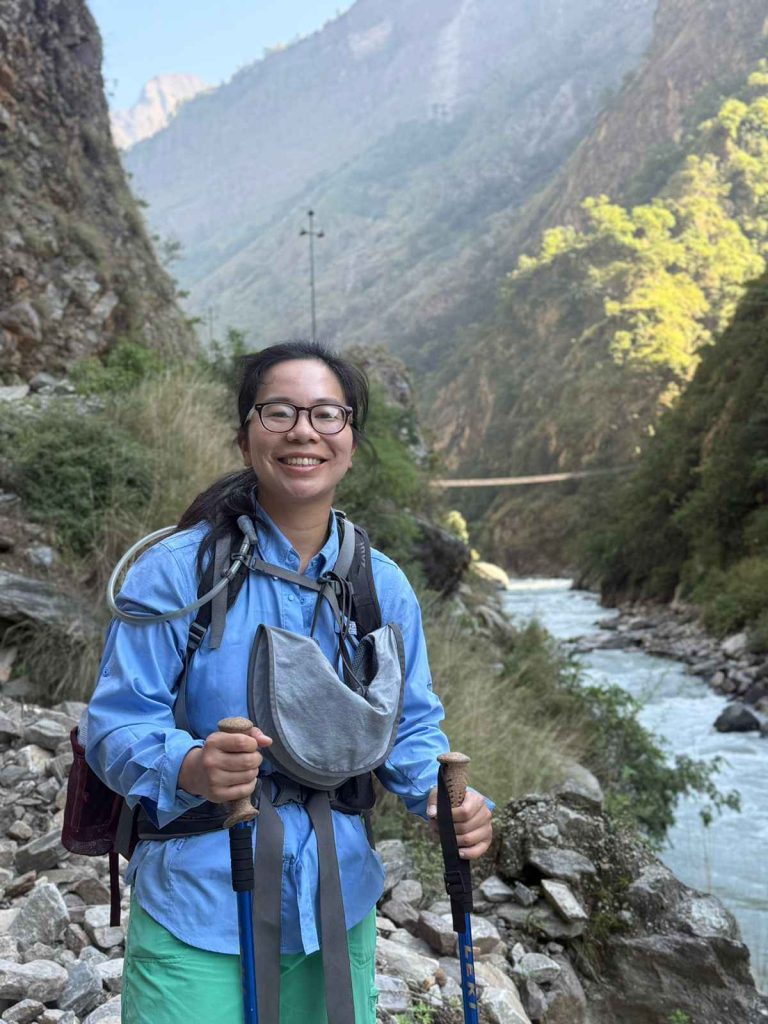
The first full trekking day of the Manaslu Circuit and Tsum Valley Trek began at dawn on March 6. The trail leaves Machha Khola heading north along the Budhi Gandaki and immediately enters the kind of landscape that defines the lower sections of this route. Dense subtropical forest, the river running loud and fast below the trail, steep gorge walls rising on both sides, and suspension bridges crossing back and forth over the river throughout the morning.
I counted seven bridge crossings before the lunch stop. Some were wide and stable. Others were narrow and moved considerably underfoot. Kiran crossed each one ahead of me and waited at the other side without making anything of the crossing. By the fourth bridge I had stopped holding the cables and was crossing the same way he did. That progression from nervousness to confidence across a single morning of trekking told me something about how quickly this route changes you.
Jagat is the main checkpoint for the Manaslu Restricted Area and the point where the permits that Kiran had arranged in Kathmandu became real. Army personnel at the checkpoint recorded our details and checked the documentation carefully. Beyond Jagat the trail entered the restricted zone proper and the change was immediately visible. The number of other trekkers on the Manaslu Circuit dropped to almost nothing. The tea houses became simpler and quieter. The villages had a character that felt genuinely remote in a way the lower sections had not quite managed.
Kiran and I sat on the tea house terrace at Jagat after dinner and talked about what was ahead. The following morning the trail would split and we would leave the main Manaslu Circuit temporarily to enter the Tsum Valley. He described the Tsum Valley with a feeling in his voice that was different from the way he talked about other parts of the route. More careful. More deliberate. Like someone describing a place that deserved to be described correctly.
Planning the Manaslu Tsum valley Circuit Trek and need help with permits, route, or itinerary?
WhatsApp us Email usDay 4 to Day 9: Entering the Tsum Valley — The Hidden Valley of Nepal
The Tsum Valley. I want to spend real time on this section of the Manaslu Circuit and Tsum Valley Trek because it was the part I had come furthest to see and the part that was most different from anything I had expected even after months of reading and research.
The trail branches off the main Manaslu Circuit near Lokpa and heads east into a side valley that narrows gradually before opening into the wide, flat-floored basin of the Tsum Valley itself. The transition from the Manaslu Circuit main trail to the Tsum Valley approach happens within a single morning of walking and the change is noticeable within the first hour. The trail became quieter, the vegetation changed, and the sense of entering somewhere genuinely separate from the outside world began to build progressively.
The Tsum Valley Villages and the Tsumba People
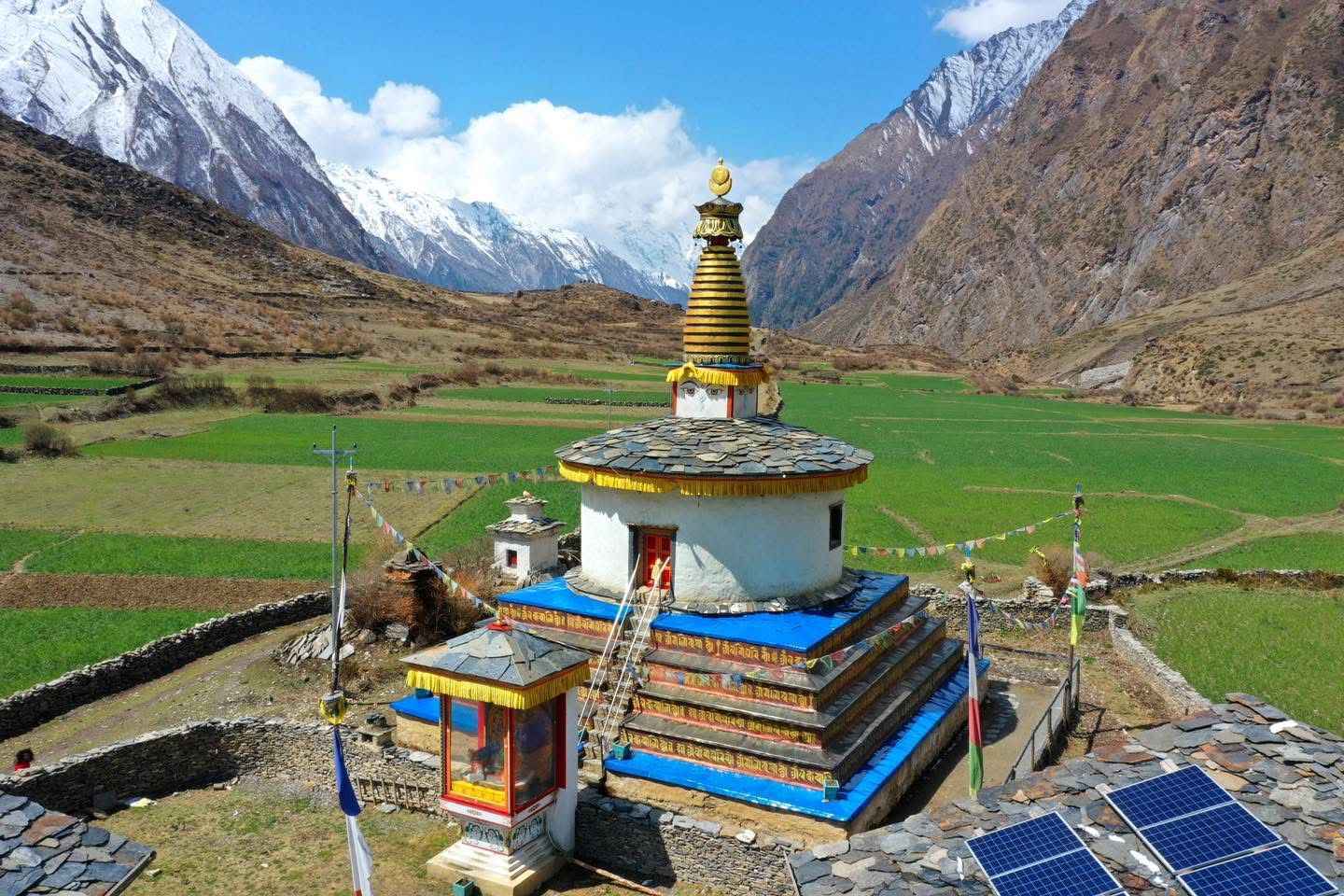
The first Tsum Valley village of any size is Chumling, which we reached on Day 5 after leaving Lokpa. Walking into Chumling for the first time was one of those travel experiences that genuinely stops you. The houses were built in the traditional Tibetan style with thick stone walls, flat rooftops, and carved wooden window frames painted in the dark reds and deep blues that characterise Tibetan Buddhist communities across the high Himalaya. Prayer flags covered every rooftop and connected every high point in the village to every other. Mani walls lined the trail on both sides as we entered.
The Tsumba people are the indigenous community of the Tsum Valley. They are Tibetan in origin and have maintained their cultural and religious traditions in a degree of isolation that is increasingly rare anywhere in the world. The Tsum Valley was completely closed to foreign visitors until 2008 and even now the Special Restricted Area Permit required to enter limits the number of visitors significantly. Walking through the Tsum Valley in March 2026 I saw perhaps a dozen other foreign trekkers across six days in the valley. On some days the trail through the valley was entirely ours.
The women we passed in the villages wore traditional Tibetan dress. The older generation spoke Tibetan as their primary language. Religious observance was not something separate from daily life but woven directly into every part of it. Prayer wheels turned at every corner. The rhythm of the day in every village we passed through was structured around the religious calendar rather than around anything the outside world had introduced.
Kiran spoke about the Tsumba people with deep respect and careful knowledge. He explained the significance of the religious sites we passed, why certain places required silence, how to interact respectfully with the community, and what the various religious objects and structures we encountered meant within the Tibetan Buddhist tradition. Walking through the Tsum Valley with that level of cultural context transformed what could have been a beautiful but superficial experience into something genuinely meaningful.
Mu Gompa and Rachen Gompa — The Monasteries of the Tsum Valley Trek
The two great monasteries of the Tsum Valley are Mu Gompa and Rachen Gompa and reaching both of them was the highlight of the Tsum Valley section of the Manaslu Circuit and Tsum Valley Trek.
Mu Gompa sits at around 3,700 metres in the upper Tsum Valley on a rocky promontory above the valley floor with views of the surrounding peaks that are genuinely extraordinary on a clear March morning. The monastery is active and when we arrived a group of monks was engaged in a prayer session inside the main temple. The sound of the horns and drums and chanting filled the building and drifted out into the cold clear air outside. Kiran spoke briefly with the head monk and we were invited to sit quietly inside while the session continued.
I sat in the back of the main temple at Mu Gompa for about thirty minutes listening to the prayer session. The interior was painted with elaborate murals covering every surface from floor to ceiling. Butter lamps burned on the altar. The smell of the lamps and the incense was strong and specific and entirely unlike anything I had encountered before. Outside through the temple doorway the snow-covered peaks of the Ganesh Himal range were clearly visible in the morning light.
Rachen Gompa is a nunnery in the lower Tsum Valley and the largest religious institution in the valley. Several hundred nuns live and practice there. The compound is large and impressively constructed and the atmosphere was quieter and more contemplative than Mu Gompa. We arrived in the afternoon when the nuns were between prayer sessions and Kiran arranged for us to be shown around by one of the senior nuns who spoke some Nepali. Walking through the inner courtyards of Rachen Gompa while the afternoon light turned the stone walls gold was one of the most peaceful experiences of the entire 19 day Manaslu Circuit and Tsum Valley Trek.
Milarepa’s Cave and the Spiritual Landscape of Tsum Valley
Between Mu Gompa and Rachen Gompa the trail passes a cave associated with Milarepa, the 11th century Tibetan Buddhist yogi and poet who is one of the most revered figures in the Tibetan Buddhist tradition. The cave is a pilgrimage site and there were prayer flags and small offerings at the entrance when we passed. Kiran told me about Milarepa’s life and the significance of his presence in the Tsum Valley tradition while we sat outside the cave for a few minutes.
The entire landscape of the Tsum Valley functions as a kind of sacred geography for the Tsumba people. The mountains, rivers, caves, and prominent rock formations all have religious significance within the local tradition. Walking through that landscape with someone who understands and respects it gives the trekking experience a depth that no amount of guidebook reading can replicate.
Day 10: Leaving the Tsum Valley and Rejoining the Manaslu Circuit Trek
Leaving the Tsum Valley on March 13 and rejoining the main Manaslu Circuit near Deng was a genuine transition. The Tsum Valley had been so quiet and so complete in itself that re-entering the main Manaslu Circuit trail felt like returning from somewhere very far away.
The trail from the Tsum Valley junction back to Deng on the main Manaslu Circuit descends through forest and river gorge terrain and rejoins the Budhi Gandaki at a point that felt immediately different from the upper valley. The scale of the gorge was larger here, the river faster and louder, and the trail had the character of the main Manaslu Circuit route rather than the quieter Tsum Valley approach.
Kiran explained at dinner in Deng that the sections of the Manaslu Circuit ahead of us would build steadily in altitude across the following five days toward the Larkya La crossing. He went through the acclimatisation plan carefully. The key days were the rest day in Samagaun, which would include a visit to Manaslu Base Camp to gain altitude before sleeping lower, and the shorter walking day between Samagaun and Samdo that kept the body adapting rather than racing upward.
Day 11: Deng to Namrung — The Manaslu Circuit Enters the Nubri Region
The Nubri region above Deng on the Manaslu Circuit Trek is where the cultural landscape of the route changes completely for the second time. The subtropical jungle of the lower valley disappears and the trail opens into a wider, more dramatic mountain landscape with the first genuinely Tibetan Buddhist communities appearing along the route.
Namrung at 2,900 metres was the first of these communities that made the new character of the Manaslu Circuit fully clear. The architecture of the village was immediately different from anything below. Stone buildings with carved window frames and prayer flags on every rooftop. Large chortens at the village entrance and exit. Mani walls along the trail on both sides of the settlement.
Kiran wore his red poncho through most of the afternoon walk into Namrung. I had come to use it as a visual reference point on the trail ahead. When the path bent around a ridge or disappeared temporarily into a gully, the red poncho always reappeared from the other side within a few minutes and confirmed the direction.
Day 12: Namrung to Samagaun via Lho and Pungen Gompa
The trail from Namrung to Samagaun on the Manaslu Circuit passes through Lho village, which contains one of the most remarkable viewpoints on the entire 19 day Manaslu Circuit and Tsum Valley Trek.
The monastery at Lho sits on a promontory above the Budhi Gandaki valley with Manaslu filling the entire northern view from its courtyard. The mountain at this distance and from this angle is almost overwhelming. The summit at 8,163 metres, the glaciers on its upper flanks, the enormous rock faces below the summit, and the ridgelines sweeping down to the valley floor. Mount Manaslu is the eighth highest mountain in the world and standing in the Lho monastery courtyard looking at it is one of those moments where the word enormous stops feeling like an adequate description.
Kiran paused at the monastery for a personal prayer, as he did at every significant religious site on the route. I waited outside and looked at the mountain. We did not speak for several minutes after that and neither of us needed to.
Pungen Gompa is the monastery above Samagaun with an even closer view of the Manaslu massif. We visited it on the walk into the village and the afternoon light on the mountain from the Pungen Gompa viewpoint was different in quality from the morning light at Lho. Both were extraordinary in their own way.
Samagaun at 3,500 metres is the largest settlement in the upper Budhi Gandaki valley and the main base before the high altitude section of the Manaslu Circuit Trek. We spent the night at a comfortable teahouse and ate the largest dal bhat either of us had managed in several days. Kiran reminded me that the acclimatisation day the following morning required eating well.
Day 13: Acclimatisation Day at Samagaun — Manaslu Base Camp Visit and Birendra Lake
The acclimatisation day at Samagaun on the Manaslu Circuit and Tsum Valley Trek was one of the most valuable days of the entire 19 days even though the total trekking distance was short.
Kiran had explained the acclimatisation principle at the briefing in Kathmandu and had reinforced it at several points on the route. You do not simply rest at altitude. You climb higher during the day and sleep lower. The body responds to the altitude stimulus and begins producing more red blood cells, which is what makes the crossing of Larkya La Pass genuinely safe rather than merely survivable.
We walked toward Manaslu Base Camp in the morning. The trail climbs through boulder fields and glacial moraine and the landscape becomes increasingly dramatic as the altitude gains. The Manaslu Glacier fills the upper bowl of the valley and the sounds of ice movement and occasional small rockfall echo down the moraine in a way that has no equivalent in everyday European life.
We stopped at Birendra Lake on the way up. The lake sits in a glacial bowl below the Manaslu Glacier and in March it was still partially frozen at the edges. The colour of the open water was a deep green-blue against the grey moraine and the white glacier above. I photographed it but the photographs do not capture the colour accurately. You need to be there in person for the colour to register properly.
We climbed to a point high enough to see the expedition tents at Manaslu Base Camp clearly in the distance. There was a spring season expedition preparing on the mountain that March. Kiran pointed out where the fixed ropes would be on the upper ridgeline above the glacier. Looking at that terrain and understanding what it takes to attempt Manaslu from base camp gave the entire Manaslu Circuit and Tsum Valley Trek a different kind of scale.
In the afternoon back at Samagaun I sat in the teahouse garden and wrote in my journal for two hours. The kind of writing you do when you have been somewhere that deserves to be recorded before the details blur.
Planning the Manaslu Tsum valley Circuit Trek and need help with permits, route, or itinerary?
WhatsApp us Email usDay 14: Samagaun to Samdo — The Last Village Before Larkya La Pass
Samdo at 3,785 metres is the last permanent settlement before the Larkya La Pass crossing on the Manaslu Circuit Trek. The walk from Samagaun to Samdo is deliberately short to allow the body to gain altitude gradually. Kiran set a slow and consistent pace throughout the day and stopped for water and short rests more frequently than on the lower sections.
The trail between the two villages climbs through completely open terrain above the tree line. No shelter from the wind, which in March was active and cold on the exposed upper sections. The views of the surrounding peaks were completely unrestricted and the character of the landscape was the most dramatic we had walked through since leaving the Tsum Valley.
Samdo is a traditional Tibetan Buddhist village close to the Tibetan border and it had the feeling of a genuinely remote place more strongly than any other settlement on the Manaslu Circuit and Tsum Valley Trek route. The monastery in Samdo is one of the oldest in the region. A single monk was conducting prayers when we arrived and the sound of the ritual instruments and chanting came clearly through the walls of the building as we walked past.
The temperature that night in Samdo was the coldest of the trek so far. I put on every layer I had to sleep and woke twice through the night. Kiran had told me this would happen. He had also told me that being cold but dry and alert at Samdo was far better than arriving at Dharamsala tired, which was our destination the next day.
Day 15: Samdo to Dharamsala — The Night Before Larkya La
Dharamsala at 4,450 metres on the Manaslu Circuit is not a village. It is a small cluster of the most basic teahouses on the entire 19 day route that exist for one purpose only. To give trekkers a place to sleep before the Larkya La Pass crossing the following morning at 3am.
The trail from Samdo to Dharamsala crosses completely barren glacial terrain. No vegetation, no shelter, only rock and moraine and the intense high altitude cold. Even walking steadily and generating body heat, the wind on the exposed sections cut through clothing that had felt adequate an hour lower. The cold at 4,000 metres in March on the Manaslu Circuit in Nepal is a different quality of cold from European winter cold. It is thin and relentless rather than wet and heavy.
Kiran set the slowest pace of the entire Manaslu Circuit and Tsum Valley Trek on this day. Every step conserved was worth saving for the following morning. He had done this section many times and he knew exactly how much energy the Larkya La crossing demanded and exactly what happened to trekkers who arrived at Dharamsala already depleted.
The teahouses at Dharamsala were the most basic of the entire route. Cold rooms, thin blankets, and nothing remotely comfortable. I put on the full sleeping system immediately after dinner as Kiran had told me to. He checked that I had eaten enough, drank enough water, and had everything I needed for the 3am departure. He was matter of fact and calm about all of it.
Before going inside for the night I stood outside for about ten minutes. The sky above Dharamsala at that altitude and in that dry March air was the clearest I have seen anywhere in my life. The stars were so dense and so bright that the Milky Way was visible as a distinct band rather than just a suggestion of extra light in the sky. I stood there in the cold and looked at it until my feet told me to go inside.
The alarm was set for 2:30am.
Day 16: Crossing Larkya La Pass at 5,106 Metres — The Greatest Day of the Trek
This was the day the entire Manaslu Circuit and Tsum Valley Trek had been building toward since I booked it from Germany six months earlier.
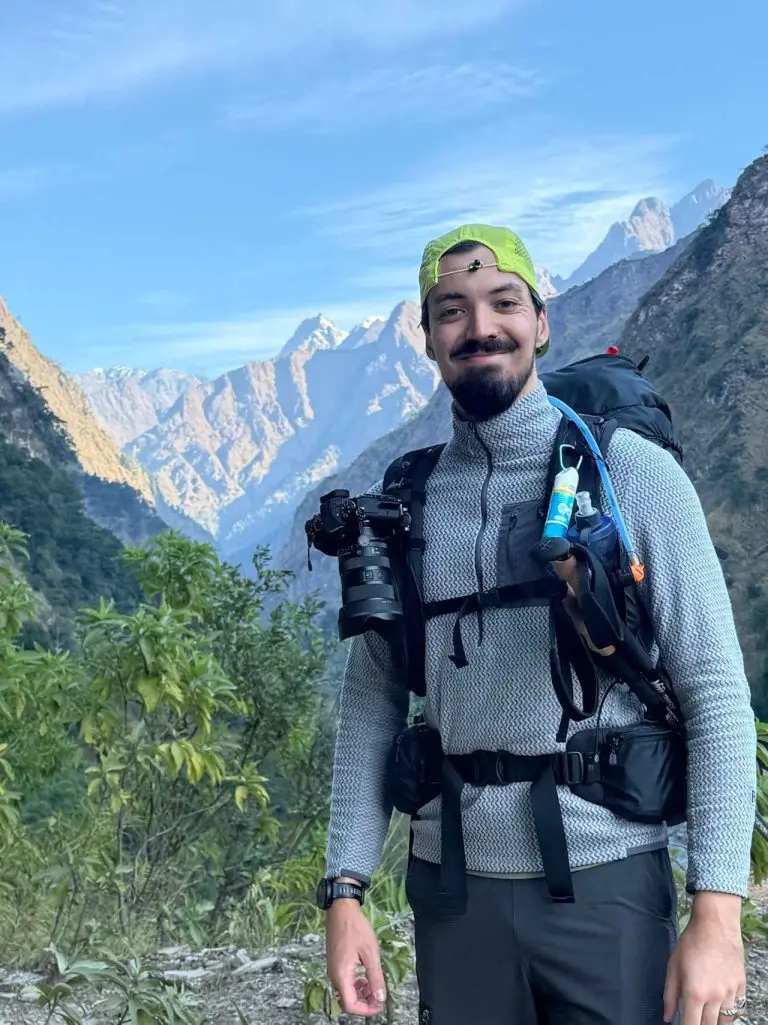
I was awake before the alarm. The temperature inside the Dharamsala teahouse at 2:30am was well below zero. Getting out of the sleeping bag required a genuine act of will. I dressed in every layer I had and went downstairs. Kiran was already in the dining room with hot tea ready. He handed it to me without a word. That cup of tea in the complete darkness at 2:30am at 4,450 metres on the Manaslu Circuit is a memory that will stay with me for the rest of my life.
We left at 3am. The headlamp lit the trail ahead and the stars above the pass were still fully visible. The temperature was around minus twelve degrees Celsius and the wind was present but not yet the full force it could become on the exposed upper sections of the Larkya La approach.
The trail from Dharamsala to the Larkya La Pass climbs gradually for the first hour and then steepens significantly in the final section before the col. In March there were sections of hard packed snow and ice that required careful footwork. The microspikes that Kiran had recommended I bring from Kathmandu were essential on these sections. Without them the approach to the Larkya La would have been significantly more difficult and potentially unsafe.
Kiran led throughout. The red poncho was ahead in the headlamp beam, moving steadily upward. I followed his exact line across the icy sections and matched his pace as precisely as I could.
At around 4,800 metres the altitude became properly noticeable for the first time on the Manaslu Circuit and Tsum Valley Trek. Every step required more conscious effort than the gradient alone justified. Breathing needed to be deliberate. The body was working genuinely hard and the thin air at that elevation on the Manaslu Circuit in March made everything feel harder than it looks on a map or in a route description.
Kiran stopped every thirty minutes on the upper section for a few minutes of rest, water, and a check that I was doing well. He watched my breathing, my complexion, and the quality of my movement without making me feel like a patient. He simply paid close attention and managed the pace accordingly.
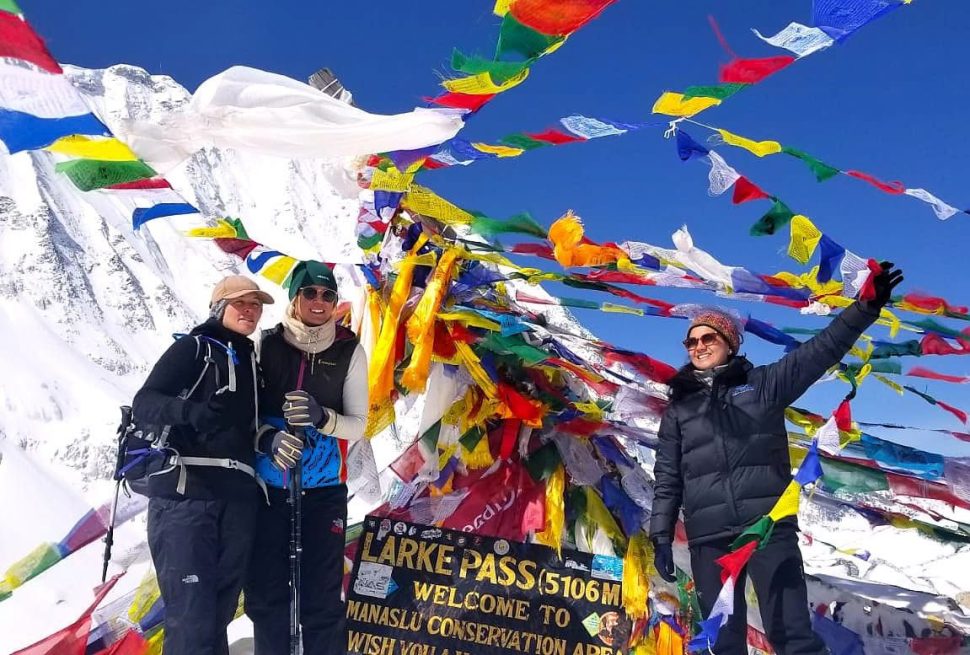
At 6:20am we reached Larkya La Pass at 5,106 metres.
The sky was fully light and the mountains around the pass were appearing from the predawn darkness into sharp clarity as the sun began to reach them from the east. Prayer flags were strung across the col in every direction, moving in the wind with a sound that was completely appropriate for that place and that moment.
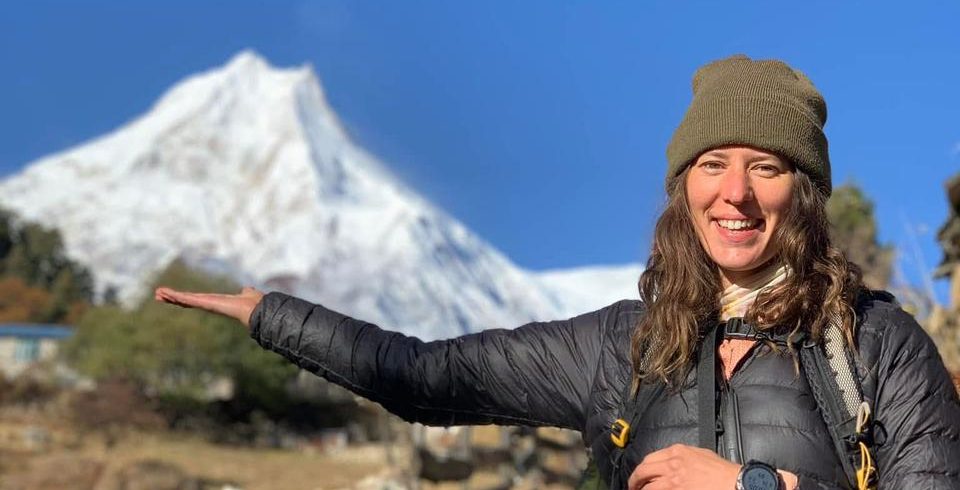
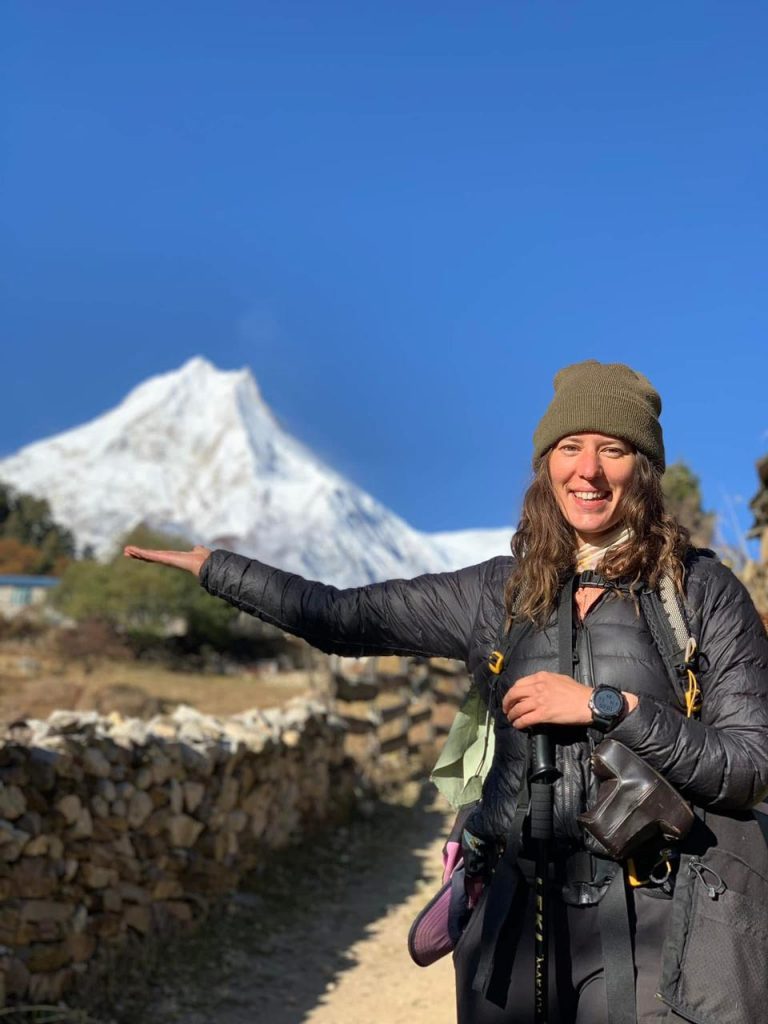
I stood at the top of Larkya La and looked in every direction. Manaslu to the east, enormous and white and impossibly large at close range. Ganesh Himal to the southeast. Himlung Himal and Cheo Himal visible across the upper valley. Annapurna II appearing in the far distance to the south. The Tibetan plateau visible to the north beyond the ridgeline of the pass.
I did not take any photographs for the first few minutes. I wanted to be actually present at the top of Larkya La rather than experiencing it through a camera screen. The wind was strong and cold and the prayer flags were snapping. The sky was the deepest blue I have ever seen anywhere. The mountains were the largest things I have ever stood near in my life.
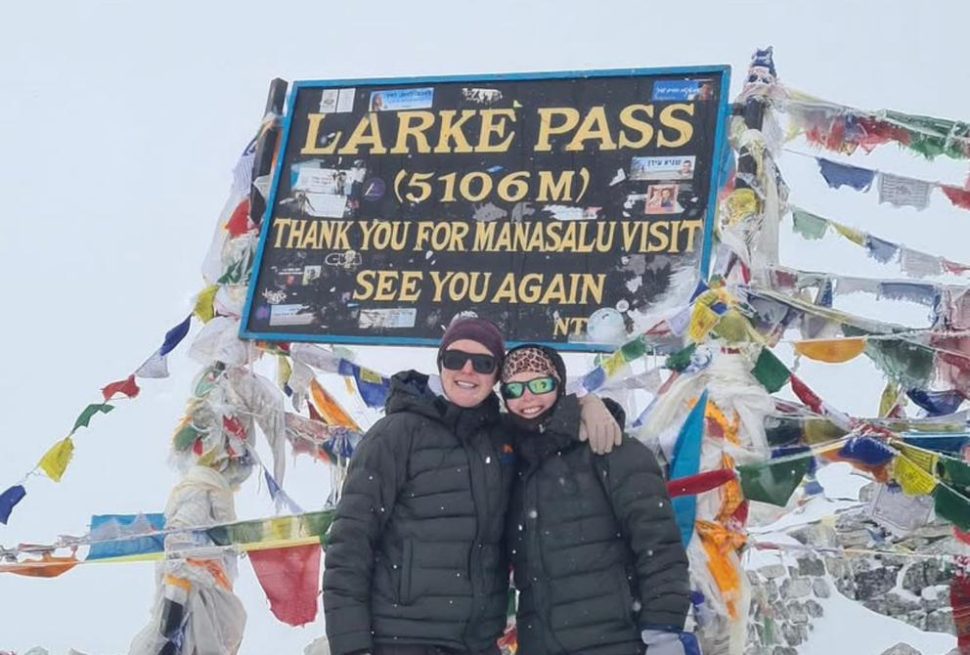
Kiran took a photograph of me at the pass. He has done this for every trekker he has guided across Larkya La and he said he never gets tired of watching the moment when someone stands at the top for the first time.
The descent from Larkya La to Bimthang is long and steep and technically demanding in a different way from the ascent. Descending on loose rock and frozen ground with tired legs after a very early start and a high altitude crossing is where the body discovers reserves it did not know it had. Kiran managed the descent pace carefully, reminding me to use trekking poles actively and to keep steps short on the steepest sections.
We reached Bimthang at around 11am. The valley below the Larkya La opens into a wide green meadow at 3,590 metres that feels almost impossibly lush after the barren high altitude terrain of the previous three days. I sat down on the grass outside the teahouse and did not move for twenty minutes. The Manaslu Circuit and Tsum Valley Trek’s hardest section was behind us completely.
Day 17: Bimthang to Tilije — Descending Through the Forest After Larkya La
The day after crossing Larkya La on the Manaslu Circuit was spent descending through some of the most beautiful forest on the entire 19 day route.
The trail from Bimthang drops through rhododendron and pine forest with the Dudh Khola river growing louder below the path as the route descended. In early March the rhododendrons were just beginning to show the first colour of the season on the lower sections of the forest. The change from the barren high altitude landscape above the Larkya La to the living warmth of the forest below was one of the most complete and sudden landscape transitions I have experienced on any trek anywhere.
My legs were tired from the pass crossing and the descent to Bimthang the previous day. Kiran adjusted the pace without being asked, as he had done consistently throughout the entire Manaslu Circuit and Tsum Valley Trek whenever the terrain or my energy level required it. He was very good at reading how someone was moving and responding to it without making the person feel like they were slowing things down.
Tilije is a larger and more developed village than the settlements of the upper Manaslu Circuit valley with a more developed infrastructure and the first cold drinks shop I had seen for eleven days. I bought a bottle of water and sat on a wall above the river looking back up toward the ridgeline of the Larkya La. Somewhere up in that rock and snow was the pass we had crossed that morning. From Tilije it was invisible behind the descending ridges.
That evening was the most relaxed of the entire Manaslu Circuit and Tsum Valley Trek. The difficult section was completely behind us. Kiran and I sat at the teahouse table for a long time after dinner talking about the entire nineteen days, revisiting the Tsum Valley days and the Larkya La crossing, and discussing what each section had meant in the larger context of the route.
Day 18: Drive from Tilije Back to Kathmandu
The drive from Tilije to Kathmandu on March 21 took most of the day along roads that felt smooth and fast compared to the approach route three weeks earlier. I looked out the window through most of the journey and thought about what the 19 Days Manaslu Circuit and Tsum Valley Trek had actually been.
The Tsum Valley was the thing that stayed most present in my mind during the drive back. The monasteries, Mu Gompa and Rachen Gompa. The villages of Chumling and Chhekampar. The faces of the Tsumba people we had met along the trail. The nuns at Rachen Gompa in the afternoon light. The prayer session at Mu Gompa that I had sat inside for thirty minutes listening to. The feeling of walking through a valley where the outside world had genuinely not yet arrived in any complete way.
And behind all of that, the Larkya La. Standing at 5,106 metres at dawn with Manaslu filling the eastern sky and Ganesh Himal and the full sweep of the Himalayan range visible in every direction. That was the physical summit of the route. But the Tsum Valley was the emotional and cultural summit. The thing that made this specific combination of the Manaslu Circuit and Tsum Valley Trek different from every other Nepal trekking route I had read about.
We arrived back in Kathmandu in the early evening. Kiran and I had dinner together at a restaurant in Thamel and talked for a long time. He told me about other routes he guided in the Manaslu region. I told him about the Germany trip I was planning to describe the trek to my friends and family in Munich and how I already knew that the description would fall short of the experience no matter how carefully I tried.
What I Learned About the Manaslu Circuit and Tsum Valley Trek That the Route Descriptions Do Not Tell You
There are things about the 19 Days Manaslu Circuit and Tsum Valley Trek that route descriptions and itinerary pages cannot convey adequately. I want to try to say some of them here for anyone reading this who is considering the same trek.
The first is the cumulative effect of altitude on the body over 19 days. I had read about acclimatisation and understood the theory. Living it across nineteen consecutive days of increasing altitude on the Manaslu Circuit and Tsum Valley route is a different thing from understanding it theoretically. By the time we crossed Larkya La my body had been above 3,000 metres for eight days and the pass itself felt manageable in a way that it would not have felt if we had arrived there in half the time. The carefully designed acclimatisation days in the itinerary at Samagaun are not padding. They are the reason the Larkya La crossing is an extraordinary experience rather than a medical emergency.
The second is the role of the guide. I had trekked independently in the Alps and in other parts of Europe for years and I was sceptical before the Manaslu Circuit and Tsum Valley Trek about how much difference a guide would actually make. The answer is complete difference. Kiran knew the Manaslu Circuit and Tsum Valley route with the knowledge that comes from years of guiding on a specific trail rather than from studying maps and route descriptions. He knew the conditions at Larkya La in March. He knew which teahouses had the warmest rooms. He knew every monastery and its significance and could explain it properly. He knew how to read altitude sickness symptoms from observation rather than from asking a checklist of questions. He managed every logistical detail of 19 days on the trail without any of those details ever becoming visible to me as problems. That is what a genuinely good guide on the Manaslu Circuit and Tsum Valley Trek is.
The third is the Tsum Valley itself. I had researched the Tsum Valley carefully before the trek and still found it genuinely surprising when I arrived. The degree of cultural integrity in the Tsum Valley is something that feels increasingly rare anywhere in the world. The Tsumba people have maintained their Tibetan Buddhist way of life with a completeness that is not performative or constructed for visitors. It is simply how they live. Walking through that valley with Kiran’s cultural knowledge as context turned it from a beautiful remote area into something genuinely meaningful and specifically irreplaceable as a trekking experience.
The Cost of the 19 Days Manaslu Circuit and Tsum Valley Trek and Whether It Is Worth It
The 19 Days Manaslu Circuit and Tsum Valley Trek with Manaslu Treks and Expedition costs from USD 1,455 per person for a group and up to USD 1,895 for a solo trekker. The price is all-inclusive. Permits for both the Manaslu Restricted Area and the Tsum Valley Special Restricted Area, all accommodation in teahouses throughout the 19 days, all meals, guide fees, porter, and logistics. Nothing extra is added in Nepal.
The Tsum Valley Special Restricted Area Permit alone costs USD 500 for the first seven days. That single cost is a significant portion of the total package price and it is worth understanding before comparing the 19 Days Manaslu Circuit and Tsum Valley Trek cost with other Nepal trekking packages. The permits are what make the Tsum Valley the place it is. They limit the visitor numbers in a way that preserves the very thing that makes the trek worth doing.
Is it worth the cost? I spent my first evening back in Germany looking at the photographs and writing up my notes and thinking about that question. The answer for me is completely and without any qualification yes. The 19 Days Manaslu Circuit and Tsum Valley Trek gave me things that money cannot be meaningfully compared to. Standing at Larkya La at dawn with Manaslu above me. Sitting inside Mu Gompa during a prayer session. Walking through the Tsum Valley on a day when the trail was entirely mine. Those are not experiences that have a fair market price.
Planning the Manaslu Tsum valley Circuit Trek and need help with permits, route, or itinerary?
WhatsApp us Email usMy Recommendations for Anyone Planning the Manaslu Circuit and Tsum Valley Trek
Book the Manaslu Circuit and Tsum Valley Trek with a company that genuinely specialises in this specific region. Manaslu Treks and Expedition is exactly that. The Manaslu region is their focus and their expertise in the Manaslu Circuit and Tsum Valley route specifically is evident from the first conversation. Kiran knows this trek the way a person knows the streets of their own neighbourhood rather than the way a person knows a route they have studied from a guidebook.
Book the 19 day version rather than shorter alternatives if your schedule allows it. The 19 Days Manaslu Circuit and Tsum Valley Trek gives you the complete experience. The Tsum Valley section and the full Manaslu Circuit including Larkya La together create a combination of mountain and cultural experience that neither route delivers on its own. Doing one without the other is missing half of what makes this specific combination of trekking so exceptional.
March is a genuinely good month for the Manaslu Circuit and Tsum Valley Trek. The trails are quiet, the rhododendrons are beginning on the lower sections, the skies are clear, and the Larkya La Pass is typically clear of the worst winter snowpack. The cold is real but manageable with proper preparation. Autumn from September to November is the other great season for the Manaslu Circuit and Tsum Valley Trek with even clearer skies and warmer temperatures but busier trails.
Bring proper cold weather gear for the Larkya La crossing and the nights at Dharamsala and Samdo. The cold at those elevations on the Manaslu Circuit in March is serious and underestimating it is the most common mistake trekkers make on the high section.
And trust your guide. On the Manaslu Circuit and Tsum Valley Trek specifically, with the Tsum Valley’s cultural complexity, the altitude of the Larkya La crossing, and the remoteness of the terrain above Jagat, the quality of your guide is the most important variable in the entire experience.
Final Thoughts on the 19 Days Manaslu Circuit and Tsum Valley Trek
I am writing this in my apartment in Munich, six weeks after returning from Nepal. The Tsum Valley is still the thing I think about most. The feeling of walking into that hidden valley on the morning of March 8 for the first time. The Mu Gompa prayer session. The nuns at Rachen Gompa in the afternoon light. The view from Pungen Gompa above Samagaun with Manaslu filling the sky.
And Larkya La. Standing at 5,106 metres on the Manaslu Circuit at dawn on March 19 with everything visible and the prayer flags moving in the wind and Kiran standing quietly nearby letting the moment be what it was.
The 19 Days Manaslu Circuit and Tsum Valley Trek with Manaslu Treks and Expedition was the most complete and meaningful travel experience of my life. I say that having travelled widely in Europe and Asia over twenty years. Nothing else compares to this specific combination of mountain, culture, remoteness, and human warmth.
If you are planning a serious Nepal trek and you have the time and the fitness for 19 days on the trail, the Manaslu Circuit and Tsum Valley Trek is the answer. Book it with a company that knows it properly. Trust your guide. Go slowly at altitude. Eat dal bhat every meal you can. And when you stand at the top of Larkya La in the early morning light with Manaslu above you, take the first few minutes without a camera.
Steffen, Munich, Germany, March 2026
My Recommendation for the 19 Days Manaslu Circuit and Tsum Valley Trek
I recommend the 19 Days Manaslu Circuit and Tsum Valley Trek with Manaslu Treks and Expedition without any reservation to any experienced trekker who wants the most complete, authentic, and meaningful Himalayan trekking experience available in Nepal.
The company handled every detail of the 19 day trek from the first message to the jeep that dropped me at the hotel after the drive back from Tilije. Kiran managed all permits including the complex Tsum Valley Special Restricted Area documentation, all teahouse arrangements, the logistics of the Larkya La crossing, and the countless small daily decisions that make a long high altitude trek comfortable rather than stressful. The all-inclusive pricing was exactly what was quoted. Nothing was added in Nepal. Nothing was less than expected.
For anyone interested in booking the 19 Days Manaslu Circuit and Tsum Valley Trek for 2026 or 2027, contact Manaslu Treks and Expedition directly on WhatsApp at the number on their website. Kiran responds personally and quickly and the conversation from first contact to confirmed booking was one of the smoothest and most honest I have experienced with any travel company anywhere.
The cost of the 19 Days Manaslu Circuit and Tsum Valley Trek starts from USD 1,455 per person. It is worth every single euro of the equivalent.
Steffen, Germany, 2026